Wan-Animate-2 delivers real-time character animation at 24 frames per second.
Alibaba’s framework eliminates skeletal pose extraction from character animation workflows.
Wan-Animate-2 supports multi-character and multi-camera animation without retraining.
Wan-Animate-2 Goes Open Source, Challenging Commercial Leaders In AI Character Animation
The system skips skeletal pose extraction, runs at 24 fps in real-time streaming and claims performance comparable to commercial tools including Dreamina and KLING MotionControl.

Summary
Alibaba’s Tongyi Wanxiang team has open-sourced Wan-Animate-2, an end-to-end character animation framework that could change how developers approach AI-driven character performance. The system runs real-time streaming at 24 frames per second without extracting skeletal poses or compressing motion features, while testing shows results competitive with leading commercial tools.
Instead of converting a driving video into a skeletal representation, Wan-Animate-2 feeds the original video directly into a diffusion Transformer. This allows the model to learn the relationship between the driving performance and target character without relying on an intermediate rig that can lose information or fail during difficult movements.
Wan-Animate-2 removes the pose-estimation bottleneck
The pose-free approach is designed to preserve more detail from the source performance. According to the team, this results in cleaner hand movements and fewer limb artefacts during challenging motions.
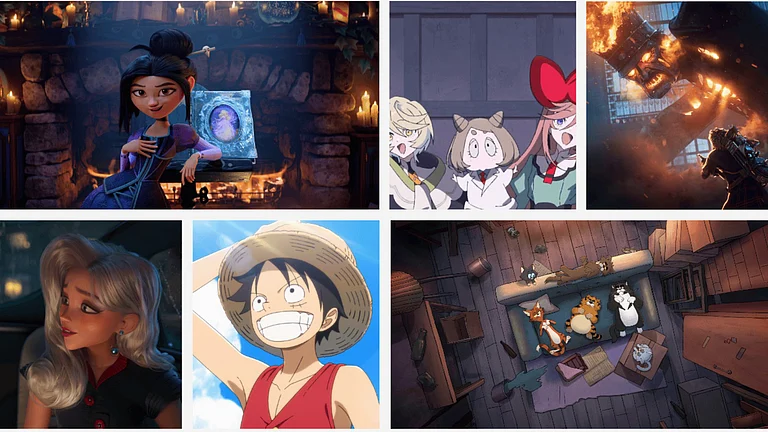
The framework also goes beyond single-character animation. Multiple target characters can be driven simultaneously from one video and the same animation can be rendered from different camera positions without requiring retraining. It supports non-standard aspect ratios and different character body types, addressing limitations that have affected many open-source animation systems.

Head-to-head comparisons have placed Wan-Animate-2 alongside closed-source commercial systems including ByteDance's Dreamina and Kuaishou's KLING MotionControl. The results suggest Alibaba's open-source framework can compete with commercial offerings while allowing developers to run the model locally.
Alibaba expands its open-source AI video push
The significance of Wan-Animate-2 extends beyond another video-generation model. Character animation has remained a difficult stage in AI video production because generated characters can struggle to maintain identity while following arbitrary movements. Developers have often had to rely on manual keyframing to bridge that gap.
Wan-Animate-2 aims to automate that process while keeping the underlying weights accessible to developers and creators. The framework was released as open source this week.
The launch also follows Alibaba’s Wan 3.0 release earlier in August, which introduced document-input video generation for enterprise applications. Together, the two projects show Alibaba targeting both professional production workflows and the wider open-source creator ecosystem.
Advertisement
The next test will be adoption, as developers begin building tools and workflows around the newly available animation model.
Published At: