T
A 22-Yard Gash
The knives are out, Team India at its nadir. What can a ex-players' brains trust suggest for the future?

BCCI president Sharad Pawar and his band of merry men wisely joined the cacophony in threatening harsh action. "Our team has disappointed me and the nation. The BCCI provides maximum facilities to the players and expectations from the team were quite high," Pawar said with a grim face. Curiouslu, a couple of days later, he was less strident but he’d already worked on the minds of a volatile constituency baying for the players’ and coach’s heads.
By that time, at least three ex-India captains had called board officials, warning them against inciting passions. In fact, Ajit Wadekar, Bishan Singh Bedi and Kapil Dev were the few voices of reason, calling for Pawar and co to resign even as they asked fans to show restraint in the face of Team India’s ignominious exit from the Cup.
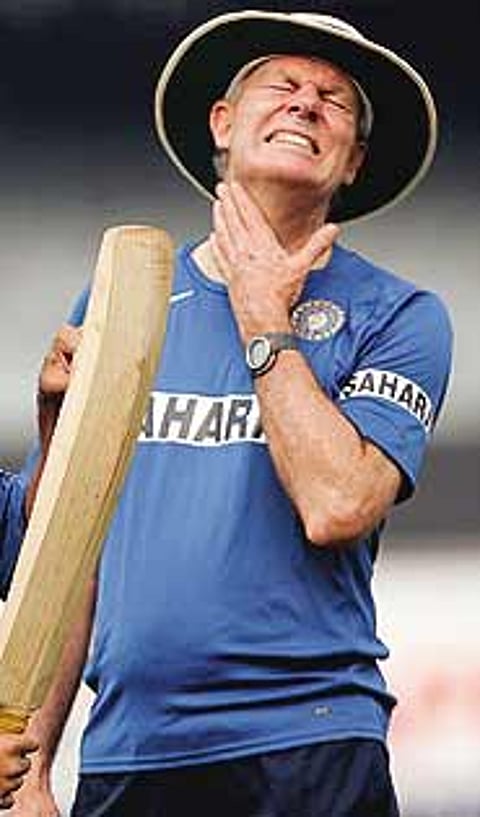
Kapil even reproached board officials for their indiscretion. "The question is: should we sack the players without even talking to them? Or should we first get their side of the story? If that is the case, we should perhaps ask the board president and secretary to resign first," he wrote, defending the team. Bedi too demanded accountability from the board members. "Everywhere else in the world, they are all accountable—from the scoreboard operators to the chairman of the board. What is the contribution of these officials baying for the players’ blood? They forget they are in their posts only because of the players. The players aren’t there because of them. We must know how to accept defeat just as we must know how to celebrate success. It’s a sad day when board officials join the bandwagon in driving the people against the players."
Then again, Pawar lost no time in reminding us that such niceties are not known in Indian cricket. "Has anyone in the BCCI stepped down since the 1983 win...during which time Cup teams have faced many a debacle? Then why should we?" Pawar asked indignantly. To be fair, he did go on to say that the time had come to sit, discuss and decide a future course of action. "Let us concentrate from today on World Cup 2011 and start encouraging the younger players. The board has to give serious thought about player performances and how to take the game forward." He’s now called for a meeting of six former captains to discuss the Cup fallout.
Wadekar feels it’s a good idea calling the captains but is wary that anything positive that comes out could go into "cold storage". Leaving the cynicism behind, let’s see what could emerge from this meeting of our top cricketing brains.
Advertisement
Change the system, embrace professionalism: "How can an amateur system breed professionals?" asks Bedi, demanding that the administration be entrusted to professional hands. "The whole business of honorary officials must change." There are some players involved in running state associations but few have played at the highest level. They don’t understand some of the intricacies, warns Wadekar. "Some former players have to be nominated to run cricket because they cannot be contesting elections," he says. "The system needs to be changed but in a democracy like ours, it’s quite difficult, isn’t it?"
Make domestic cricket more competitive: The clamour for restructuring domestic cricket so that it delivers quality rather than quantity is growing. "The numbers playing first-class cricket is huge...it should be designed to throw up players with qualities needed in international cricket. It’s time we looked at an improved Duleep Trophy as the only first-class tournament. All players must compete in this event," Bedi says.
Advertisement
Wadekar agrees. "It’s a good idea but it must be mandatory for all to be playing domestic cricket," he says. "We learnt from playing in the Times Shield against players like Umrigar, Vijay Manjrekar. Going forward, we must get all players—big and small—to play domestic cricket."
Improve the quality of grounds: In Australia, South Africa and England, the grounds are lush green and smooth as a billiards table. Even schoolboys don’t hesitate to slide and dive to stop the ball. And that’s the biggest reason why fielding is our weakest link. And it will remain that way, Wadekar points out, if India doesn’t improve the quality of its cricket grounds even at the junior level.
Work on the cricket nurseries: "Why do we have only such a small lot to choose from? Who will replace Sourav, Rahul or Sachin?" asks Wadekar. And answers the question himself. "Basically, we must start from the school, maidan and club levels. It’s only at the time of elections to state associations that people visit the maidans. We must also revive collegiate and university cricket. The jump from under-19 to first class or even the India team denies players the chance to arm themselves with the knowledge that can stand them in good stead when they play cricket."
Advertisement
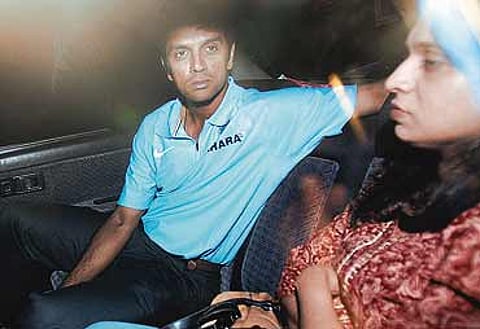
Coaching at the grassroots levels: In the match against Sri Lanka, it became apparent the islanders had outrun the Indians—first with their running between the wickets and then with the fielding. "There should be a proper machinery to check what these coaches at that (junior) level are doing. Are they instilling the right values, techniques among the young?" asks Wadekar, pointing out that these skills must be taught right in the early years itself.
Meanwhile, in the immediate future... "The board must hear out the captain, players and coach before it makes any decision on who to retain or not," says Kapil Dev. Careful discussions must precede any judgements passed on Dravid or coach Greg Chappell. The same applies to any player being eased out of Team India. It’s time to draw up a roadmap that will make India a top cricket playing nation rather than one that invests emotions and oodles of cash in supporting world cricket with little benefit to itself.
Advertisement
Published At:
Tags