The police kept in mind the larger interest of public safety and national security while rightly refusing a clearance certificate to Fahim Ansari.
The court has considered the confidential intelligence report submitted by the police, which "prima facie" indicates that the possibility of Ansari indulging in similar activities cannot be ruled out.
The certificate to Ansari was refused in the backdrop of his criminal antecedents in a "reasonable manner and in the larger interest of public safety and national security."
Mumbai Police Refused A Clearance Certificate To Fahim Ansari After 26/11 terror attack
The Bombay High Court has said the police kept in mind the larger interest of public safety and national security while rightly refusing a clearance certificate to Fahim Ansari, acquitted in the 26/11 terror attack case, to ply an autorickshaw for livelihood.

Summary
In the bustling, neon-lit streets of Mumbai, an autorickshaw is more than just a vehicle; it is a lifeline, a humble engine of self-reliance for thousands seeking a fresh start. For Fahim Ansari, the dream of navigating these streets as a licensed driver represented a final bridge back to a normal life. However, the Bombay High Court ruled on Wednesday that some bridges remain closed, deciding that the "larger interest of public safety" outweighs an individual's immediate right to a specific livelihood.
The legal battle centre-ed on a simple document: a police clearance certificate. Ansari, who was famously acquitted in the 26/11 Mumbai terror attacks case due to lack of evidence, had approached the court after the police refused him the badge required to ply a commercial autorickshaw. His argument was a human one—that his past trial, despite ending in acquittal, should not haunt his every attempt at employment. Yet, a bench of Justices A.S. Gadkari and R.R. Bhonsale found that the police were not acting out of malice, but out of a "precautionary measure" backed by confidential intelligence.
The court’s decision rested on a delicate balance between a man’s acquittal and his "antecedents." While Ansari walked free from the 26/11 charges, the court noted his prior conviction in a separate case involving an attack on CRPF officials in Uttar Pradesh—a sentence he has already served. For the authorities, the shadow of alleged links to the Lashkar-e-Taiba and the gravity of his previous charges created a profile of "high potential risk." In their view, allowing a man labelled with such a history to operate a public service vehicle was a gamble they were not willing to take with the city’s security.
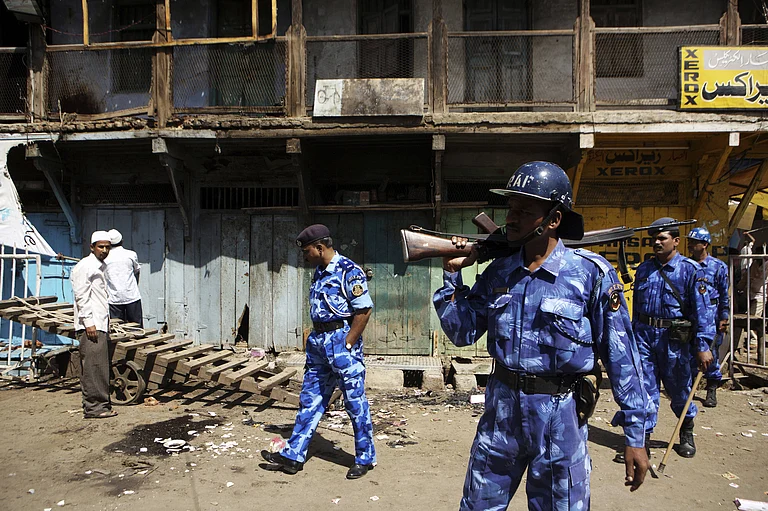
Ultimately, the judgment paints a picture of a man caught in a permanent purgatory. The court was careful to mention that while the "autorickshaw badge" is denied, other "avenues of employment are still open to him." But for Ansari, who called the refusal "arbitrary and discriminatory," the ruling serves as a stark reminder that in the eyes of the state, an acquittal is not always a clean slate. As Mumbai continues to move forward from the scars of 2008, the legal system remains anchored in a philosophy of "national security first," leaving those with a complicated past to find their way on a much narrower road.
Advertisement
However, the court’s observation that other "employment avenues" remain open suggests a narrow window for reintegration, one that stops short of any role involving public transit or sensitive infrastructure. In the eyes of the law, while Ansari may have served his time for other crimes and been cleared of the terror charges, the "larger interest of public safety" remains a permanent barrier on his road to a full restart.
Published At: