The author remembers Prof G.N. Saibaba, for whom he had fought till the end.
He writes how coming out of jail alive itself is a miracle, but medical complications continue.
Strict bail conditions have forced the author to find his place in a new city, and also restricted him to travel outside.
Me Coming Out Alive Is A Miracle: Hany Babu, Bhima-Koregaon Accused, On Life Behind Bars
More than five years after his arrest under the UAPA in the Bhima Koregaon case, former Delhi University professor Hany Babu was granted bail in December 2025. He shares his experience of prison life.

Summary
Mornings start very early in jail, but they never come with an air of freedom. It has only been three to four weeks since I came out; the bail arrived quite late for me. Five years is a long time compared to my co-accused. Throughout these five years, hope never left my sight, even when I contracted Covid. But there were indeed times when a little despair did creep in.
The sky behind bars keeps changing, and you look at it with longing. When I was at last released, the happiness was soured by watching two of my co-accused, Surendra and Ramesh, who walked with me till the gate had to stand there and wave at me while I kept walking out to freedom. It did not feel right to walk out of jail by myself. Three of my co-accused are still behind bars.
Given that I had fought for G.N. Saibaba till the end, my colleague who was wrongfully arrested and linked to Maoist camps, his fight only ended when he died after eighteen months, even after coming out of jail.
When I started taking up issues of caste and reservation, activism was the most natural thing to happen to me, whereas some can cautiously choose to stay out of it. Sometimes the brunt of this falls on the family the most. Those actions which have nothing to do with the family consume them. I still remember how my daughter got anxiety attacks even though she appeared strong to me. One conversation was when she asked me not to do anything in jail that was not allowed by my conscience. You are innocent, she said, and I then wondered, so are they, then why. It is a paradoxical situation that in activism you work for people, but when something goes downhill, it is your family that suffers the most, the very family you had been neglecting.

When I developed an eye infection while I had Covid after I was arrested in 2020, it became hazardous. This is just a fragment of what all happened; I would put it this way: it was only because of my wife and my lawyers that I came out alive. When we went in, an investigating officer said that not all would come out of this alive. So, fear is something that lingers by your side always. If you fall ill in prison, you can only rely on luck because you are at the mercy of the staff. They can be apathetic to your pain and illness.
Advertisement
Me coming out alive itself is a miracle, but the real cost of the medical negligence we suffered is yet to be fully gauged. Many of us are still doing medical rounds. I myself have an operation in a couple of months.
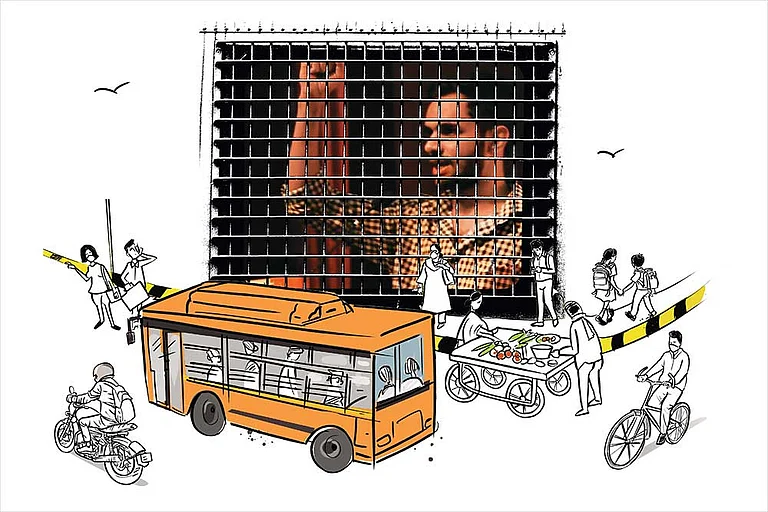
Half of the joy goes away. We have suffered enough, and then we are introduced to a bigger jail outside jail in finding a house. Finding a place in a new city itself becomes mayhem. The search is not merely for a roof but for a corner that will not treat you like an intruder. I managed to find a space, surprisingly, through acquaintances I had met in jail. Life builds bridges in the most unlikely places. I already have a home in Delhi, my mother lives in Kerala, and now I have a third establishment here. On paper it may appear like stability, but in reality, it feels like being scattered across maps. Because I have some financial security, I was able to relocate myself; otherwise I might have been on the streets like many others who walk out with nowhere to go.
Advertisement
The court says I must stay here, but no one tells you where to find your people in an unfamiliar city. A legal order cannot create belonging. Every staircase I climb, every landlord I speak to, reminds me that I arrive with a history no one wants to touch. There are the skewed eyes from neighbours, the polite distance, and the questions that are never asked directly. Ours was no ordinary agency investigating the case; it was a national agency, and that label follows you longer than any sentence.

I know people who deleted my number even before my arrest, right after the raid at my home. I do not blame them; fear is contagious. My mother received the greatest shock of all, and she has not been able to meet me till now. she is too old to travel. That helplessness hurts more than the years inside. Freedom is supposed to widen the world, yet mine feels smaller than the cell I left behind.I do not know when I will be able to teach again. I understand that this is one part of life that will suffer, yet I do not regret going to jail even a little. From afar it appears barbaric, and in many ways it is, but inside you also get time to reflect and experience life stripped to its essentials. From the other side of the wall, I had witnessed it in the case of Saibaba. I had protested, spoken, and written. But being in there myself was different. But I will not say that either inside or outside jail I have had the hardest suffering. It is like the caste system, no matter how low a rank you are at, there will always be someone below you; the same is true with suffering.
Advertisement
Violence erupted on January 1, 2018, during a Dalit commemoration of the Battle of Bhima Koregaon’s 200th anniversary, resulting in one death and multiple injuries from stone-pelting and arson. Tensions stemmed from caste hostilities, with the speakers at the Elgar Parishad event probed for incitement. Investigators named several activists in connection with the Elgar Parishad event. The celebration commemorates the 1818 battle, seen as a symbol of Dalit resistance. Key arrests included Sudhir Dhawale and Jyoti Jagtap, followed by activists such as Surendra Gadling, Shoma Sen, Mahesh Raut, Rona Wilson, Sudha Bharadwaj, Arun Ferreira, Vernon Gonsalves, Varavara Rao and Gautam Navlakha.
Published At: