The Supreme Court said dowry abolition is an urgent social and constitutional imperative, citing ineffective and misused laws.
It directed high courts to fast-track pending dowry death and cruelty cases under IPC Sections 304-B and 498-A.
The court asked Centre and states to reform education, strengthen enforcement, and boost public awareness to curb dowry.
Dowry Eradication an Urgent Constitutional Need: Supreme Court
Top court flags misuse and weak enforcement of dowry laws, orders reforms.

Summary
The Supreme Court stated on Monday that the abolition of dowries is an urgent constitutional and societal imperative, pointing out that current legislation suffers from "ineffectiveness" and "misuse" and that the wicked practice is still widespread.
A bench of Justices Sanjay Karol and N Kotiswar Singh issued several directives, emphasising that "concentrated effort" was required to address the issue. One of these directives asked the high courts to determine the number of pending cases about sections 304-B and 498-A of the IPC, from earliest to latest, to expedite their resolution.
Section 498-A of the former Indian Penal Code addresses the crime of a husband or his family members abusing a married woman, while Section 304-B deals with dowry death.
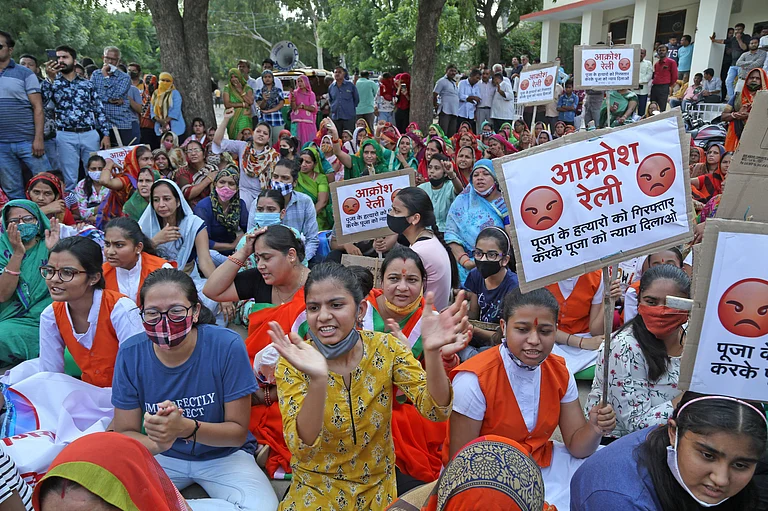
The bench, which was rendering its decision in a 24-year-old dowry death case, instructed the Centre and states to take into account any necessary modifications to educational curricula at all levels, upholding the constitutional stance that spouses are equal and are not subservient to one another.
According to the report, this case shows that dowries are not unique to Hindus; they are also present in other groups who practise various religions.
"While on the one hand, the law suffers from ineffectiveness and so, the malpractice of dowry remains rampant, on the other hand, the provisions of this Act (Dowry Prohibition Act) have also been used to ventilate ulterior motives along with Section 498-A, IPC," it said.
It further said, "This oscillation between ineffectiveness and misuse creates a judicial tension which needs urgent resolution".
The apex court's order came on appeals filed by the Uttar Pradesh government challenging the Allahabad High Court's verdict, which acquitted two persons, including a woman, in a 2001 dowry death case.
The top court allowed the appeals and restored their conviction in the case.
However, it refrained from incarcerating the woman convict, considering that she was 94 years old. The bench directed the man to surrender within four weeks to serve the life sentence awarded to him by the trial court.
It said that while in this case, the accused have finally been brought to book, there are many instances where it does not happen.
Advertisement
"Many, who openly seek and give dowries, go scot-free. It has been noted time and again, in various judicial pronouncements, that DPA (Dowry Prohibition Act), 1961 suffers from various difficulties in its implementation," it said.
Passing a slew of directions, the bench said it has to be ensured that the future generations are informed and made aware of the evil practice of dowry and the necessity to eschew it.
"As such, it is directed that states and even the Union government consider changes as are necessary to the educational curricula across levels, reinforcing the constitutional position that parties to a marriage are equal and one is not subservient to the other as is sought to be established by giving and taking of money and or articles at the time of marriage," it said.
According to the bench, the legislation allows governments to designate dowry prohibition officials.
The bench stated that it is important to make sure these officers are properly assigned and provided with the tools they need to perform the tasks assigned to them.
It stated that in order to ensure public awareness, local authorities should sufficiently distribute the contact information of these officers.
Advertisement
In order to properly understand the social and psychological ramifications that are frequently at the forefront of these instances, the top court recommended that police and judicial officers handling such situations receive recurrent training.
It claimed that this would also guarantee that officials will be sensitive to legitimate claims as opposed to those that are baseless and abuse the legal system.
"It is not lost on us that the instant case began in 2001 and could only be concluded 24 years later by way of this judgment. It is but obvious that there would be many such similar cases," it said.
"The high courts are requested to take stock of the situation, ascertain the number of cases pending dealing with section 304-B, 498-A from the earliest to the latest for expeditious disposal," the bench said.
The apex court asked the district administration, along with the district legal services authorities, to conduct workshops/awareness programmes at regular intervals by engaging and involving civil society groups and dedicated social activists to ensure change at the grassroots level.
Advertisement
Dealing with the appeals, the bench noted that a 20-year-old woman had died simply because her parents did not have the material means and resources to satisfy the wants or greed of her family by matrimony.
"A coloured television, a motorcycle and Rs 15,000 is all she was apparently worth," it noted.
The bench said the evil, unless eradicated, can never be contained, and what originally began as a voluntary gift-giving practice to the daughter upon marriage, for her own use and financial independence, with time, morphed into an "institutionalised practice" becoming an essential aspect of hypergamy.
"This practice of marrying 'higher up' traces its origins to caste and kinship, along with, to use a colloquial term, the 'baggage of the samaj' that comes with it," it said.
It said this case represents that dowry is not a feature only amongst Hindus, but it can also be found in other communities professing different faiths and religions.
Advertisement
"In Islam, dowry, stricto senso, is prohibited. What is prescribed is, in fact, the reverse. 'Mehr' is a compulsory gift that the groom is required to give to the bride at the time of marriage," it said.
The bench said, "The eradication of dowry is an urgent constitutional and social necessity".
It posted the matter after four weeks to ensure compliance.
Published At:
Tags