At least 37 people have reportedly been killed as anti-election protests escalate across Pakistan-occupied Kashmir
Pakistan has rejected negotiations with protesters, while denying reports of civilian deaths and blaming militants
India has criticised the PoK elections, while the UN has called for an independent investigation into the violence
Pakistan Refuses Talks As 37 Die In PoK Protest Crackdown
At least 37 people have reportedly been killed in Pakistan-occupied Kashmir as clashes between security forces and anti-election protesters intensify, with Islamabad denying civilian casualties and the UN calling for an independent investigation.

Summary
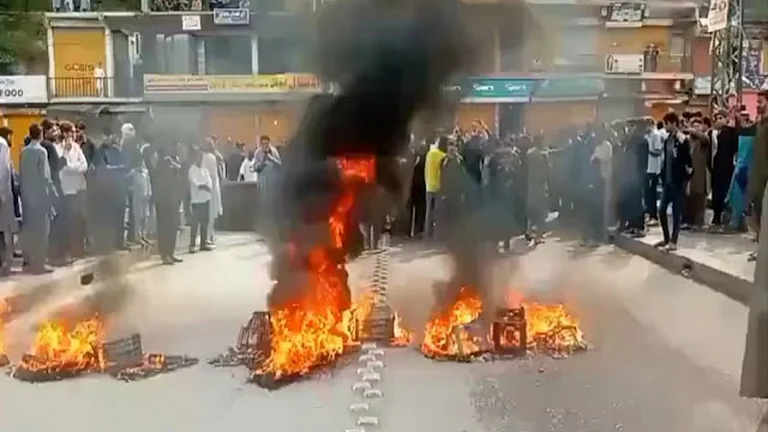
At least 37 people have reportedly been killed in Pakistan-occupied Kashmir (PoK) after security forces clashed with anti-election protesters during a week of escalating unrest, while Pakistan has denied civilian casualties and ruled out talks with demonstrators, according to a News18 report.
The violence intensified after the Joint Awami Action Committee (JAAC) launched a long march from Rawalakot to Muzaffarabad, with clashes spreading across Rawalakot and Mirpur. Despite the crackdown, the JAAC maintained that its demonstrations remained peaceful.
"People have continued to stand peacefully and unarmed. God willing, our peaceful struggle against oppression and injustice will continue," the organisation said.
Pakistan's Minister of State for Interior Talal Chaudhary rejected calls for negotiations, saying, "We will not talk to the protesters and law will take its course," as per the report.
Islamabad has also denied reports that civilians were killed, claiming members of the banned Tehrik-e-Taliban Pakistan (TTP) were present among the protesters.
Political Fallout
The unrest has fuelled political tensions in Pakistan after Defence Minister Khawaja Asif likened the protesters to India.
"I put the protesters of Azad Kashmir in the same category as India and consider them also as enemies like India," Asif said in a video circulating on social media.
The remarks drew criticism from opposition leaders, including Jamiat Ulema-e-Islam (F) chief Maulana Fazlur Rehman, who accused the government of allowing the situation to spiral into bloodshed and described the crackdown as "open terrorism".
India, UN React
India has dismissed the ongoing PoK legislative assembly elections as a "cosmetic electoral exercise", saying they were intended to legitimise Pakistan's "illegal occupation" of the territory.
MEA spokesperson Randhir Jaiswal said the protests reflected "Pakistan's decades-long systemic exploitation, denial of fundamental rights and administrative oppression" in the region, while urging the international community to hold Islamabad accountable for alleged human rights violations.
Advertisement
The UN High Commissioner for Human Rights, Volker Türk, has called for prompt, independent and impartial investigations into protest-related deaths and criticised Pakistan's decision to ban the JAAC under anti-terrorism laws, warning that the move raised serious concerns over freedoms of expression, peaceful assembly and association.

Why the Protests Began
The protests began last month over rising living costs, allegations of political discrimination and claims that Pakistan's establishment manipulates reserved seats in the PoK Legislative Assembly to influence the formation of governments.
The JAAC called for a boycott of the elections, arguing that the process lacked credibility. Polling for the first phase was held on Monday, with the ruling Pakistan Muslim League-Nawaz (PML-N) winning nine of the 13 seats contested and the Pakistan Peoples Party (PPP) taking the remaining four.
Independent assessments cited by local sources suggested voter turnout in the Mirpur division remained below 10%, far lower than the official figure of 45% announced by authorities. Protesters have also accused authorities of imposing communication blackouts and restricting access to parts of the region as the unrest continues.
Advertisement
This version keeps the context but trims about 20–25% of the text, removes repetition, and follows a cleaner inverted-pyramid structure while preserving all the important developments.
Published At:
Tags