At Davos, Carney spoke for nations that feel the ground shifting beneath their feet, for societies that understand that a world without rules is not a freer world, but a more brutal one
Carney reminded us that the first crack in authoritarian confidence often appears when someone refuses to whisper.
Our security and prosperity depend on trade routes, on stable regions, and on predictable rules.
Mark Carney And Nehru: When One Voice Breaks The Silence
Where Nehru confronted blocs, Carney confronts caprice and greed. Yet both respond to the same danger: that global order might be shaped by coercion rather than consent.

Summary
It is important to understand why the Canadian Prime Minister’s speech at Davos found such extraordinary traction across the world in the last few days. It was not merely because of what Mark Carney said, but because of what his words symbolised. In a hall often crowded with platitudes, technocratic optimism, and carefully hedged diplomacy, he spoke with unsettling clarity. He named a fear many nations harbour but few dare articulate that the world’s most powerful nation is growing comfortable with a lawless imagination of order, where might become right and norms are dismissed as inconveniences.
The hegemonic posture of US President Donald Trump has unsettled people across continents. From Europe to Latin America, from Africa to Asia, leaders and citizens alike sense the tremors of an international order being unmoored. Yet most have remained silent, or chosen euphemism over candour. Their reasons differ while some fear economic retaliation and some depend on military umbrellas. Others nurse the hope that a show of loyalty might earn them a small favour. The unfortunate reality is silence, in such times, appears pragmatic; prudence masquerades as wisdom.
In Carney, many found their own unspoken anxieties finally articulated as he did not speak only for Canada. He spoke for nations that feel the ground shifting beneath their feet, for societies that understand that a world without rules is not a freer world, but a more brutal one. One may not agree with every line of his argument, and that is beside the point. One may not be comfortable with his past politics or his extant one. What matters as of now is that he reminded the world that power must still be answerable to principle. The rules-based international order that emerged after the Second World War was not a utopian fantasy. It was born from devastation. It reflected a hard-earned understanding: when power operates without restraint, the result is not stability but catastrophe. Norms, treaties, and institutions were not designed to erase conflict; they were meant to contain it, to civilise it, to prevent it from consuming everything in its path. To dismiss this architecture as obsolete is to forget why it came into being and how shall the world move from here on.
Advertisement
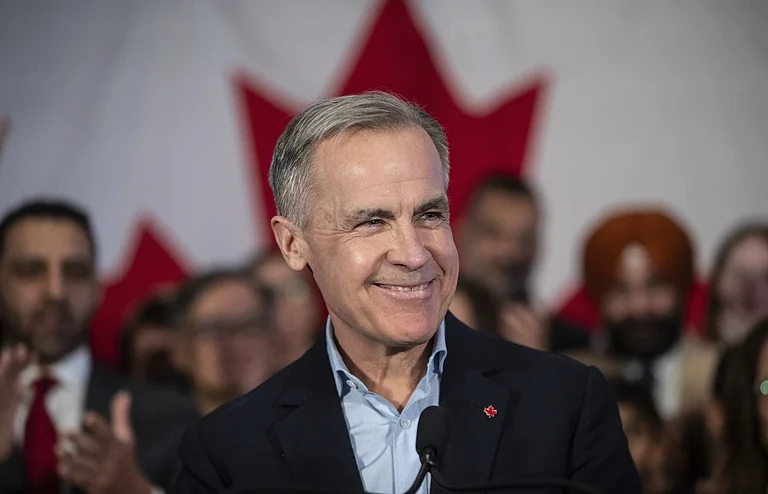
Carney’s speech mattered because it reintroduced moral vocabulary into a space accustomed to managerial language and he also spoke of responsibility, of interdependence, of the dangers of unilateralism. He reminded his audience that markets do not float in a vacuum; they are embedded in political and ethical ecosystems. When those ecosystems fracture, economic prosperity becomes fragile, uneven, and volatile. But beyond economics lay a deeper argument: the world cannot afford a return to the law of the jungle. A lawless international order does not liberate nations but traps them in a permanent state of anxiety. Smaller countries become hostages to the moods of larger ones and alliances turn transactional. Commitments lose meaning and diplomacy becomes theatre; and age-old treaties become disposable. Uncertainty replaces trust, and fear becomes a rational strategy. The tragedy is that many leaders know this. They understand that today’s strongman may become tomorrow’s liability and they also grasp that unpredictability is not power; it is peril. Yet they hesitate because the cost of dissent appears immediate and tangible. The cost of acquiescence feels abstract and deferred.
Advertisement
By speaking plainly, Carney demonstrated that it is still possible to address power without genuflection. He showed that respect does not require submission, and that disagreement need not be disguised as praise. In doing so, he reopened a space for collective courage. He reminded us that the first crack in authoritarian confidence often appears when someone refuses to whisper. There is a lesson here for democracies like ours, because India, too, inhabits this moment of flux. We are neither small enough to be invisible nor powerful enough to be immune. Our security and prosperity depend on trade routes, on stable regions, and on predictable rules. Historically, we have benefited from a world in which disputes however imperfectly are mediated by norms rather than brute force. A planet governed by impulses instead of institutions is not in our interest. Yet we appear to have lost the habit of calling a spade a spade, even when silence carries a cost.
Advertisement
Yet we often oscillate between rhetorical defiance and strategic silence. We celebrate multipolarity but hesitate to defend the very norms that make multipolarity viable. We speak of sovereignty while ignoring that sovereignty itself becomes fragile when rules dissolve and finally disappear. Carney’s intervention invites us to rethink this posture. It suggests that true strategic autonomy is not merely the freedom to choose sides, but the capacity to shape the grammar of global conduct. It lies in insisting that power be tempered by principle, that leadership be accountable to something beyond ego.
Carney’s speech can be read in conversation with Jawaharlal Nehru’s idea of non-alignment, though the historical contexts differ. What connects them is not policy detail but moral posture. Nehru’s conception of non-alignment was never a plea for isolation or ethical neutrality. It was a refusal to let the world be reduced to binaries imposed by the great powers. It asserted the right of newly free nations to exist without being absorbed into rival camps.
Advertisement
Carney’s intervention echoes this spirit. He was not proposing a third bloc, nor advocating withdrawal from alliances. He was asserting the right of nations to speak to power without fear, and to resist a world order dictated by the temperament of the strongest. In that sense, his speech embodies what non-alignment originally stood for; the courage to say that global politics cannot be reduced to obedience and defiance, loyalty and betrayal.
Non-alignment, in Nehru’s imagination, was a civilisational argument as it rested on the belief that peace is not merely the absence of war, but the presence of norms that make coexistence possible. It sought to humanise international relations, to inject into them an ethic drawn from histories scarred by empire and domination. The newly free nations did not wish to exchange one master for another; they wished to build a world in which no master was needed.
Carney’s speech draws from a similar anxiety, though from a different vantage point. The fear today is not of bipolar entrapment, but of unilateral arbitrariness. Where Nehru confronted blocs, Carney confronts caprice and greed. Yet both respond to the same danger: that global order might be shaped by coercion rather than consent. There is also a shared faith in restraint. Nehru believed that power, if unmoored from moral purpose, becomes self-destructive. He warned against the intoxication of strength and the arrogance of inevitability. Carney, too, cautioned against the illusion that rules weaken nations. He argued, in effect, that the real weakness lies in dismantling the very structures that prevent chaos.

The difference, of course, is historical location, while Nehru spoke as the representative of a young nation emerging from colonial rule. His non-alignment was an act of self-preservation as much as idealism. Carney speaks from within the developed world, from a country embedded in Western institutions. That he nevertheless chose to challenge hegemonic behaviour makes the gesture more striking. It suggests that the ethos of non-alignment i.e. independence of mind, refusal of intimidation, fidelity to norms need not belong only to the post-colonial world. In this sense, Carney’s speech can be seen as a contemporary reincarnation of a Nehruvian impulse; the insistence that the world must remain plural in voice and vision; that power must encounter principle and that silence in the face of domination is itself a form of alignment. What links them, finally, is courage; the courage to stand outside the gravitational pull of fear, and to insist that history is not the exclusive property of the powerful, nor the future a gift to be dictated by the loudest voice.
(Views expressed are personal)
The writer is a Rajya Sabha MP
Published At: