The author's piece is ruminates on love, memory and migration.
The author's search for home is more about belonging through care and shared history than it is about less about a physical place.
Outlook Anniversary Issue: Home ...A Conversation
A meditation on love, memory and migration, where the search for home becomes less about a place and more about building belonging through care and shared histories.

Summary
Home
is a difficult idea
For some it has form—a structure, a place
For others, it is people—family, friends, a lover
For some it is the act of arriving
For others, it is a destination within
For others yet, home is found in leaving.
Dearest K,
You’re often in my thoughts.
I keep returning to those last lines from your poem
For others yet, home is found in leaving.
Now that you’ve left Shillong, I wonder if those words echo differently for you.
Do they bring clarity, or are you still trying to make sense of what leaving means?
As for me, I’m still trying to grasp what home truly is
a place where one feels loved and cared for.
Lately, my mind drifts to Laitlyngkot.
I don’t know if returning there will restore my memories or rekindle that sense of belonging,
but I do find myself wanting to build a home of my own there —a physical one this time.
I imagine tending to a small kitchen garden, an orchard,
and perhaps a creative space tucked away in the backyard.
Today, I went to buy pork from Bahheh and thought of you.
At a pork shop—yes, that’s where it happened.
That’s where we so often spoke about Laitlyngkot and my butcher cousins,
about where they source their pigs,
how dohsnam (locally prepared blood sausage) has that distinct taste without the funky smell,
how the lean meat balances the fat,
which cuts are best for dohsniang neiiong (pork cooked in a black sesame-based curry) and which for syrwa (stew prepared with meat and local seasonal vegetables)
Karen:
I woke up this morning, thinking about what mummy’s last thoughts must have been.
Maybe home is found in leaving, after all.
I’m going to have doh nei-iong tonight
Though it won’t be pork from Laitlyngkot
it will be home on my tongue.
Advertisement
What if we constantly create and re-create home,
with words, with our memories, our thoughts,
our hands and feet, our nostrils and our tongues.
Because June, I swear, the air here smells like home,
and the water tastes like home.
I remember walking with you in Rynjah.
You say I’ve left… but I’m not so sure.
June:
I hope the sesame is as earthy as the ones at home.
Sona and I went to visit your dad yesterday,
He’s doing fine and he has been keeping himself busy by dropping off and picking up Nunu and Carlton from school.
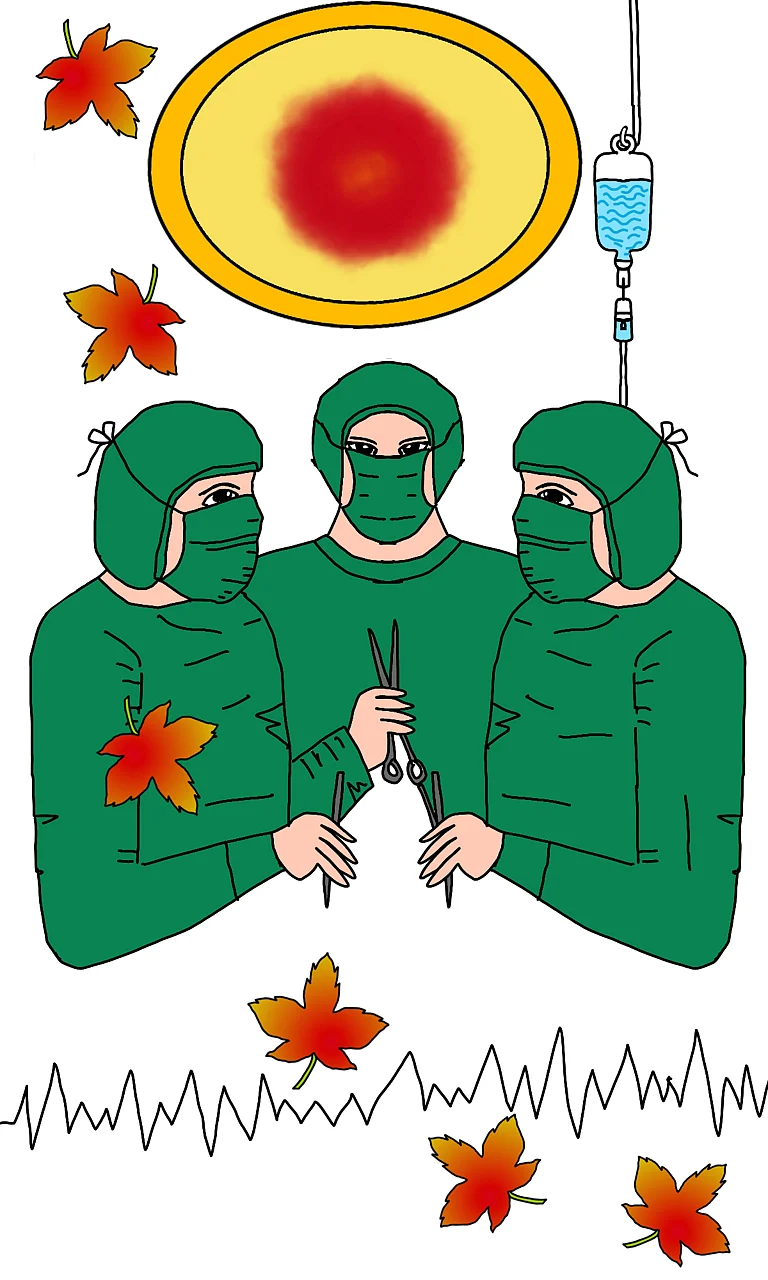
We went up to your room,
It feels and smells different.
Your clothes neatly packed, sitting quietly in your cupboard as if waiting for you
It felt strange not seeing you as I walked in the house
Advertisement
Karen:
I wonder, if papa packed my words too…
New Place
I’m tired of being without words
so I will bleed them from
my
finger tips
to s p e l l out this
ravaging hunger
for brown spots on a
white wall
and language that
escapes me
on this slow, redemptive
crawl
if words forget desire
my finger tips will
remember…

I’ve been upset today, with myself mostly.
For failing to remember…
For failing to make space
home is making space
not taking it
this is a hard lesson on home
I am learning from you
Dearest June,
I kept thinking of you as I went about my day,
and our conversation about how colonial writers
described the first Khasi women
they encountered—their irreverent red mouths,
Advertisement
howling with laughter.
Western politeness is tiring, and I think it is plastic,
like the cards and food,
designed like most other things here, to isolate.
How I long for the frank rudeness of home,
of our Khasi kongs and their sharp tongues
if we take too long to order in jadoh stalls.
I miss the close (dis)comforts of community.
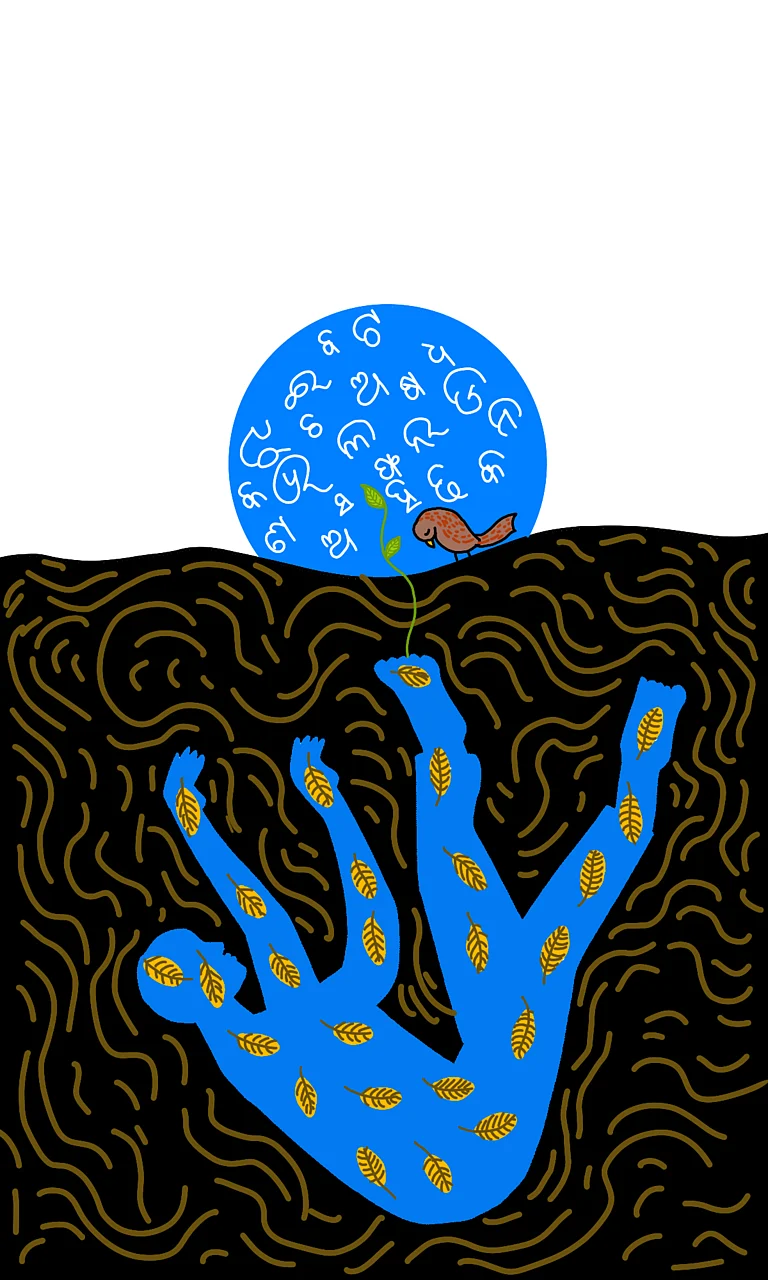
I can only imagine the landscape you’re walking through now.
Sometimes our honesty, our sharp laughter, our crass, unfiltered truths
make me wonder how such conversations would land in the West.
They might find them alien, too raw, too close to the bone.
I hope you find someone there
who laughs with the same abandon,
who speaks plainly yet tenderly,
who folds honesty into modesty the way we were taught to do.
Advertisement
I often wonder if my parents sent me to Shillong
to smooth the edges of this crassness,
to polish our tongues,
to help us speak the language I am writing in now.
I wonder if these questions
of language, of refinement, of belonging
sit quietly in the minds of all who leave home behind.
Are these the secret longings of every migrant?
Not just a search for opportunity,
but a search for a home gentle enough to hold them,
and a voice soft enough to be heard.
June:
Today, home felt slightly unfamiliar
as if its walls had shifted in the night,
as if the place that once held me gently
now asked me to want less even as I tried to do more.
I left my feelings somewhere near the doorway,
and walked in with only the body,
moving through its routines as though nothing had changed.
Karen:
You know how I barely ever remember dreams,
and how the criss-crossings of
dreams, imagination and memory
have always seemed to me irresistible;
a labyrinthine maze- unsolvable
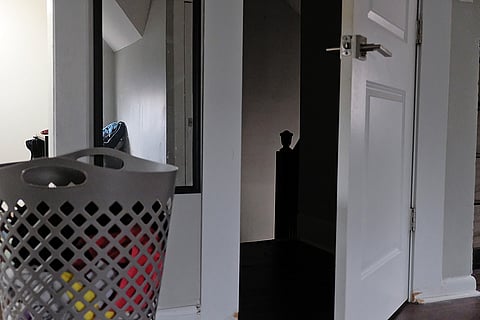
My doorway came to me in a dream,
Or was it a memory…
June:
| Photo: Courtesy of the authors
Dear K,

| Photo: Courtesy of the authors
November slipped past quietly,
and the cherry blossoms barely graced us this year.
You would have missed them,
the soft blush that used to greet you along the road
from Windermere to NEHU,
now holding only the colours you left behind.
We kept waiting,
but it felt as though the blossoms bore a quiet resentment for Shillong
arriving not out of desire,
but out of obligation.
As if even flowers can grow weary
of being celebrated too loudly, too publicly.
Perhaps they long for a gentler season to bloom in stillness, unnoticed, unburdened.
Maybe this is nature’s way of asking us to pause
to listen more carefully
to its hesitations,
and to our own.
Dear June,
| Photo: Courtesy of the authors
I’m smiling this morning, reading what you have written.
Between the reticent blossoms I have missed,
and the spectaculars- which I have not
I’m filled with an ache that is difficult to place…
I’d almost forgotten that it is Christmas season
Here, nothing slows down and speeds up
at the same time for festivities
It is easy to forget…
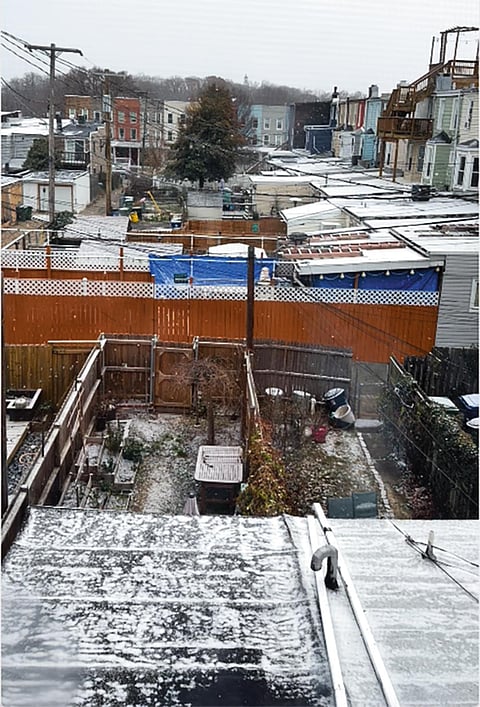
A gentle dusting of snow covers everything
in white, and the colourful houses of Baltimore
have become ornaments
I remember the ease with which
you follow the light.
Here, it dances differently, I wonder at the tune
you would’ve created.
My niece turned 16 today,
I put up a quiet photo of her on my status
-the only celebration she will tolerate
Like flowers, I suppose she too grows weary
of being celebrated too loudly, too publicly.
Dear K,
I’ve been thinking about how differently we understand the idea of home. The way you carry it, the way you leave it, the way you return to it. It’s never quite how I do. And yet, despite these differences, I keep finding myself leaning into our friendship as my own sense of home.
I’ve learned that home isn’t always made of walls and doors. Sometimes it’s far more fragile, and far more enduring. It’s built slowly, out of remembered voices, shared silences, and the quiet comfort of being held without having to explain yourself. I did not find this kind of home in geography. I found it in friendships, and most clearly, in you.
There were moments when places failed me. Houses shifted, rooms emptied, familiar roads stopped feeling kind. What remained steady were people who knew my rhythms, how I disappear when things feel too heavy, how laughter returns after grief, how I speak most honestly when I’m unsure. You have known these things about me without needing to name them. In that knowing, I found a ground that did not move even when everything else did.
Friendship offers a rare kind of belonging. It is chosen, not inherited. It asks only for presence, not permanence, for listening, not fixing. With you, home has existed in long conversations that stretch into the night, in shared meals without reason, in glances that carry entire histories. These moments feel like rooms I can return to, even when we are far apart.
There is also a safety in our friendship, a permission to arrive unfinished. With you, I don’t have to perform wholeness. I can speak in half-formed sentences, carry my doubts openly, rest in silence without fear of being misunderstood. That acceptance becomes a shelter—not built from certainty, but from trust. It’s where I feel most myself, and therefore, most at home.
Distance has taught me something too. Our friendship survives time zones and seasons. Even after long stretches of absence, we return to each other as if no time has passed. In that continuity, I recognise a home that travels with me—shifting, adapting, but always familiar.
Finding home in friendships has changed the way I understand belonging. Home is not always something we return to. Sometimes, it is something that walks beside us. It lives in people who see us clearly and stay, who remind us who we are when we forget. And in your presence, I realise that home is not where I am from, but where I am known.
Karen:

| Photo: Courtesy of the authors
When I say I love you
I don’t mean I will bring you
gifts of joy or comfort or calm
I don’t mean I will want you
and want to keep you
I don’t mean I will stand
heart in hand, hand on heart
When I say I love you
I mean I will meet you
where you are, and stand with you
I mean I will witness you becoming
even as we parse
silence and despair for meaning.
This article appeared as ‘Home ...A Conversation” in Outlook’s 30th anniversary double issue ‘ Party is Elsewhere ’ dated January 21st, 2025, which explores the subject of imagined spaces as tools of resistance and politics.
Donskobar Junisha Khongwir is an educator and visual artist. She graduated from AJK MCRC, Jamia Millia Islamia University, and is currently an Assistant Professor in the Department of Mass Media at St. Anthony’s College, Shillong. In addition to teaching, she serves as curator at the Northeast India AV Archive, where she focuses on the preservation and dissemination of archival materials, ensuring that the region’s rich audiovisual history is accessible to scholars, artists, and local communities
Karen Lalrindiki Donoghue teaches at the Department of Journalism and Mass Communication at North-Eastern Hill University, Shillong. She is currently a Fulbright-Nehru postdoctoral fellow at Cornell University, focusing on the community history of the Mizo diaspora in the United States with an emphasis on transnational identity and solidarity. She is a member of the executive committee of the Oral History Association of India
Published At: