Ratha Yatra or the Jagannath Rath Yatra is one of the most popular Hindu festivities in honour of Lord Jagannath, a form of Lord Vishnu. Millions of devotees assemble at the Jagannath Temple, Puri, every year to watch the great procession of Lord Jagannath, his elder brother Lord Balabhadra and sister Goddess Subhadra going out of the temple on brilliantly painted chariots.
Ratha Yatra 2026: Date, Timings, Traditions, Rituals And Spiritual Significance
Discover Ratha Yatra 2026 date, timings, rituals, traditions, chariot details, spiritual significance, and Bahuda Yatra. Know everything about Jagannath Rath Yatra.

The event symbolises the divine travel of the Lord from his temple to the Gundicha Temple, believed to be the abode of his aunt. It signifies the arrival of God among his disciples. Ratha Yatra is not just a religious occasion; it is a celebration of devotion, equality and spiritual connection.
Ratha Yatra 2026 Date and Time:
Ratha Yatra is performed on the second day (Dwitiya Tithi) of Shukla Paksha in the month of Ashadha as per the Hindu lunar calendar.
When is Ratha Yatra 2026? Ratha Yatra is observed on Thursday, 16 July 2026.
The times and ceremonies are historically based on the lunar calendar. The magnificent chariot pulling starts normally at 07:00 in the morning and goes on throughout the day.
The main rituals are the following:
Morning puja and Mangala Aarti are within the temple.
Pahandi ceremony, when the gods are taken from the temple to their chariots.
The Chhera Pahara rite, when the King of Puri wipes the chariot platforms as a gesture of humility.
Chariot-pulling event, where worshippers pull the holy chariots towards Gundicha Temple.
(The exact timings for the muhurta will be announced via the official temple announcements.)
The Three Godly Chariots:
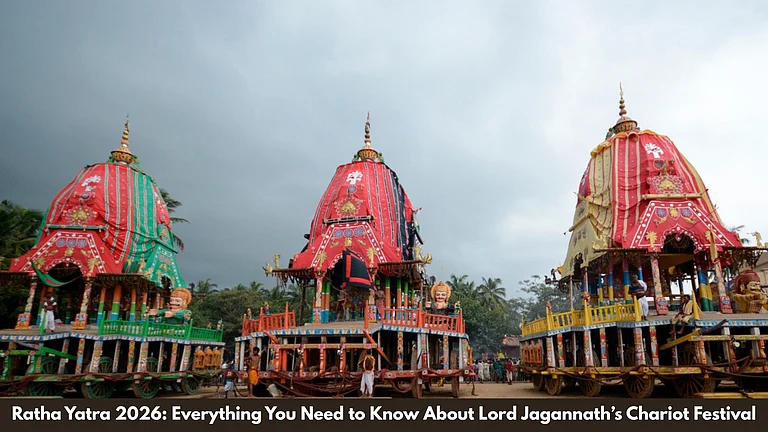
The main attraction of Ratha Yatra is the procession of three large wooden chariots, each bearing a single deity.
Nandighosa - Lord Jagannath's Chariot:
The chariot of Lord Jagannath is known as Nandighosa. It is the largest of the three chariots and symbolises divine bliss, prosperity, and spiritual blessings.
Taladhwaja - The Chariot of Lord Balabhadra:
The chariot of Lord Balabhadra is an emblem of strength, courage and protection. It means stability and righteousness.
Darpadalana - The Chariot of Goddess Subhadra:
The chariot of Goddess Subhadra symbolises peace, compassion and the nurturing aspect of the feminine.
These chariots are created afresh every year in the customary manner with holy wood and special specifications.
Important Rituals of Ratha Yatra:
1. Snana Yatra:
Before the main Ratha Yatra, the deities participate in Snana Yatra, a ceremonial bathing festival. After this ritual, the deities are believed to fall ill and remain away from public view for some time before appearing again for the grand journey.
Advertisement
2. Pahandi Ceremony:
One of the most emotional moments of the festival is Pahandi, where the idols of Lord Jagannath, Balabhadra, and Subhadra are carried in a rhythmic procession from the temple to their respective chariots.
Devotees chant prayers and sing devotional songs as the divine siblings begin their journey.
3. Chhera Pahara:
The Gajapati King of Puri performs the Chhera Pahara ritual. The king cleans the chariot area with a golden broom, symbolising that everyone is equal before God, regardless of wealth or social position.
This ritual carries the message of humility and devotion.
4. Bahuda Yatra (Return Journey):
The deities reside at Gundicha Temple for a few days and then they are taken back to Jagannath Temple in a reverse journey called Bahuda Yatra. This is the end of the sacred journey.
Spiritual Meaning of Ratha Yatra:
Ratha Yatra is much more than a magnificent festival. It has deep spiritual importance.
God Visits His Devotees:
The most unusual thing about Ratha Yatra is that the Lord comes out of the temple and comes into the streets. It means that the heavenly gifts are not limited to a holy place but are available to all.
Figure of Equality:
All kinds of people pull the chariots. The event is a reflection of oneness, dedication and the idea that everyone is equal in the sight of God.
Way of the Soul:
The chariot is typically taken as a metaphor for the human body, and the voyage as a metaphor for the soul's progress toward spiritual awakening. To draw the chariot means to remove all that is negative, ego and all that comes in the way of dedication.
Advertisement
Relationship with Lord Krishna:
For many devotees, Ratha Yatra symbolises Lord Krishna’s trip and His loving bond with His devotees. It recalls to individuals the divine love, compassion and the everlasting relationship between God and humanity.
Outside Puri festivities:
The most famous of them is the Ratha Yatra at Puri, but this event is celebrated all throughout India and in many other nations around the world. Devotees take out processions and hold devotional singing, cultural activities and community gatherings to mark the voyage of Lord Jagannath.
Ratha Yatra 2026 will bring together millions of devotees for another festival of devotion, tradition and spiritual force. The huge chariots of Lord Jagannath rolling through the streets are a powerful statement that the divine comes forth to humanity with love and benefits.
Ratha Yatra is not just a celebration; it is a spiritual trip that reminds believers of humility, faith, unity and the eternal connection between the human soul and the almighty.
Advertisement
Published At: