T
Politics, Tamil Cinema Eshtyle
In the last 10 years, the overt cinema-politics linkage appears to have been severed. But actually, Tamil cinema has merely learnt to craft politics in a different fashion

But the truth is that Tamil cinema has merely learnt to craftpolitics in a different fashion. How such politics is perceived andreceived has depended on the location of the audience in the caste-class,rural-urban axes.
W
atching Kaadhal (Love) early this year in Chennai, a low-budget story ofteenage love that surprised the box office, I initially viewed it as thesame old story of heterosexual love told in a refreshingly differentmanner. Its recreation of Madurai's small-town ambience and steering clearof stereotypical approach to conflict and conflict-resolution seemedappealing. But a more sociologically nuanced reading underlined a danger. An aspiring filmmaker friend who watched Kaadhal in a Madurai cinema talkedof how Thevars--the dominant 'backward caste' of the southern districts--inthe hall shouted aloud: 'Fuckers, this will be your fate if you think youcan get our girl.' Dalits watching the movie in the southern districts wereintimidated both by the depiction of the hero and by the participativeenthusiasm of the Thevars among the audience.
Kaadhal does not explicitlystate the caste background of either the boy (Murugan, a two-wheelermechanic) or the girl (Iswarya, a class X student). However, it is made amply clear that director Balaji Sakthivel, a Thevar, is 'authentically'portraying a Thevar subculture in representing Iswarya and her family. Allwe know of Murugan is that he lives in a dirty slum--the door of his housepainted an Ambedkarite blue--with his mother.
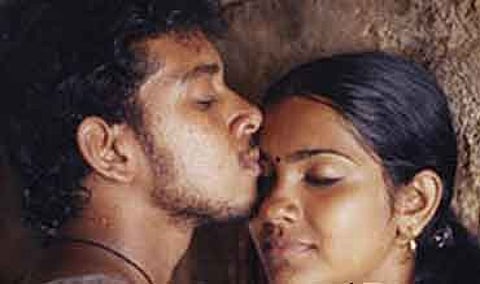
When Iswarya elopes with Murugan to Chennai, the director creates cleverplot devices to ensure that the couple is not shown sleeping together inthe three nights they spend in Chennai. The couple spends the first nightin the city by watching a late show of a film and riding a bus all nightfor want of a place to rest. Sex is not possible. The next day, Iswarya hasher period and Murugan buys her sanitary pads. The impossibility of sex isreinforced. The third day they get married, but Iswarya's relativesseparate them and almost beat the life out of Murugan. No sex again.
Advertisement
Thedirector conveys to the audience that the Thevar girl's virginity isintact. Interestingly, such a portrayal comes at a time whenSelvaraghavan's blockbusters--Thulluvado Ilamai (The Spring of Youth) and 7GRainbow Colony--have shown the adolescent female lead sleeping with the herobut not being keen on marriage.
Sakthivel also gives us ample scope to decipher Murugan's caste status. Toa question from Iswarya's uncle about what caste he belongs to, Muruganmerely says: 'The caste of humanity.' When the uncle claims to belong tothe caste of lions and insists on knowing Murugan's caste, the latter issilent. Later, when being mauled by the ostensibly Thevar relatives ofIswarya, he is called a 'low-caste dog'. As the film ends, Iswarya, now anunhappily wedded mother pillion-riding her same-caste husband, spotsMurugan as a mad man at a traffic signal. This is where some young Thevarsin the audience shout in Madurai's cinemas: 'Keep off our women. '
In adecade that witnessed the entrenchment of the fair-skinned north-Indianheroine (Khushboo, Naghma, Simran, Jyotika) as the ideal accouterment forthe dark Dravidian hero, Kaadhal pitted a dark Tamil woman (Sandhya)against a believable, vulnerable man (Bharath). But caste overrode theirTamilness.
Advertisement
Kaadhal and its success offer several pointers to how Tamil cinema hasrenegotiated its relationship with politics. In the early 1990s, a spate offilms sported caste names such as Chinna Gounder, Thevar Magan, ThevarVeettu Ponnu and Kunguma Pottu Gounder, and several protagonists playedtraditional panchayat chiefs strutting their caste identities in arural-feudal setting. These films glorified caste and became vehicles ofassertion of pride of the middle castes. Cinema at this juncture reflectedthe developments in the political and social realms.
While the southerndistricts witnessed bloody clashes between dalits and Hindus, castes suchas Thevars, Vanniars, Naickers and Nadars were asserting themselves in thepublic sphere. Cinema cashed in. The song Potri padadi penne/ Thevar-kaladimanne (Praise the land touched by Thevar's feet) in Thevar Magan, whicheulogised Thevars, triggered caste clashes even in college hostels.
W
hile in the heydays of Dravidian ideology--from Annadurai toMGR--cinema wasused as a tool of politics, in the 1990s politics became a tool for cinema.The 2001 assembly election saw the emergence of several parties affiliatedto specific castes and the DMK trucking with them. After the DMK alliancewas routed, these caste-based parties wound up. The strident use of castenames in film titles and for protagonists also waned. However, casteidentity has come to be stated through cultural markers, dialect, food andlocation. Advertisement
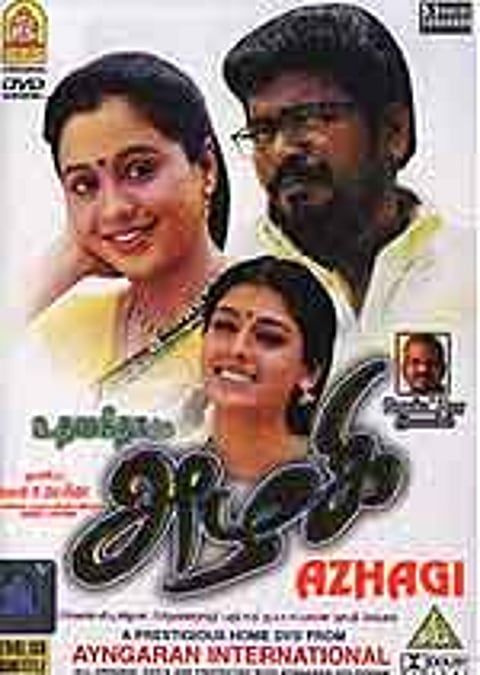
In the last five years, marginal castes hitherto invisible inTamil cinema, such as Vanniyars, have found a space via filmmakers likeThangar Bachan (Azhagi, Solla Maranda Kathai and Thendral). Their risecoincides with the coming of age of the Vanniyar-based Pattaali MakkalKatchi led by S. Ramadoss. Like Kaadhal, Bachan's films do not spell outbut imply the caste ethos.
P
arallel to such 'regional', caste-oriented aspirations, Mani Rathnamemerged as someone who took on 'national' issues. While the Dravidiancinema scripted by DMK stalwarts like C.N. Annadurai (Velakkari 1949) andM. Karunanidhi (Parasakthi 1952) had engaged with local issues ofnon-Brahmin assertion, language, and self-respect, a tradition thatcontinued up to MGR's oeuvre, Mani Rathnam, after initially dabbling indramas and love stories, sought to herald the arrival of the Tamil as anational citizen. This coincided with the emergence of the DMK and AIADMKas national players in alliance governments. 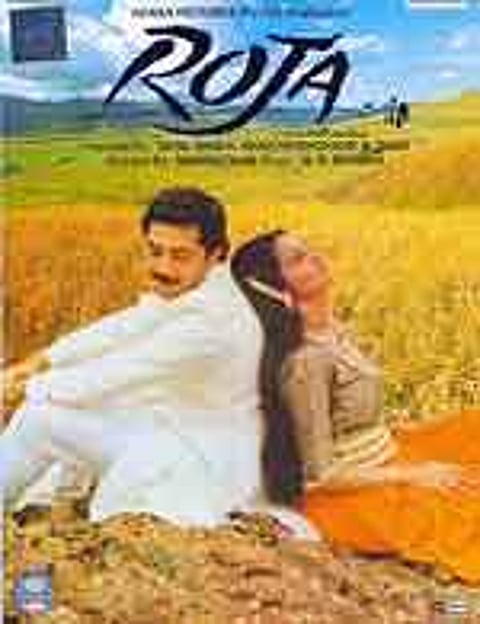
Roja (1992) with itsanti-Muslim bias was attuned to Hindutva-style cultural nationalism in theyear of the Babri Masjid demolition. After making Bombay (1994), he evenagreed to cuts demanded by Balasaheb Thackeray. The film offered a romanticrecipe for communal harmony and endorsed Thackeray's view of the Muslimvictim as accused. Rathnam's films, running only in 'A' centres in TamilNadu, had style and technical wizardry but were backed by little substance. Hisapparentlyderacinated urban protagonists speak in murmurs in dim, back-lit rooms. In Kannathil Muthammittal, flooded by picture-postcard images, he gives theshort shrift to both the Eelam and adoption issues. Around the same time,Bala, a fresh directorial voice, made Nanda which captured the sameRameswaram with an imagination that eluded Kannathil.
Advertisement
The contrast is most telling between Sakthivel's Kaadhal and Rathnam'sAlaypayudhe (remade as Saathiya in Hindi).While Kaadhal captures the realstruggles that a couple faces in a city, Alaypayudhe's couple moves into anunfinished building decked with Fab India furnishings. Rathnam may be slickbut offers no progressive relief: his heroines bear the brunt of burdensomeelements of tradition. Till marriage they are child-like, sing, dance andfrolic. After marriage and loss of innocence, they become obsessed withtheir thali (mangalsutra).
T
he past decade also spelled the death of a few genres that flourished inthe 1970s and 1980s: the rural-background film (of Bharathiraja, S.P.Muthuraman, Kasthuri Raja), the social melodrama (of Visu, V. Sekhar), andthe relationships dramas of K. Balachander. The emergence of Sun TV as themost powerful medium in Tamil society since 1995 led to television weaningaway most of the women audience from cinema halls. Every day from 7.30 p.m.to 10.00 p.m. various kinds of soaps keep most Tamil households hooked.Filmmakers like Balachander have in fact switched to directing andproducing serials. Cinema thus came to be burdened with the task ofattracting a predominantly young, male audience not drawn to TV serials. Itwas around this time that caste appeal came to be made via cinema to onesegment, and depoliticised entertainment was lapped up by others.
The high point of such entertainment has been the masala formula masteredby Vijay, the highest paid Tamil actor who has churned out at least threehits annually in the last five years. Distributors call him 'collectionking'. With minimal acting abilities, Vijay, shorn of any casteaffiliation, does the same fight-love-dance-comedy routine in film afterfilm and ensures that he is watched. This kind of cinema passes for acelebration of 'youthfulness', but in fact represents the political apathyof the younger generation.
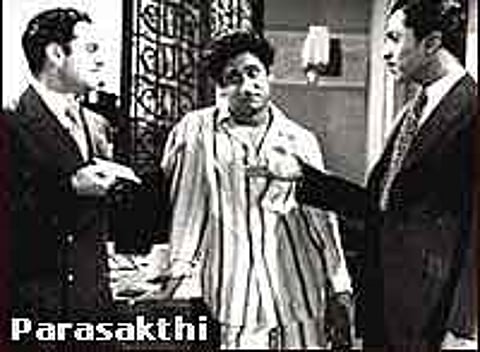
The Vijay formula films also indicate thatfollowing successive Dravidian party regimes and the prospering of theupper strata of non-Brahmins, the Tamils can forget about waging politicalstruggles and simply sit back and enjoy. The angst of Gunasekaran-SivajiGanesan's character-in the DMK vehicle Parasakthi has no place today. Theangry, rebellious, anti-establishment voices of the seventies and earlyeighties have become the establishment. The youth, contained and contenteddespite high unemployment levels, seem to meekly accept Vijay's message of'enjoylife'.
Tamil cinema remains an embarrassment confined to Tamil Nadu.
Published At:
Tags