Not A Hero marks Rima Das' third film at the Berlinale.
Bhuman Bhargav Das, who also featured in Das' earlier film, Tora's Husband, plays the spirited lead.
Not A Hero premiered in the Generation Kplus section.
Not A Hero Review | Rima Das’ Charming Film Maps A Child's Shifting Perspective
Berlinale 2026 | Das returns to the festival with a graceful, glowing film on all the beauty slipping out of grasp.

Summary
Rima Das weaves exquisite tapestries of everyday moments in the guise of cinema. Her winning, luminous latest film, Not A Hero, feels scaled up but has the heart, fragility, melancholy and hope of her best work. Premiering in the Berlin Film Festival’s Generation Kplus section, the film is quintessential Das, amplifying no plot but adhering to the flitting moment. She’s not interested in glazing a scene with a certain, prefixed agenda but listens to what it’s clamouring to reveal and withhold. In this, she’s one of our most gifted filmmakers, richly receptive to life’s beauty, generosities and hard truths alike. Not A Hero frames shooting the breeze as its lively, permeable core. But it opens with a shock. Raised in Guwahati, the eleven-year-old Mivan (Bhuman Bhargav Das) is tossed back by his father to his ancestral village for a couple of months. There’s some anxiety over a loan, but his mother is against the plan. Why punish them for their failings? The insistence of the father wins. Mivan is sent to live in the village with his aunt, Pahi (Sukanya Boruah).
However, frayed equation between Mivan’s father and Pahi spills into the aunt-nephew dynamic too. The two keep out of each other’s way. She values her independence and finds the situation wholly unideal. Though Das unfortunately doesn’t linger too long on the duo, Boruah and Bhargav Das deftly pull off the sparring, the grudging and ambush of repressed warmth. It doesn’t take too long for the stark change in setting and circumstances to dawn on the urbane, tech-savvy, precocious Mivan. Older, unclean, ragged facilities demand that he adapts and lowers expectations. At least in the beginning, Mivan hasn’t quite registered that this would be his life not for a few days but two entire months. There’s denial and escapism. He looks at the village with lazy curiosity and boredom, plugging in his headphones to keep up stimulation. Intrigue and jumpy, frantic energy pale, superseded by pure irritation and a surge of homesickness.
Advertisement
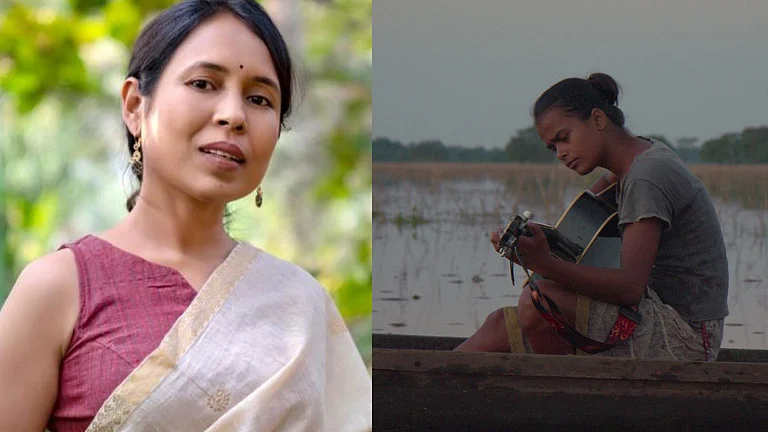
Bhargav Das, sparkling and cheeky, effortlessly moves from the waning to ultimate acceptance of the place as another home. Mivan, smart and confident, doesn’t shy from introducing himself at school, but coming on their wavelength calls for big shifts. He wants pasta, refuses rice and is startled when his new school friend, Rio (Mrinmoy Das), walks barefoot, tucking shoes in his bag. Rio assures him his feet are harder than shoes. What Mivan stares at is how to take this sojourn with delight and gratitude. His sleek English eloquence makes him a cut above his classmates, but his fumbling in Assamese is also as humbling. Slowly, friendship blooms among classmates. Das takes her time, as Mivan strikes a bond with Rio’s family cow, reconnecting with the free, unbound pleasure and vigour nature endows. Pallab Talukdar’s infectious music (a standout earworm being Baby, Baby) perfectly tunes into drifts of growing friendship, the sublimity of being in the vast open. Das displays all the beauty and lightness of walking around if you can reset and look afresh.
Advertisement

Still Aditya Varma
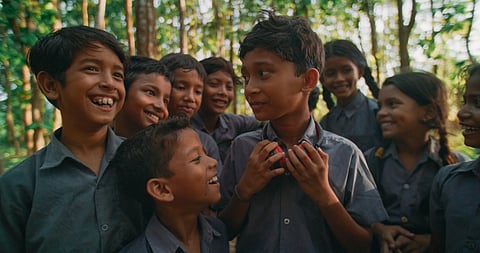
Aditya Varma’s camera follows Mivan with the comfort, trust as well misgivings of a friend. Das usually shoots her own films. Here, she has palpably struck such a wonderful kinship with his lensing—the two beautifully blend. Even as her film treads a familiar route, Das roots it in endearing specificity. Yes, there are the usual pegs marking how Mivan’s relationship to the village turns. You can predict the gradual warming up to the way of life, reconciliations, teary departures, anchorage in the earth missing in the city which was initially chafing and something he’d look right past. Das is no stranger to the faces she puts on screen, their experiences and casual sense of being. There’s such tenderness and purity in her way of seeing the world you want to reach out and protect her characters from life’s inevitable harshness. See the love the kids lavish on a jackfruit tree. Not A Hero is strewn with small, lovely moments radiating simple acts of kindness, like casually giving away a fancy pen to a classmate only to later discover how much a gift can save someone.
Advertisement
Still Aditya Varma
Yes, there’s bullying at school, classmates being strong-armed by a senior. However, Das chooses empathy and mellowness. Her screenplay subtly loops in how power and brute force arranges itself, why a violent antidote can also be profoundly unsettling. There’s a chilling, upsetting moment when Mivan realises it that doubles as an elemental leg in his coming of age. Children can also show adults greater courage to rekindle their own lost recesses. Das sensitively inserts such pivotal lessons within the soft fabric. Latter sections with a threat and conflict do come off as too fabricated as if some dramatic buttressing were needed to lend the narrative heft. This weakens the film but doesn’t take away from Das’ exalting perceptiveness to moments and moods. Not A Hero might not set too lofty ambitions but emerges as one of the most grounded, expansive pieces of cinema in a while. In its lending its young protagonist agency and wisdom to step out of familiarity, engage more fundamentally and absorb the earth’s blessings, it feels priceless.
Advertisement
Published At: