Independent publishers in India prioritise editorial conviction over market-driven celebrity and scale.
Small presses play a critical role in sustaining regional languages, marginal histories, and political writing.
Despite distribution, funding, and visibility challenges, indie publishing survives through intent, innovation, and long-term commitment.
Indie Publishing In India: Pushing the Margins
As the mainstream chases scale and celebrity, independent publishers continue the slower, harder work of keeping diverse voices in print

Summary
Independent publishing in India has always been more than a business model — it is a stance, a cultural intervention — one that insists that books matter even when the market believes otherwise. As rapid-fire self-publishing platforms reshape the landscape, small presses continue to build spaces for languages, movements, communities, and ideas that might otherwise go unseen. From multilingual children’s literature to experimental artists’ books, and from Dalit memoirs to Naga poetry, small presses have worked to bring to light the stories that mainstream publishing often overlooks. Today, new threats - from algorithms to shrinking bookstore shelves - coexist with new opportunities like POD, digital sales, and direct-to-reader engagement. What, in this scenario does it take to remain independent, and relevant?
Instinct Over Market Certainty
When Speaking Tiger launched in 2015, it was not chasing scale — it was staking a belief. High on editorial ambition - publishing international fiction, hard-hitting non-fiction, poetry, children’s books - despite the economic realities of the Indian book market, founder Ravi Singh believes in trusting editorial instinct rather than chasing blockbuster success or “star” authors.
“We’ll take a chance with anything that we believe in strongly, because of the content, the sensibility and the writing,” says Singh. Yet instinct alone isn’t enough insulation. Reading trends are a different ball game. “I’m always suspicious of reading habits—these keep changing and they often replace one dominant discourse with another. If we’re going to be an alternative, we need to look beyond the mainstream, or at least look at it from a different angle,” he adds.
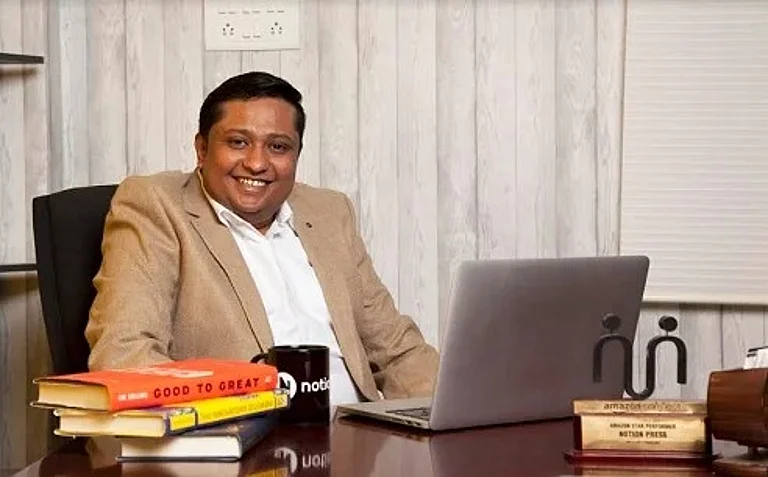
Keeping operating costs low is part of this conviction. “We don’t pay big advances or do big launches… it also creates hierarchies among authors.”
Instead, the focus is on ensuring that every book can find its readers: “Who doesn’t want bestsellers? We dream of them. But not every book can or even needs to be a bestseller. I’d rather we try harder to ensure no book we publish is a dud,” he says.
Advertisement
That tightrope — following editorial passion while remaining financially viable — runs through indie publishing nationwide.
Distribution Is A Constant Rebuilding
For many publishers, the struggle begins not with readers but with reaching them. The fact that delivery platforms have evolved can only be a good thing in this scenario. In Goa, Leonard Fernandes of CinnamonTeal welcomes digital tools that allow publishers to bypass broken distribution systems and connect directly with niche audiences. He explains, “We do not have to depend on the archaic, random distribution system that cannot support the long chain as well as is unable to respond to sudden spikes in demand. We know how distribution works, especially being on the other end as booksellers, and how it cannot absorb the capacity of so many publishers. By reaching out via different social media, we are able to put our information out there and engage with those who might be interested with the book in question.”
Advertisement
While direct sales and digital payments have filled crucial gaps, and paid publishing offers many avenues for first-time authors, democratization also has a downside. “The book should be well edited, properly presented and adequately priced,” says Fernandes. He warns writers to educate themselves - because the booming paid-publishing market is full of traps.
Goa-based publisher and journalist Frederick Noronha, founder-editor of the imprint Goa, 1556, has worked for long with writers and themes that mainstream publishing overlooks. He has a stark observation of the book landscape in India.
“India is a book desert. A large part of the country (the bulk) outside the metros, isn't publishing the kind of information and knowledge it needs, in the form of books. The reason this happens is primarily economics. Unless you're addressing a huge market, your story doesn't deserve to be told. There are also other issues, like maybe the fact that we as a civilisation haven't quite appreciated the role and importance of books.”
Advertisement

Cognisant of this problem, and noticing the way the market dominates what gets published (also being a journalist himself since 1983), Noronha set up Goa,1556 in 2007, with the goal of producing non-fiction works on Goa. So far, they’ve done between 180-190 titles: Stories of daily life, what is important to the people, stories which reflect the diversity of India, stories which give a voice to communities and sections which hardly have a book on them. Since they operate on a modest, shoestring budget, sharing information, crowdsourcing work, even crowd-funding support (they did it successfully for a Roman-script Konkani dictionary) has helped quite significantly.
Keeping Languages Alive
Nowhere is independent publishing more vital than in regional literatures — where language itself is cultural survival. “Odia is spoken by more than 30 million people in the state cannot be replaced by either English or Hindi,” says Manu Dash of Dhauli Books.
Advertisement
Even as print-on-demand widens access, it has also mushroomed vanity publishing and quality of writing suffers, he says. “Many retired bureaucrats want to become writers overnight and their identity crisis dilutes quality writing.”
Awards, he feels, is another impediment to publishing quality work. “Private sector as well as Government should stop giving Awards, which has no impact in promoting literature. They should invest the money and energy and give priority for promoting readership which is declining very fast,” Dash suggests.
Among the oldest Hindi publishers in the country, Rajkamal Prakashan sees continuity as responsibility. “No institution can stay connected with contemporary times if it abandons tradition or its roots. We have been working with six generations of writers. On one hand, the second and third generations of older writers remain in touch with us; on the other, we consistently publish the very first books of the youngest generation of Hindi creativity.” says Ashok Maheshwari, Chairman & MD.
He also believes that history and modernity are not opposing forces - they are co-authors. Even technology is a collaborator, not a threat, according to him. “When television arrived, people feared that no one would read books anymore, that no one would have time to read. We believed that after watching TV, people would want to increase their knowledge by reading books — and that is exactly what happened. The same happened in the age of the internet and ebooks,” observes Maheshwari.
In an increasingly English and digital-driven India, sustaining a strong vernacular publishing ecosystem can be perceived as a challenge, but for Ravi Deecee, of DC books which publishes only in Malayalam, the reader leads the way. “Our recent release, Kalachi by K. R. Meera, was launched with 25,000 hardcover copies priced at ₹599 is an indicator of the confidence and scale of the Malayalam reading market,” says Deecee, who has observed a significant increase in reading since the pandemic and DC Books kept Malayalam publishing and bookselling active during the lockdown with their highly innovative marketing strategies. “We have introduced micro-fiction formats to cater to the interests and shorter attention spans of newer readers. At the same time, upmarket fiction, thrillers, and fast-paced narratives are increasingly becoming part of their reading preferences,” he adds.

United colours of language
In Nagaland, PenThrill, helmed by Vishü Rita Krocha is building a reading culture almost from scratch. For her, publishing is an extension of personal struggle. “To get published with mainstream publishers felt like a distant dream,” she says of her own writing journey and the goal of PenThrill.
“I've always believed that the expressions of our forefathers are very lyrical and this is perhaps something that has translated into many young emerging writers expressing themselves in the form of poetry.” It is not surprising that half her catalogue is poetry because that’s where expression blooms. Creating space for Naga poetry and memoirs is a testament to Nagaland’s rich culture and legacy of oral literature. It is slow work to but deeply meaningful to Krocha.
For Hyderabad Book Trust’s Gita Ramaswamy, this work has always been political. When they printed the Gujarat 2002 genocide books in Telugu, the trustee and founder was worried that the Hindutva brigade would destroy their office. “But we figured that even this would rally support for the cause” she says. Having published Telugu translations of David Werner's Where There is no Doctor, I, Phoolan Devi by Phoolan Devi, The Menace of Hindu Imperialism by Swami Dharma Tirtha, Debrahmanising History: Dominance and Resistance in Indian Society by Braj Ranjan Mani, My Years in an Indian Prison by Mary Tyler, Why I am Not a Hindu by Kancha Ilaiah Shepherd, among others, she says, “As an activist, it was an affirmation that books shape thought in the people I knew. It is crucial in movements that people are well-informed and that available knowledge shapes their understanding to help them take the right decisions. Blinkered reading leads to blinkered action. In writing and publishing, I saw the immense impact of text on readers I don’t know. Its’ a high like no other”
Feminism at the core
Indie feminist publishers have long filled the silences left by mainstream lists. Ritu Menon (Kali for Women / Women Unlimited) and Urvashi Butalia (Zubaan) - who have nurtured writers before they were commercially validated - continue to take risks on voices and perspectives mainstream houses still shy away from — especially Dalit and intersectional writing. Feminism is now a trend in commercial lists, but there still remain battles for feminist publishing houses to fight and voices to highlight. “It's our job to keep track of all kinds of new political articulations in movements on the ground and reflect these and that is what we do. So many new issues are coming up in movements - reflecting on our histories, recovering lost histories, addressing issues of science and gender, opening up the debate on gender - what is biological, what is social, where does gender lie, bringing in the stories of marginalized women, looking at indigenous practices and women's wisdom on the ground…I could go on and on”, says founder Urvashi Butalia.
Ritu Menon, of Kali for Women and Women Unlimited notes that feminist publishing is in a “two steps forward-one-step-back phase,” threatened by resurgent patriarchies. “The mainstream is certainly publishing more women than it used to, but their writing is not necessarily feminist. In fact, mostly it is not. In any case, our work has always been to unearth, to take risks, to excavate, so we continue to do that. To take just one example, there is a fair amount of writing on caste now, but the feminist perspective on caste has been foregrounded by feminist presses,” says Menon.
Yoda Press has consistently championed queer, feminist and counter-narratives long before they were “marketable’ and founder Arpita Das speaks of finally being at the sweet spot of their readership, made up of Gen Z readers and a large percentage of millenials. “What has refused to move is how inflexible government agencies and departments remain in this country when it comes to supporting independent publishers, “ she says.
Shifting margins
At Stree–Samya, Mandira Sen traces a lineage of transformative scholarship — Dalit feminism, labour histories, anti-caste critique for decades. Dalit memoirs, have been a very important part of their list: Omprakash Valmiki: Joothan: A Dalit's Life, translated from Hindi by Arun Prabha Mukherjee is an enduring bestseller; Surviving in My World: Growing Up Dalit in Bengal by Manohar Mouli Biswas, translated by Jaideep Sarangi and Angana Dutta; Memories of Arrival : A Voice from the Margins by Adhir Biswas, , a distinguished Bangla publisher. translated by V. Ramaswamy are a few others.
“Books that interrogate caste, gender, and power threaten long-standing hierarchies, so they face resistance at multiple levels: usually not in university syllabi, mainstream media, and review platforms; limited shelf space, media visibility, or access to big marketing ecosystems. Still ‘like dust we rise’, says Sen.

Books as art, books as craft
Children’s publishers are also seeing small shifts — more schools buying, more engagement. Tulika, for instance, is known for its multilingual, culturally rooted books that reflect a contemporary, plural society.
Tara Books pioneered the handmade/artists’ book movement in India, their collaborations with indigenous and folk artists rooted in fair partnership and co-authorship. Founder Gita Wolf sees handmade books not as luxuries but as fair, sustainable work rooted in local expertise. “Artists' books are by definition expensive, and in truth we could have stayed with smaller numbers and made them far more expensive, but that was not our vision. We wanted to make artists' books affordable by scaling them up in quantity while honouring the labour that goes into it -- in other words fair wages,” says Wolf.
For these publishers, the book is not a product but a practice.
Yes we can
What unites this disparate ecosystem — from poetry in Kohima to children’s literature in Chennai to activism in Hyderabad to theatre texts in Kolkata — is a refusal to let market logic decide which voices deserve a future. Independent publishing in India is powered by intent, as Naveen Kishore of Seagull books aptly summarises. “I suspect that somewhere along the way we may have actually begun to believe that this business of choosing to be amongst books is a ‘calling’. Like the medical profession used to be. Like some of the teaching profession still is. A phrase we do not often hear any longer comes to mind: ‘our life’s work’. There is immense satisfaction when you locate a book that is hard to find by sheer ‘detective’ work and see the joy on your customer’s face.”
In a world accelerating toward the ephemeral, indie publishers insist on the slow burn — the decades-long journey of a book from obscurity to influence. Their work is steady, stubborn, and mostly invisible. But culture is built on such stubbornness.

One more thing, Kishore adds, ‘The goal is always in the ‘doing’. So between the lines of the content you create and the constant doing doing, there lies a no-man’s land called ‘eventual success’. But don’t hunt for it. Come upon it as a long lost relationship. And keep focussed on your work.”
Published At: