Sciatica has quietly become one of the most widespread spinal conditions affecting modern populations.
The Growing Sciatica Crisis – Sedentary Lifestyles And Specialist Rehabilitation
Sciatica is rising due to sedentary modern lifestyles and long sitting. Active, assessment‑based rehabilitation is more effective than rest/medication alone for long‑term recovery and spinal health.

Sciatica occurs when the sciatic nerve, the longest nerve in the body, becomes irritated, compressed, or impinged. Sciatic pain may radiate from the lower back through the hips and down the leg, often accompanied by numbness or tingling.
Did you know that research suggests 13-40% of people experience sciatica at some point in their lives (Davis et al., 2023)?
In the United Kingdom, the indirect economic burden of back-related disorders, including sciatica, has been estimated at around USD 4.93 billion annually, largely due to lost productivity and work absence.
London illustrates the trend clearly.
According to the NHS, UK public health statistics, and workplace health reports, many office workers now spend more than 8–9 hours sitting each day, a pattern the NHS identifies as a key contributor to spinal discomfort and musculoskeletal strain.
Increasingly, London’s spine rehab clinicians argue that the issue is not simply age or genetics, but also the mechanics of modern life.
National Health Service medical doctors increasingly point to lifestyle as one of the main drivers. According to NHS notes, long periods of sitting and reduced daily movement place sustained pressure on the lumbar spine. Over time, this can weaken muscles and reduce their ability to support your spinal vertebrae, leading to disc irritation, muscle weakness, nerve compression, and nerve impingement.
In other words, the rise of sciatica pain is less about ageing or bad luck - and more about how modern work patterns have changed the way we use our bodies.
For many people, the immediate response is painkillers and rest.
Yet growing evidence from institutions such as Harvard University, the Mayo Clinic, and the National Institute for Health and Care Excellence suggests that assessment-based, active, structured, and laser-sharp customised rehabilitation is more effective than passive treatment alone.
This modern, effective approach has led to growing interest in structured, evidence-informed approaches such as a specialist sciatica rehabilitation programme designed to support effective sciatica rehabilitation and restore healthy spinal function.
Advertisement
Lifestyle Factors, Sedentary Behaviour And Spinal Health
Understanding how sciatica develops and how the body can recover has become essential. For readers exploring structured approaches to recovery, the concept behind a specialist sciatica rehabilitation programme that addresses both sciatica rehabilitation and persistent sciatic nerve pain has drawn increasing attention in clinical exercise rehabilitation science.
Public health authorities in the United Kingdom have highlighted further evidence supporting the relationship between sedentary lifestyles, spinal degeneration, metabolic syndrome, and spinal health.
Evidence-Based Rehabilitation Guidance From The National Institute For Health And Care Excellence (NICE)
Guidance from the National Health Service in the UK notes that prolonged sitting and sedentary behaviour are associated with muscle deconditioning, reduced muscular activity, poorer posture, and increased musculoskeletal discomfort.
The NHS emphasises that prolonged sitting can reduce mobility and increase spinal strain, reinforcing the growing recognition that regular movement throughout the day is essential for maintaining spinal health and reducing the risk of back-related disorders.
Advertisement
The National Institute for Health and Care Excellence (NICE) guidelines for low back pain and sciatica recommend assessment-based, structured exercise as a core component of back rehabilitation treatment.
Rather than relying solely on medication or passive therapies, NICE UK’s guidelines emphasise customised programmes that restore movement, strength, range of movement, abilities, and spinal function that may have been lost, as well as functional spinal capacity.
This shift reflects a broader trend in rehabilitation science.
Large clinical reviews have shown that most cases of sciatica improve when patients remain active and follow assessment-based and informed targeted rehabilitation strategies.
Clinical Research Supporting Active Rehabilitation
For example, research published in The Lancet Neurology examining the clinical course of sciatica concluded that conservative management combining movement and rehabilitation is effective for the majority of patients (Koes et al., 2017).
Similarly, systematic reviews published in The Spine Journal and BMJ Open have demonstrated that customised exercise-based interventions can significantly improve back and sciatica pain levels, functional capacity, and spinal mobility in individuals with low back pain and sciatic symptoms (Hayden et al., 2021; Hallman et al., 2018).
Advertisement
Understanding Sciatica And Its Mechanisms
Sciatica is broadly defined as pain that travels along the sciatic nerve due to irritation or compression of a spinal sciatica nerve root.
Lifestyle Patterns As A Major Contributor To Modern Sciatica
While disc injuries have long been associated with the condition, lifestyle patterns are now a major factor.
A large longitudinal Finnish study tracking individuals from age 31 to 46 found that sciatica prevalence increased from 21% to 37%, with physical inactivity identified as a significant predictor (Shiri et al., 2018).
This is not surprising, as it aligns with broader current trends.
Biomechanics Of Prolonged Sitting And Spinal Stress
Data from UK labour and health surveys show that around one-third of working-age adults spend most of their day sitting, a key driver of sedentary lifestyle back pain. The result is increased spinal disc pressure, impaired muscle neurology, compensatory movements, postural repositioning and asymmetries, reduced glute muscle activation, and tight hip flexors, all of which alter spinal mechanics.
Advertisement
Workplace Implications And Musculoskeletal Health
Researchers at the University of Oxford studying spinal biomechanics note that prolonged sitting can significantly increase lumbar disc pressure compared with standing or walking.
Over time, these forces may contribute to conditions such as prolonged sitting back pain, herniated disc sciatica, and persistent sciatic nerve pain. According to workplace injury reports, musculoskeletal disorders remain among the leading causes of lost working days in the UK.
In short, the rise in sciatica may reflect a modern paradox: humans evolved to move, but work increasingly requires us to stay still.
Why Painkillers and Rest Are Not Enough
For many people, the first response to severe back pain or sciatica is medication and rest. Non-steroidal anti-inflammatory drugs (NSAIDs) can be helpful in the short term by reducing inflammation and easing discomfort. However, medical guidance from organisations such as the National Institute for Health and Care Excellence and the Mayo Clinic suggests that these measures are rarely effective as long-term solutions.
Research indicates that around 25% of sciatica cases persist for longer than six weeks (Koes et al., 2017). During this time, prolonged rest can unintentionally weaken the muscles responsible for stabilising the spine, particularly the deep core, spinalis, hip, and gluteal muscles. When these stabilisers become inactive, the spine may experience greater mechanical strain, which can worsen issues such as lower back nerve compression.
Painkillers also address symptoms but not the cause.
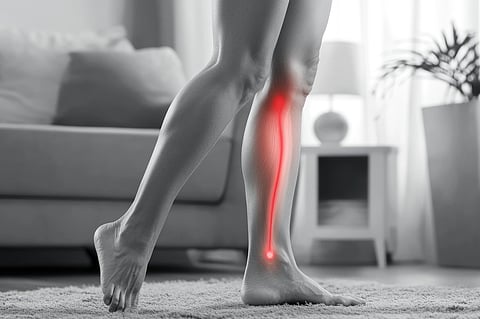
While they may reduce inflammation, they do not address the underlying mechanical factors often involved in sciatica, such as disc bulges, muscle imbalances, reduced mobility, or neural tension along the sciatic nerve.
The Modern Solution to Back Pain
Clinical research on back pain increasingly supports active approaches to sciatica pain relief, particularly assessment-based, customised exercise programmes guided by trained rehabilitation professionals.
These programmes focus on restoring strength, movement control, posture, endurance, abilities, lost spinal function, and spinal stability through progressive lumbar spine rehabilitation.
Specialist Lower Back Pain Rehabilitation: Targeting the Root Cause
For readers seeking long-term solutions and sustainable sciatica recovery, approaches such as specialist lower back pain rehabilitation examine how assessment-based rehabilitation, precision programming, and targeted movement strategies address the root causes of spinal dysfunction rather than simply masking the pain.
The Risks of Self-Prescribed Sciatica Exercises
When people develop sciatica, many turn to the internet for quick solutions.
A simple search produces thousands of videos and articles offering sciatica exercises that promise fast relief. While movement is often beneficial, self-prescribing exercises without proper assessment can worsen your sciatica pain and even cause further damage to your sciatic nerve.
Certain movements may increase pressure on the lumbar discs or aggravate nerve irritation, causing tingling sensations, increased leg pain, and numbness in your leg and foot.
Research shows that deep forward bends, traditional sit-ups, aggressive hip or hamstring stretching, or heavy deadlifts can all increase spinal load in ways that worsen symptoms for many individuals, increasing the risks of further back injuries.
In addition, researchers at Harvard University studying spinal biomechanics have shown that repetitive spinal flexion and combined bending-and-rotation movements significantly increase stress on the lumbar discs.
Why Assessment Matters in Sciatica Rehabilitation
Another challenge is that sciatica is not always a single condition.
The symptoms can arise from several causes, including disc herniation, piriformis syndrome, or spinal stenosis, and aggravations arising from spine degeneration, osteoarthritis, and other degenerative conditions.
Exercises that benefit one form of sciatica may aggravate another.
This is why clinicians often emphasise the importance of identifying exercises to avoid with sciatica before beginning a rehabilitation routine.
The real issue, therefore, is not exercise itself but exercise without assessment. Understanding which movements place unnecessary stress on the spine discs is an important step in managing symptoms and improving long-term outcomes.
For those researching sciatica causes and prevention, resources discussing exercises to avoid when suffering from sciatica provide useful insights into how different movements affect spinal mechanics and nerve tension.
What Effective Sciatica Rehabilitation Looks Like
Effective sciatica rehabilitation does not follow a one-size-fits-all approach.
Instead, modern rehabilitation programmes progress successfully through informed, structured rehabilitation stages.
First comes medical history and a comprehensive assessment, analysing posture, movement patterns, current limitations, asymmetries, compensatory movements, dominant sides, risks, nerve tension, muscle spasms, lost spinal abilities, and core strength. Rehab specialists may also evaluate hip mobility and muscular imbalances that influence spinal mechanics.
Next comes pain management, involving assessment-based designed laser sharp customised exercises, mobility work, neural gliding techniques, and controlled strength and activation of stabilising muscles.
The third stage focuses on stabilisation over the long term – making it last, where progressive strengthening of the deep core, psoas, multifidus, quadratum lumborum, transversus abdominis, paraspinals, and gluteal muscles supports spinal alignment. Research from the University of Cambridge highlights the importance of muscular coordination around the lumbar spine for maintaining spinal stability during movement.
Finally, comes strength and prevention, and a return to regular, strong exercise, daily movement, and sport, where rehabilitation expands into functional movement patterns and customised resistance training.
The goal is not simply to reduce pain, but to safely rebuild your physical resilience so that you feel your best. By improving core stability, addressing back pain patterns, reducing risk, and restoring gluteal activation, sciatica can be managed and spinal mechanics protected, allowing the spine to tolerate everyday stresses better.
Expert Insight: Understanding the Mechanics of Sciatica Rehabilitation
Given the abundance of back rehabilitation research, what practical lessons can we learn from leading specialists in sciatica and herniated disc rehabilitation in London?
To better understand the clinical complexity of spinal rehabilitation, here is expert commentary from a highly sought-after, leading expert in the spinal health transformation field.
“Most cases of sciatica I encounter are not purely disc problems but complex multifactorial biomechanical dysfunctions involving several interconnected systems. The lumbar spine, pelvis, and scapular region form a kinetic chain that must work together. When a vertebral disc is subjected to pressure it cannot tolerate, it can cause nerve impingement, and at this stage, your neurology may be affected. Your body then develops compensatory movements, asymmetries, and unhealthy spinal loading, which can place additional stress on the sciatic nerve. Often, the piriformis and gluteal muscles also become inhibited, and prolonged sitting can further load your spinal discs. Over time, this – and more – creates abnormal shear forces on the discs and increases the likelihood of sciatic nerve irritation and herniated discs,” said Jazz Alessi, the founder of Personal Training Master, Head of the Sciatica and Herniated Disc Rehabilitation Department, and the creator of The Spine Method in London.

“The rehabilitation process, therefore, focuses first on eliminating risks, retraining the correct muscles, as well as abilities and functions lost, eliminating compensatory movements, and restoring symmetry, neuromuscular control, and spinal strength, rather than simply stretching painful areas. Evidence from exercise science shows that early activation of deep stabilising muscles can reduce disc stress load and improve movement patterns. Without this stage, people often return to activity with the same underlying imbalances that triggered the injury in the first place,” Jazz Alessi continues.
Such unique approaches are increasingly discussed within rehabilitation science, where reputable back rehabilitation exercise specialists and clinicians emphasise using an informed, multifactorial approach and integrated movement rather than isolated exercises.
So, what do case studies in London show, and what can they teach us when this unique approach is put into practice?
From Nerve Impingement to Full Function: Jan’s Rehabilitation Case Study Demonstrating 90% Pain Reduction and a Threefold Increase in Strength
Jan’s spinal rehabilitation case demonstrates how the strategic restoration of strength, abilities, and movement can transform spinal strength and function. After experiencing severe nerve impingement symptoms, Jan followed an assessment-based, laser-sharp, customised back rehabilitation transformation programme.
“The exercises my physio and osteopath prescribed me made no difference. My left leg felt solid, and my left buttock and left lower back had constant shooting pain. I had never felt anything like this before. In the five months before contacting Jazz, I was in severe and constant pain. Jazz seemed instantly approachable and deeply knowledgeable when we spoke. He came to my home four times a week for a period of three months and trained me. The inconsistencies and asymmetries diminished by 85–90 per cent very quickly. Pain also diminished to a final reduction of 85–90%. My strength increased by about 300%, my muscle tone improved by about 200%, and I can now exercise 300% longer than before. Jazz commitment, knowledge, and care are surely unsurpassable.”
Living Without the Shadow of Back Pain: Franco’s Recovery from a Herniated Disc and His Return to Strength, Movement, and Family Life
Another case highlights the long-term impact of targeted rehabilitation and a return to exercise, sport, and movement.
Franco had been struggling with 20 years of persistent back pain following two herniated disc injuries before beginning his assessment-based back rehab transformation programme.
“When in pain, I couldn’t move properly. I couldn’t walk properly. I couldn’t lift anything or bend sideways. I could barely put on my socks, let alone do any kind of physical exercise. I was, for all practical purposes, a disabled person. Now that I have completed my training programme, I feel much better, both physically and emotionally. My herniated disc rehabilitation has been very successful. I increased my strength, flexibility, and coordination considerably. I am stronger, faster, and better. I’ve had no flare-ups since training with Jazz. I have no more dullness or low level of constant pain in my back. I achieved a 300% increase in strength in just two months and can play with my son without fear of injuring myself.”
When the Whole Spine Works Together: Elizabeth Tiffany’s Case Study in Effective Herniated Disc and Sciatica Rehabilitation
Similarly, Elizabeth Tiffany described how integrated spinal training changed her movement capacity:
“My herniated disc located at L5/S was combined with bilateral sciatica resulting from the disc bulge, partial nerve denervation, and a facet joint effusion. The herniated disc and sciatica pain restricted my life choices. I was never able to do a full-body push-up or an alternate plank before training with Jazz. Jazz proceeded with an advanced assessment, asking very specific questions I had never been asked before. I’ve never been given exercises before that work both the upper and lower back together so effectively. He has demonstrated expert understanding regarding herniated discs and sciatica. I went from not being able to do push-ups to completing 22–24 in a row.”
While individual outcomes vary, such experiences highlight how comprehensive rehabilitation can address both symptoms and functional capacity.
Prevention – Building a Predictable Sciatica-Resistant Body
Preventing sciatica often begins with small daily habits. The NHS recommends regular movement breaks, posture awareness, and customised strengthening exercises to maintain spinal health.
Experts often summarise prevention around three principles: move more, sit better, and strengthen strategically.
Breaking sitting every 30 minutes helps reduce spinal compression. Strengthening the core, posterior chain, particularly the spinalis muscles, glutes, and hamstrings, helps distribute load away from the lower back. Maintaining hip mobility can also reduce disc pressure, as tight psoas muscles and hip flexors frequently contribute to lumbar strain.
These strategies form the foundation of long-term sciatica recovery and are central to modern discussions around sciatica causes and prevention, particularly in an era where sedentary lifestyle back pain is increasingly common.
Five Evidence-Based Tips for Protecting the Sciatic Nerve
Jazz Alessi shares five science-based principles commonly used in rehabilitation programmes.
Prioritise movement frequency over intensity
Research shows that regular low-intensity movement breaks can significantly reduce spinal disc pressure compared with prolonged sitting and help rehydrate the disc.
Strengthen the glutes and deep core
These muscles stabilise the pelvis and reduce load on the lumbar spine during walking, lifting, and bending.
Avoid excessive spinal flexion during flare-ups
Movements that repeatedly bend the spine forward may increase disc stress and worsen nerve irritation.
Maintain hip mobility
Tight hip flexors can tilt the pelvis forward and increase lumbar compression.
Progress gradually
An informed, structured progression from mobility to stability and strength allows tissues to adapt safely.
Conclusion: Why Prevention Matters More Than Performance
Sciatica is becoming increasingly common, but it is also increasingly understood.
Evidence from top ranked universities in the world and major institutions consistently suggests that assessment based active rehabilitation is more effective than passive management alone. While rest and medication may help in the short term, long-term recovery often depends on restoring healthy movement patterns.
The customised exercises matter, but avoiding the wrong ones matters just as much.
Ultimately, the spine responds not to how long we wait, but to how we move. By combining scientific understanding with structured rehabilitation, many cases of sciatica can be managed, improved, and in some cases prevented entirely.
References
Davis, D. et al. (2023) Sciatica. StatPearls Publishing.
Koes, B. et al. (2017) Clinical course and management of sciatica. The Lancet Neurology.
Shiri, R. et al. (2018) Lifestyle factors and sciatica prevalence. European Spine Journal.
NHS (2023) Why sitting too much is bad for us. NHS UK.
National Institute for Health and Care Excellence (2016) Low back pain and sciatica in over 16s: assessment and management (NG59). London: NICE.
Hallman, D.M. et al. (2018) The effect of prolonged sitting and physical activity on spinal mobility and musculoskeletal health. BMJ Open, 8(5), e019371.
Hayden, J.A. et al. (2021) Exercise therapy for chronic low back pain. The Spine Journal.
Published At: