Directed by Frank E. Flowers, The Bluff released on Amazon Prime on February 25.
The film stars Priyanka Chopra Jonas and Karl Urban in lead roles.
Despite being visually persuasive, the film is marred by dry writing and skin-deep politics.
The Bluff Review: Priyanka Chopra Jonas’s Latest Action Thriller Is A Snoozefest
In this Frank E. Flowers film streaming on Amazon Prime, insipid and uninspired writing drains urgency from scenes that should crackle with tension.

Summary
Set in the late 19th-century Caribbean, Frank E. Flowers’ The Bluff follows Ercell Bodden (Priyanka Chopra Jonas), a former pirate who has traded the high seas for domestic life on a picturesque island. Instead of swordplay, Ercell is now busy raising her young disabled son, trying to forge sisterly bonds with her husband’s sibling and chopping coconuts while sweating sensuously in the sun.
When an old enemy, Captain Connor (Karl Urban) resurfaces and her husband is kidnapped, Ercell has to go back to bashing brains and gutting cartoonish-ly evil looking men. On paper, it’s a familiar but workable setup—the reluctant warrior with a murky past pulled back into the world of chaos she once left behind. In execution, it is a snoozefest.
The Bluff (2026) IMDB
Insipid and uninspired writing and dialogues drain urgency from scenes that should crackle with tension. Characters speak in generic threats and pseudo-philosophical monologues. Even when the film gestures toward colonial politics and the presence of an Indian protagonist navigating a world shaped by imperial power, everything remains so dreadfully, obnoxiously skin-deep. There is neither any moral depth to hide behind nor any witty one-liners breaking up the grit and grime, which The Pirates of the Caribbean (2003-2017) series had in plenty (the first three did, at least).
Stories of the swashbuckling kind demand swagger, yes, but also a sliver of wit, and a dash of philosophy to go along with all the blood, guts, guns and glory. However, produced by the Russo brothers, The Bluff takes itself too seriously despite its distinctly pulpy premise.
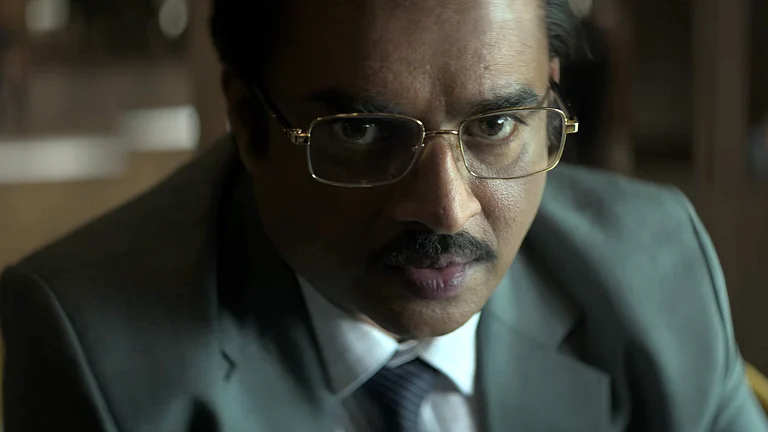
Urban—who is on another successful Prime production, The Boys (2019-ongoing)—tends to have chemistry with everyone; except here, no one has any chemistry with anyone. His antagonist, driven by obsession and grievance, should have anchored the emotional conflict. Instead, every interaction feels mechanical.

The Bluff (2026) IMDB
Structurally, the film is mostly one action scene after another. There is no exposition, no exhibition. The backstory Ercell gets is barely etched out through flashbacks that feel like placeholders rather than revelations. We are told she was formidable, feared, legendary, but we are not allowed to sit with what that history cost her. Without that grounding, the action, however elaborate, lacks weight.
Advertisement
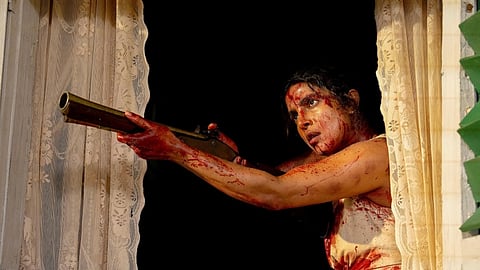
The action itself is not incompetent. There is an undeniable craft to the choreography, especially in the early home-invasion sequence that establishes the film’s commitment to gore and physical brutality. It is fun for a few seconds to see Chopra Jonas commit to the pulpy, bloody action sequences but you soon realise there isn’t much else offered to her to work with. She throws herself into it nonetheless, from digging into enemy skulls with knives and hacking away with machetes to dirty close-quarters combat, Ercell is constantly in survival mode, strategising her next move, always more skillful than the last one.

The Bluff (2026) IMDB
Visually, the film is far more persuasive than its storytelling. The setting is gorgeous—the deep blue seas, the sunny beach paradise. Mangroves, caves, rivers and sun-bleached cottages lined with exquisite conch shells that also double as deadly weapons, create a The White Lotus-worthy backdrop for the pirate-revenge story. The contrast between natural beauty and escalating violence is right there even though the film never interrogates that tension.
Advertisement
Ercell’s getups—both as an ex-pirate and as the fearsome buccaneer with a Mohawk—are way too modern. She could have walked out of the set of Quantico (2015-2018) or any MCU movie.
The side characters are even more forgettable than the main story, which barely has anything novel going for it to begin with. Allies, enemies, family members all pass through the roughly 101 minutes of runtime without leaving much of a mark. A film like this absolutely needs a Pintel and Ragetti.

The Bluff (2026) IMDB
23 years ago when Keira Knightley starred in The Pirates of the Caribbean: The Curse of the Black Pearl, she rued about the fact that she was never given a real sword to fight with unlike all the men. This misgiving was rectified in the sequels as audiences swooned over the swashbuckling Elizabeth Swann just as much as they did over Captain Jack Sparrow and Will Turner. The point wasn’t just action; it was about concocting characters who had charm and could evolve.
Advertisement
The Bluff ultimately feels like a film assembled from familiar parts without the connective tissue that makes those parts feel anchored, supported, or have enough pizzazz to flex accordingly.
While it is nice to see Chopra Jonas carving out a little corner in Hollywood as an action hero (the 2025 film Heads of State being another Prime offering of the kind), it would be nicer to see her get meatier roles and ideally getting theatrical releases again. She has presence and commitment—what she needs is material that trusts performance as much as spectacle.
Bottomline: I will rewatch Gore Verbinski’s Pirates trilogy any day over The Bluff. Even the ongoing One Piece live action series on Netflix is a more fun fare.
Published At: