The sidekick provided a common man anchor, contributed hugely to the success of any film with their antics.
Mahmood and Johnny Walker had songs written for them and had top billing on par with heroes.
The sidekick has evolved since the 50s and 60s but still provide comic relief.
Retro Express | Jigri Dost, Comic Relief, Co-conspirator: The Sidekick Keeping The Hero Relevant
The sidekick was street-smart, self-aware, irreverent. The hero might have carried the plot forward, but it was the sidekick who kept the film human.

Summary
The hero of yore, especially the 50s and 60s, needed grounding, and often someone to tell him, “Why so serious?” This job was done by what used to be labelled as a sidekick. But we all know how important they were to the narrative—how they provided a common man anchor, contributed hugely to the success of any film with their antics and often had songs written for them, which became bigger hits than the hero’s songs.
While the hero was broody, boring and lackadaisical, the sidekick—often a partner in crime—was real and relatable. We couldn’t wait to see him on screen!
Take Johnny Walker (Badruddin Jamaluddin Kazi) for example. Whether as a bumbling boozehead, or a petty thief or the hero’s best friend, the inimitable Walker was the lifeline of every film he acted in. Guru Dutt knew that and always gave the former bus conductor a crowd-pleasing role to suit his immense popularity. He even created special situations in his films—no matter how serious or artsy—to give the Comedy King his own breezy song. Thus was born “Sar jo tera chakraye” from the otherwise grim Pyaasa (1957) or “Jaane kahan mera jigar gaya ji” from Mr and Mrs 55 (1955).

Johnny Walker IMDB
Rajendra Nath, the beloved buffoon who made his presence felt in all sorts of madcap ways, was the perfect ally to Shammi’s rakish and over-the-top lover-boys from Dil Deke Dekho (1959) to Rajkumar (1964) to Prince (1969). As Popatlal, Vilayatram or Pyaare, he often brought the house down with his comic timing and trademark quirks.
Deven Varma, who starred in over 100 films and won acclaim for many, including Angoor (1982), Chori Mera Kaam (1975), Buddha Mil Gaya (1971) and Golmaal (1979), brought to Hindi cinema a touch of subtle humour that could be shared by family audience. Although he began his career with dramatic roles, he found his métier in witty and ironic comedy in the films of Hrishikesh Mukherjee, Gulzar and Basu Chatterjee.

Still from Angoor IMDB
Mehmood, known for his loud yet lovable characters, ruled the screen in the 1960s and 70s with films like Gumnaam (1965), Pyar Kiye Jaa (1966), Padosan (1968), Bombay to Goa (1972) and Sadhu Aur Shaitaan (1968) catapulting this supporting actor to stardom, making him the highest-earning actor of his era. He wasn't just a comedian but a complete entertainer—actor, singer, producer, and even director—often delivering emotional depth. His numerous supporting roles, mostly in comedies, propelled him into the spotlight as a bankable formula for a film’s success. He won four Filmfare Awards, three of which were for Best Comedian. In the 1960s and 70s, Mehmood was the only actor providing comic relief in the midst of the heavy drama of the films in that era, becoming the audience’s favourite, even surpassing the lead heroes of his time and making them insecure; his presence on posters could make film a hit.
Advertisement

Still from Padosan imdb
What tied all these performers together was not just their ability to make us laugh, but the quiet authority they wielded within the frame. These men were emotional translators—breaking tension, deflating pomposity at any given chance and offering the audience a relief within stories that were otherwise heavy with angst or heroics. They spoke in the register of the everyday: street-smart, self-aware, irreverent. In doing so, they made Hindi cinema more porous, more democratic. The hero might have carried the plot forward, but it was the sidekick who kept the film human.
What about the women? Well, the female supporting actors deserve another column altogether. Watch this space.
Mukri, Bollywood’s little big man starred in several Dilip Kumar hits as a loveable side character, apart from Amar Akbar Anthony’s (1977) Tayyab Ali and Sharaabi’s (1984) Nathuram.
Another versatile actor, Mohan Choti (born Mohan Rakshakar and changing his name after the memorable choti he sported in Hrishikesh Mukherjee’s debut film Musafir (1957)) could effortlessly switch between portraying bumbling sidekicks and mischievous pranksters, his impish grin being his trademark. With films like Anpadh (1962), Chalti Ka Naam Gaadi (1958), Padosan (1968) and Victoria No. 203 (1972), he cemented his status as a comedy icon.
Advertisement
Then there is Paintal, Keshto Mukherjee, Junior Mahmood, Johnny Lever and many others, each bringing in their own to the “sidekickness”.
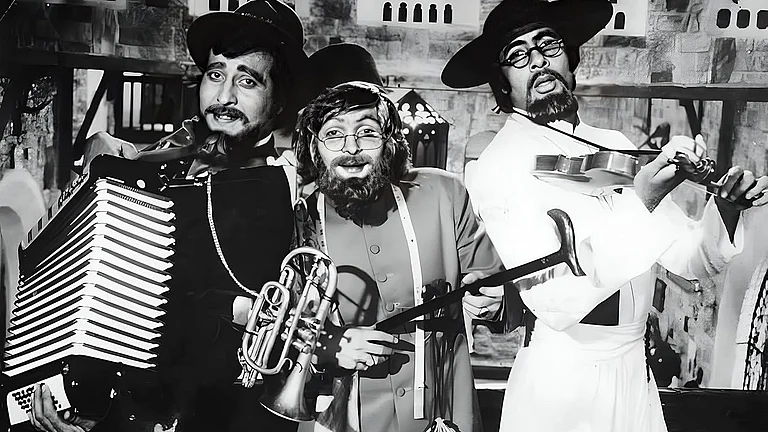
Over the years, the sidekick evolved to be a sidekick of the villain, like Shakti Kapoor was to Kader Khan, and the two often pairing together to be a sidekick comic package in the 90s. This was interesting because Kapoor spent most of the 80s on screen as a lecherous villain that everyone hated, before he reinvented himself as Govinda’s goofy sidekick in Raja Babu (1994). They worked together in more than 30 movies.
With Munnabhai M.B.B.S. (2003), the sidekick was reinvented and became larger than life. Such was the chemistry between Arshad Warsi’s Circuit and Sanjay Dutt’s Munnabhai that the two names are always mentioned together.
In hindsight, the term sidekick feels almost unfair. These characters were not ornamental add-ons to heroism but its ballast—anchoring swagger to humanity, melodrama to laughter and myth to the everyday. They laughed when the hero brooded, spoke when he sulked and often said what the audience was thinking all along. Long before “buddy films” and shared billing became fashionable, these men carried films on timing, warmth and instinct, sometimes even eclipsing the hero they were meant to support. As Hindi cinema continues to reinvent itself, perhaps it is worth remembering that some of its most enduring stars never needed the spotlight alone—they thrived precisely because they shared it.
Advertisement
Published At: