Aligarh (2016) is directed by and written by Hansal Mehta, presenting a sensitive dramatization of real-life events surrounding privacy, discrimination and dignity.
The film stars Manoj Bajpayee as Dr. Shrinivas Ramchandra Siras and Rajkummar Rao in pivotal roles.
This article examines Aligarh a decade on, reflecting on its treatment of murky legal issues, societal prejudice and the enduring questions around ethics, personal freedom, and the intersection of law and morality.
10 Years Of Aligarh: Dignity, Shame And The Cost Of Being Seen
Aligarh (2016) asked simple questions that still feel uncomfortable: Who is entitled to privacy without suspicion? Who is allowed desire without becoming spectacle? The film does not announce. It mourns. And that is perhaps why it endures.

Summary
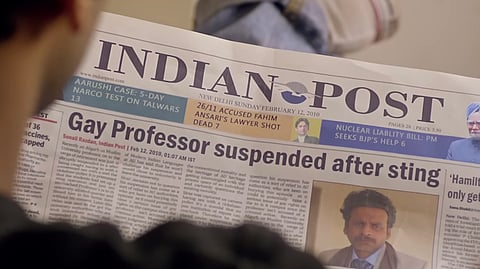
Some local television journalists barge into the home of a university professor and film him having sex with a rickshaw puller. They do not knock. They do not hesitate. They enter with cameras already switched on. What follows is packaged as revelation, circulated as scandal and debated as morality.
But in Aligarh, one reporter sees something else. Deepu Sebastian (Rajkummar Rao) recognises not a sex scandal but a human rights story. His editor insists it belongs on the sex beat. That small editorial disagreement becomes the moral centre of the film. Who gets dignity and who is denied it? Why is the privacy of some sacred and of others disposable?
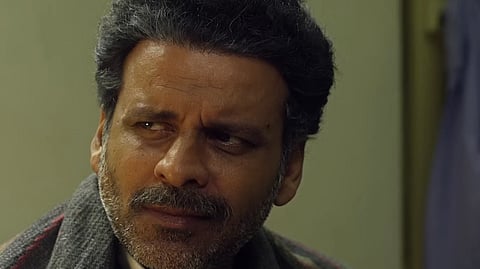
At the centre stands Dr. Shrinivas Ramchandra Siras, played with devastating quietude by Manoj Bajpayee. A 64-year-old Marathi professor and Chair of the Classical Modern Indian Languages Faculty at Aligarh Muslim University, he is suspended on grounds of misconduct—not for corruption; not for harassment; not for academic malpractice; for a consensual act in his own university accommodation.
Siras believes he has been made a victim of internal politics. That there are colleagues who do not want “that kind” of man teaching. The kind he himself never liked to name. He detests the reduction of his being to the three-letter word gay. He does not want to be an identity. He wants to be a person.
That refusal is what makes the film so haunting even today. Aligarh is not interested in slogans. It is not structured like a courtroom triumph. It is a study in loneliness. Here is a man who listens to old Hindi songs, who reads poetry, who enjoys quiet evenings, who loves. He simply does not want to limit that love to a category.
And yet, he signs a letter saying he is ashamed of what he did the previous night.
No one asks what right two men had to break into his room. No reprimand is issued to those who violated his privacy. The breach itself becomes invisible. Only the act inside the room is judged.
Advertisement
The film mirrors this encroachment through Deepu’s own life in a paying guest accommodation in Delhi. He must turn on the water motor at exactly 10 PM. The landlord’s daughter enters his room without warning. His personal space is constantly negotiated. It is not the same violation, but it is a reminder that privacy in this country is fragile and evidently, a luxury. Perhaps that is why he understands what has been done to Siras. He recognises the quiet cruelty of intrusion.
A still from Aligarh (2016) YouTube
When Aligarh was released in 2016, queer intimacy was still, on paper, a criminal offence in India. Section 377 of the Indian Penal Code criminalised “carnal intercourse against the order of nature” and had long been used to target same-sex relationships.
Two years later, in Navtej Singh Johar v. Union of India, the Supreme Court read down Section 377, decriminalising consensual same-sex relations between adults. Constitutional morality was affirmed over social prejudice. The state could no longer criminalise queer intimacy. It felt historic. It felt like an arrival.
Advertisement
Five years later, in Supriyo v. Union of India, the Court declined to recognise same sex marriage. Love was no longer illegal, but it was not fully recognised. No automatic spousal protections. No marriage equality. No straightforward joint adoption. A peculiar paradox settled in. You may love, but the law will not sanction any framework of legitimacy for that love.

A still from Aligarh (2016) YouTube
But Aligarh was never only about legality. Even before Section 377 was read down, the film had already shown how easily a life could be reduced to a headline. It was about what it means to be publicly shamed in local media—the camera stationed outside a door; the studio debates that turned a private act into spectacle; the repetition of the word scandal until it became a verdict.
If anything, that landscape has only become harsher. That’s why Aligarh, in many ways, will always remain a reminder of what it means to be subjected to a media trial. In post-social media India, that nightmare has multiplied. Today, it is not just a news channel that decides your narrative. It is instant viral shaming on social media. It is the meme-ification of identity. It is a forward of a private photograph. It is outrage manufactured in comment sections. It is anonymous handles turning a life into a joke. Humiliation once had a radius. Now it has reached a limit. What happened to Siras required physical intrusion. Today, exposure can happen with a screenshot, and the archive never forgets.
Advertisement
The film closes with images of a Pride march, but Siras himself does not live to see that assertion. He dies alone inside his locked home. That contrast remains one of the most painful ironies of the film. Visibility grows outside. Silence settles inside.
That tension feels especially relevant today. Recently in Delhi, at a Pride march, a performance was reportedly stopped midway because organisers deemed it too obscene. Even now, the same vocabulary circulates—obscene, indecent, too much. What is acceptable in private must not spill into public. What is visible must be sanitised.
The anxiety remains consistent. Intimacy is tolerated as long as it is invisible. Visibility is celebrated only when it is comfortable.
A still from Aligarh (2016) YouTube
Aligarh was never the usual kind of social film. It did not convert suffering into spectacle. Its sensitivity seems to stem, at least in part, from the fact that its writer, Apurva Asrani, has spoken openly about being homosexual. Yet in interviews, he has also said that he does not believe in rigid labels. That discomfort finds its way into the writing. Siras is not turned into a banner. He is not made heroic in a performative way. He is allowed to be hesitant, awkward, even conservative at times.
Advertisement
The film resists easy catharsis.
A decade later, queer representation in Hindi cinema has expanded. There are more characters, more conversations, more Pride flags. But few films have returned to the quiet ache of Aligarh. Few have lingered on the cost of being reduced to an identity you did not choose to perform.
Perhaps that is why the film feels less like political commentary and more like a tragic love story. Not tragic because two lovers are separated by fate in a romantic sense; tragic because love itself is cornered. Because society conspires not with grand violence but with small humiliations. Because a man who only wanted companionship is turned into a case study.
By the end, love does not triumph. It does not win an argument. It fades inside a room that should have been safe.
Ten years on, we have legal recognition but incomplete rights. We have visibility but continued vulnerability. The form of persecution evolves. The loneliness does not.
Aligarh asked simple questions that still feel uncomfortable: Who is entitled to privacy without suspicion? Who is allowed desire without becoming spectacle?
The film does not announce. It mourns. And that is perhaps why it endures.

Published At: