


WHERE ALL ROADS LEAD TO OPPORTUNITY
NMDC is transforming some of India’s most remote regions through sustained investment in education, healthcare, and skill development, placing people at the heart of progress
As a pillar of industrial and social development in India, NMDC Limited has charted a remarkable journey since its inception in 1958. Operating under the Ministry of Steel as a Government of India public enterprise, NMDC stands as the nation’s leading iron ore producer, with strong output from its highly mechanised mines in Chhattisgarh and Karnataka. Beyond its industrial strength, NMDC has built a lasting legacy of community development, undertaking initiatives that have made a meaningful impact on the lives of the communities it serves.
In the forested heartland of central India, where ancient sal trees rise above winding rivers and villages remain closely tied to the rhythms of land and tradition, development has long held a different meaning. In regions such as Bastar and Dantewada in Chhattisgarh, progress was historically measured by distance – from hospitals, from higher education, from modern livelihoods. For generations, geographical remoteness and socio-economic disadvantage limited choices, particularly for tribal youth and young women.
Today, a quiet but powerful transformation is unfolding. It is not marked by the noise of machinery or the scale of mineral extraction, but by young people entering classrooms, laboratories, hospitals, and modern manufacturing units with confidence. At the centre of this shift stands NMDC Limited, whose Corporate Social Responsibility (CSR) initiatives are redefining inclusive development in some of India’s most underserved regions.
As India’s largest iron ore producer, NMDC has long played a strategic role in national industrial growth. The organisation has embraced a broader responsibility: building human capital. Through sustained investments in healthcare, education, technical training, and professional skilling, NMDC’s CSR vision places people at the heart of progress. Its initiatives reflect a clear belief that lasting development begins not beneath the ground, but within communities.
For decades, villages across the Bastar Division faced a dual crisis. Healthcare services were scarce, with qualified medical professionals reluctant to serve in remote areas. At the same time, young tribal girls – often from families struggling to survive – were forced to abandon education early, drawn into household responsibilities or agricultural labour.
NMDC recognised that these challenges were deeply interconnected. The solution, it realised, had to be equally integrated. In the academic year 2011–12, NMDC launched the Balika Shiksha Yojana, not as a conventional scholarship scheme, but as a long-term, transformative healthcare and education programme. Designed as a public-private partnership with Apollo Hospitals, the initiative sponsors tribal girls from six districts of the Bastar Division to pursue professional nursing education.
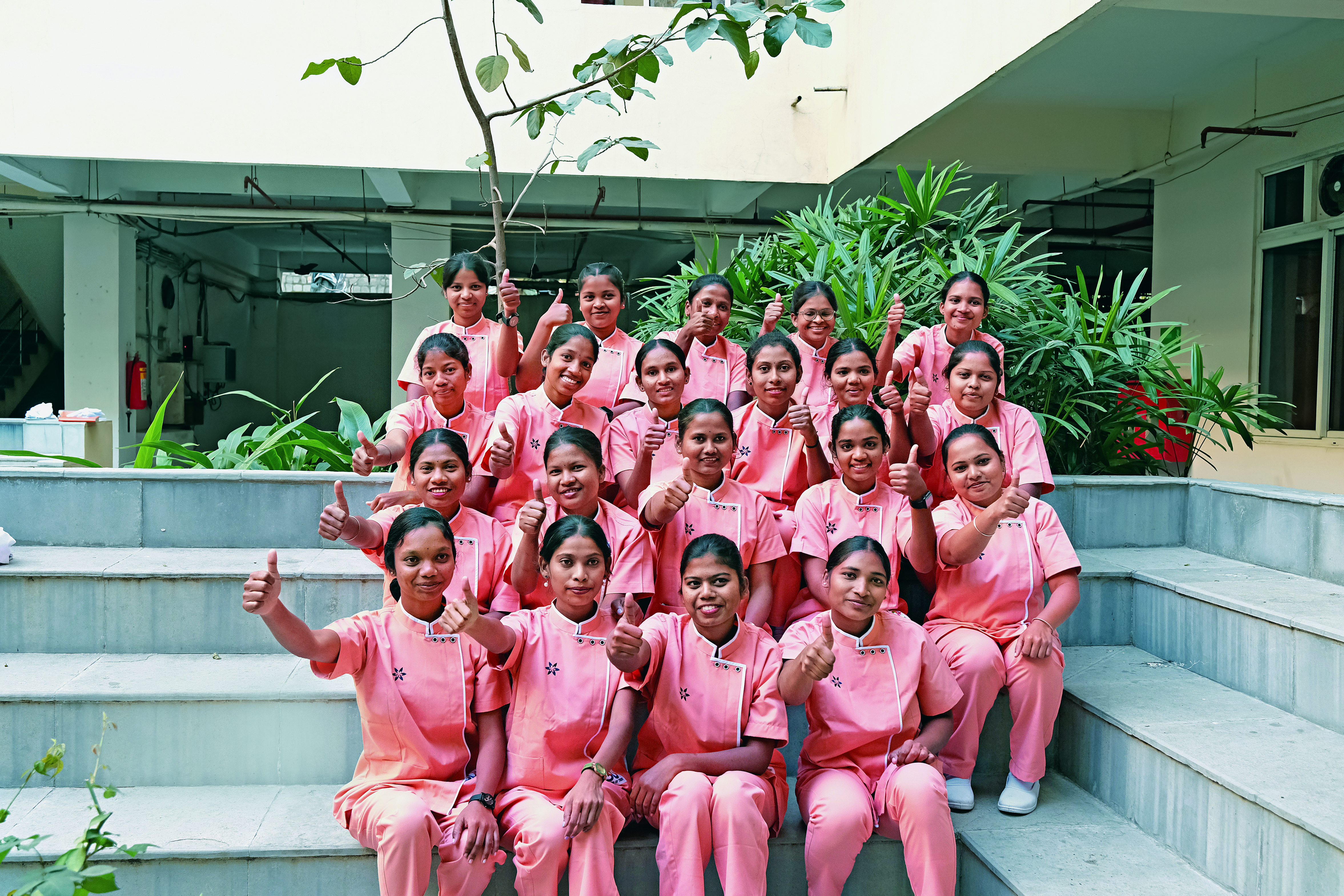
At Yashoda Hospital, Hyderabad, NMDC-sponsored BSY students build skills, confidence and leadership beyond textbooks.
I come from a Hindi-speaking background. After joining this programme, I began speaking English with confidence. Today I feel ready to grow in my career because NMDC believed in us.
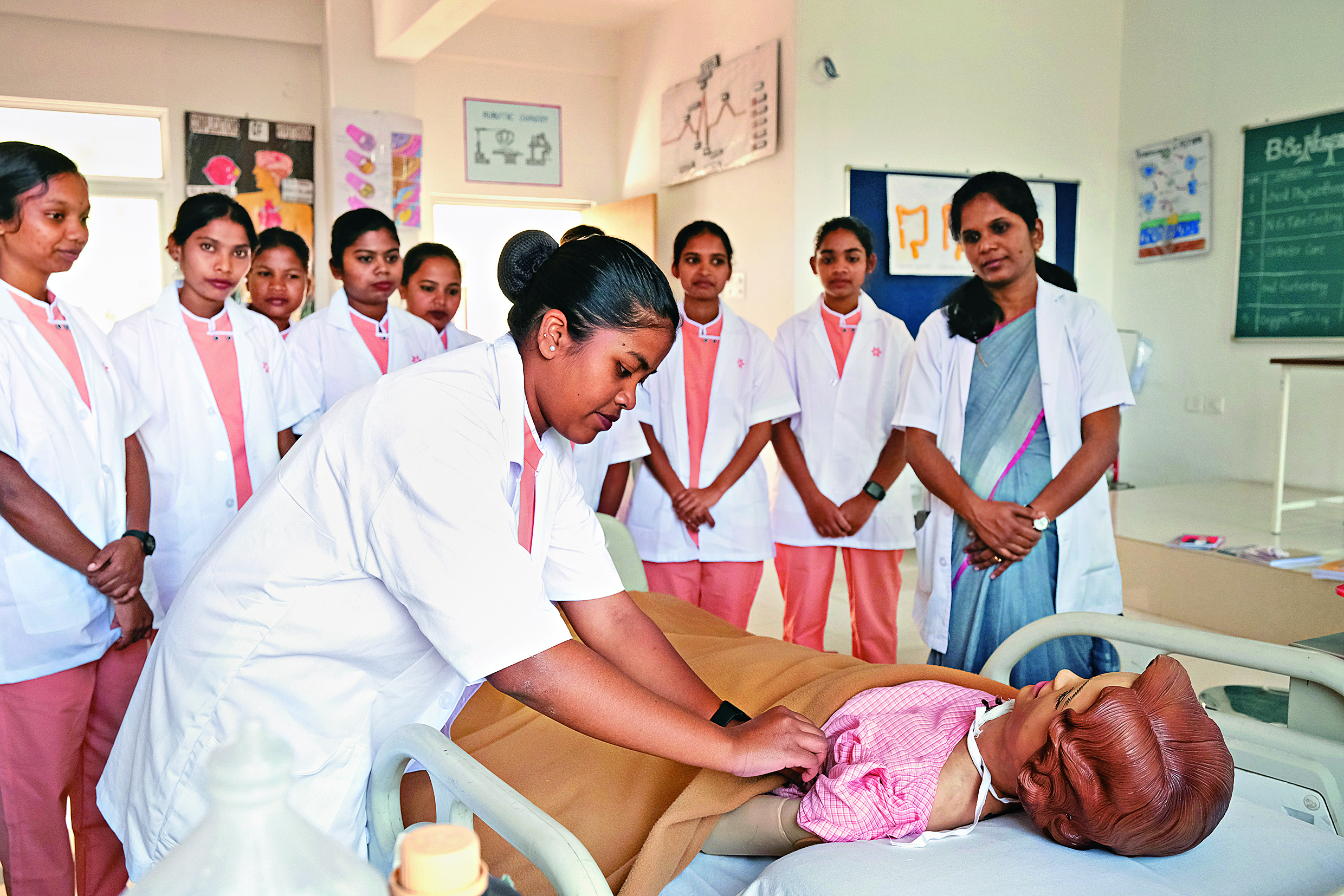
Modern medical infrastructure supports hands-on learning, enabling first generation learners to transition smoothly into professional healthcare education.
Eligibility is deliberately focused on the most vulnerable – girls from families earning less than ₹6,000 per month. Under the programme, students receive full sponsorship for a four-year B.Sc. Nursing degree or a three-year General Nursing and Midwifery (GNM) course.
What began modestly, with an expenditure of ₹24.54 lakh supporting 25 students in its first year, has grown into a cornerstone of regional development. By 2023–24, NMDC’s annual investment had risen sharply to ₹274.85 lakh, with a steady intake of 40 students per batch.
The outcomes speak for themselves. Of the 397 students admitted to the GNM programme since inception, 259 have already graduated and entered the workforce. In the B.Sc. Nursing stream most students have successfully completed their degrees.
Beyond qualifications, the programme builds confidence and leadership through debate competitions, sports, study tours and science exhibitions, ensuring graduates are prepared not just as healthcare workers, but as role models within their communities.
Radhika Tellum, one of the beneficiaries, reflects on her journey: “I come from a Hindi-speaking background. All my life, I have spoken Hindi at school and with family and friends, but after enrolling in this yojana, I have started speaking English. Today, I can speak to people and respond in English with confidence, and I feel I can advance my career in the future. This is all thanks to NMDC’s support.
Today, many graduates serve as paramedical staff within the Government of Chhattisgarh’s Health Department – often returning to the very villages they came from. Looking ahead, NMDC has scaled up the programme further to support 200 nursing students, while also introducing vocational training in biotechnology and paramedical disciplines.
While healthcare education forms one pillar of NMDC’s CSR vision, economic self-reliance requires strong technical foundations. Long before skill development became a national focus, NMDC was already investing in local technical education.
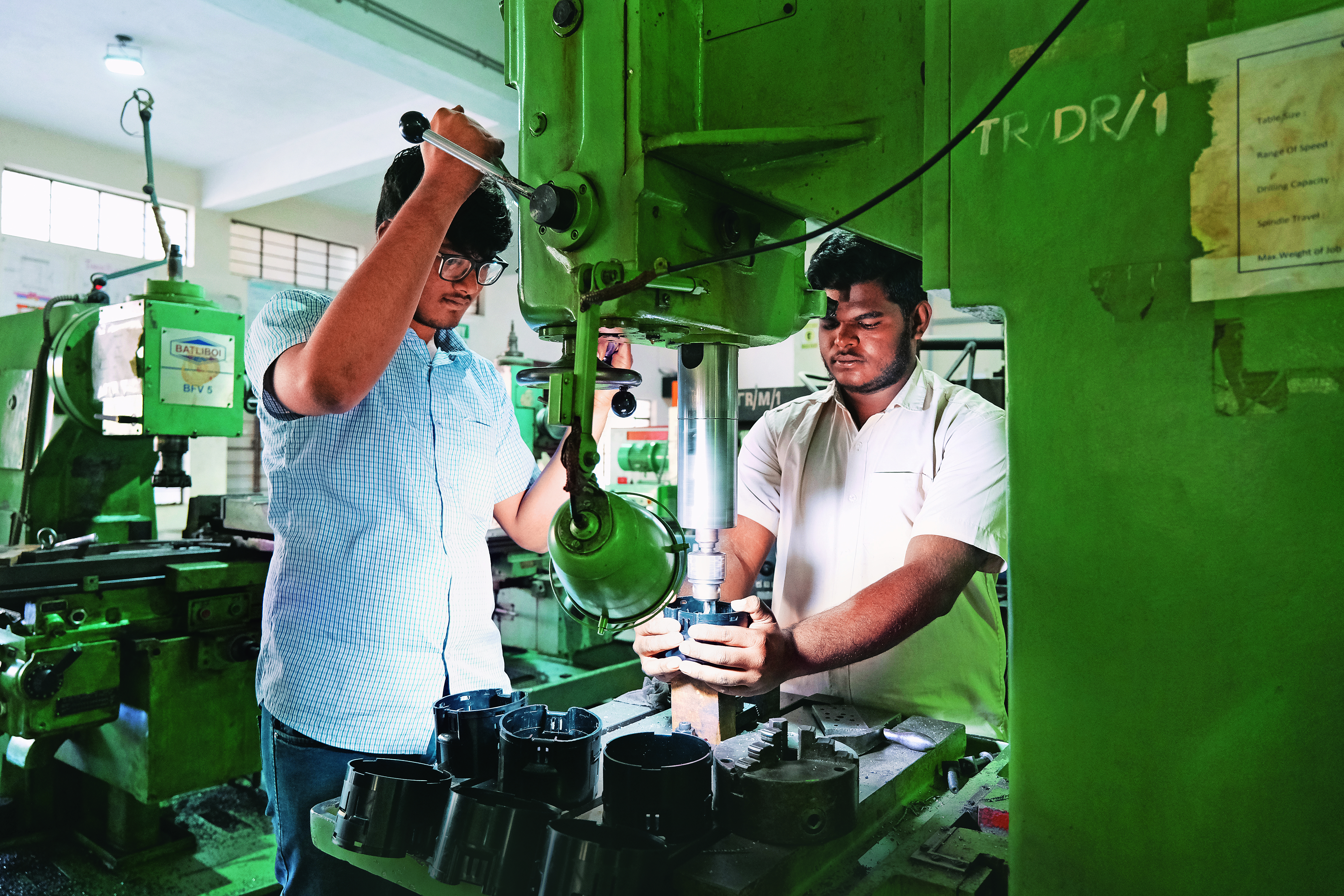
Practical training at ITI Bhansi equips local youth with industry-ready skills, linking technical education directly to employability.
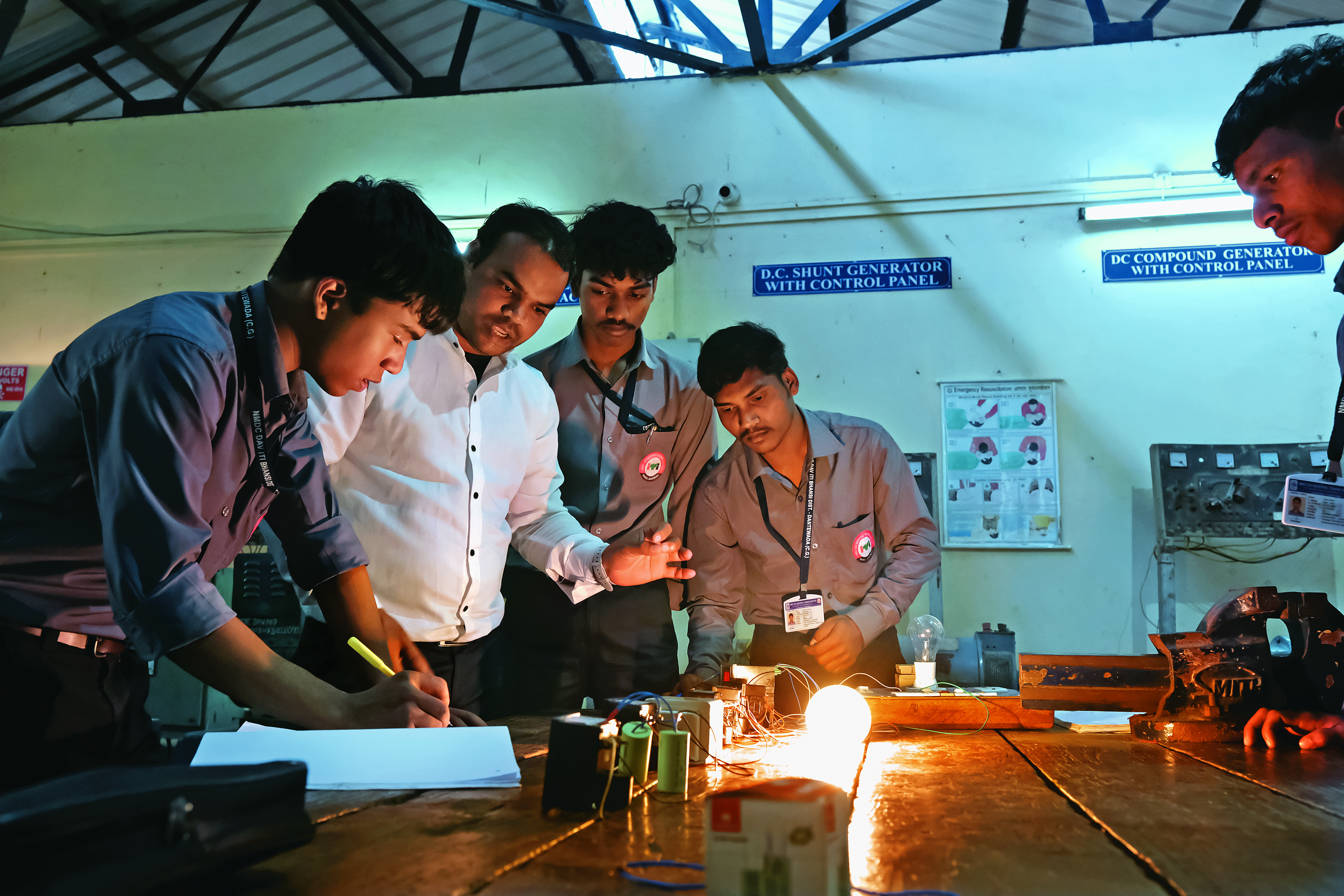
Students at ITI Bhansi engage in applied learning, where theory meets real-world problem-solving under expert guidance
In 1999–2000, the company established ITI Bhansi in Dantewada district, bringing certified industrial training directly to tribal communities. With an annual intake of 128 students, the institute offers courses in trades such as Welder, Fitter, Electrician, Diesel Mechanic, and Motor Vehicle Mechanic – skills that translate directly into employability.
Recognising that financial pressure often forces students to abandon training, NMDC provides monthly scholarships to tribal students who need support. This ensures that poverty does not interrupt learning.
The quality of education at ITI Bhansi has earned statewide recognition. It is ranked first among all ITIs in Chhattisgarh, a remarkable achievement for an institute located in one of the state’s most remote districts.
Building on this success, NMDC established Dantewada Polytechnic College in 2010–11. Located within the local Education Hub, the institute admits 126 students annually to Mechanical and Electrical Engineering streams.
Jhanvi Tamoo, a final-year electrical student at ITI Bhansi, shares her perspective: “I was worried that I would need to travel far, and it would cost a lot to study for my future. I really appreciate that NMDC has supported us like this, and in return, I would like to work with NMDC and show my trust and support the way they have with me".
One of the Polytechnic’s most impactful features is its exemption from central counselling – a policy NMDC actively pursued to ensure that local students are not edged out by those with access to urban coaching facilities. This decision has kept technical education accessible to youth from Dantewada and the wider Bastar Division.
With strong foundations in healthcare and technical education, NMDC has recently expanded into advanced manufacturing skills through a collaboration with the Central Institute of Petrochemicals Engineering & Technology (CIPET).
I was worried I would have to travel far and spend a lot to study. NMDC made quality technical education accessible close to home, and that has given me confidence about my future.
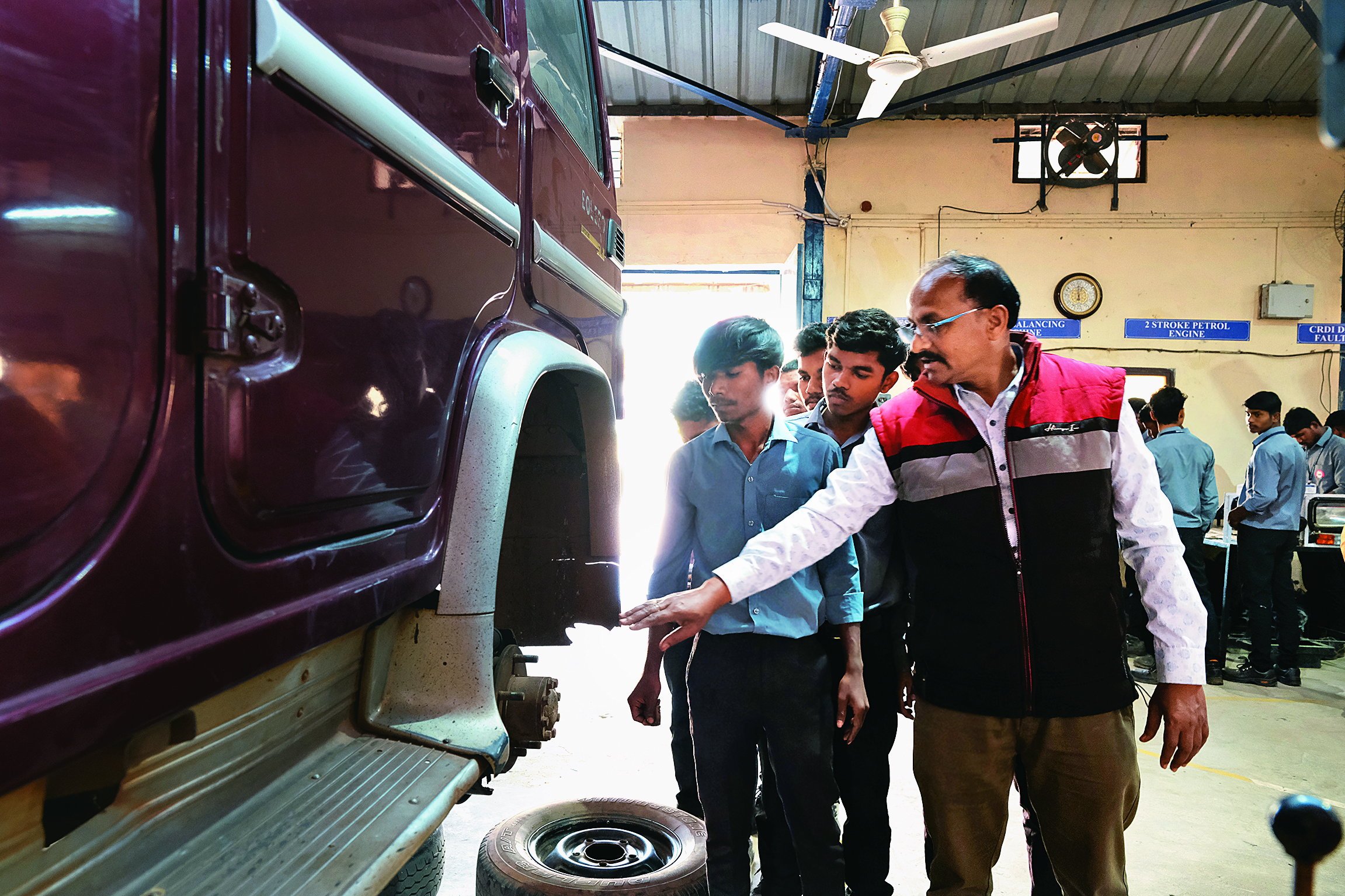
JHANVI TAMOO Final-Year Electrical Student, ITI Bhansi
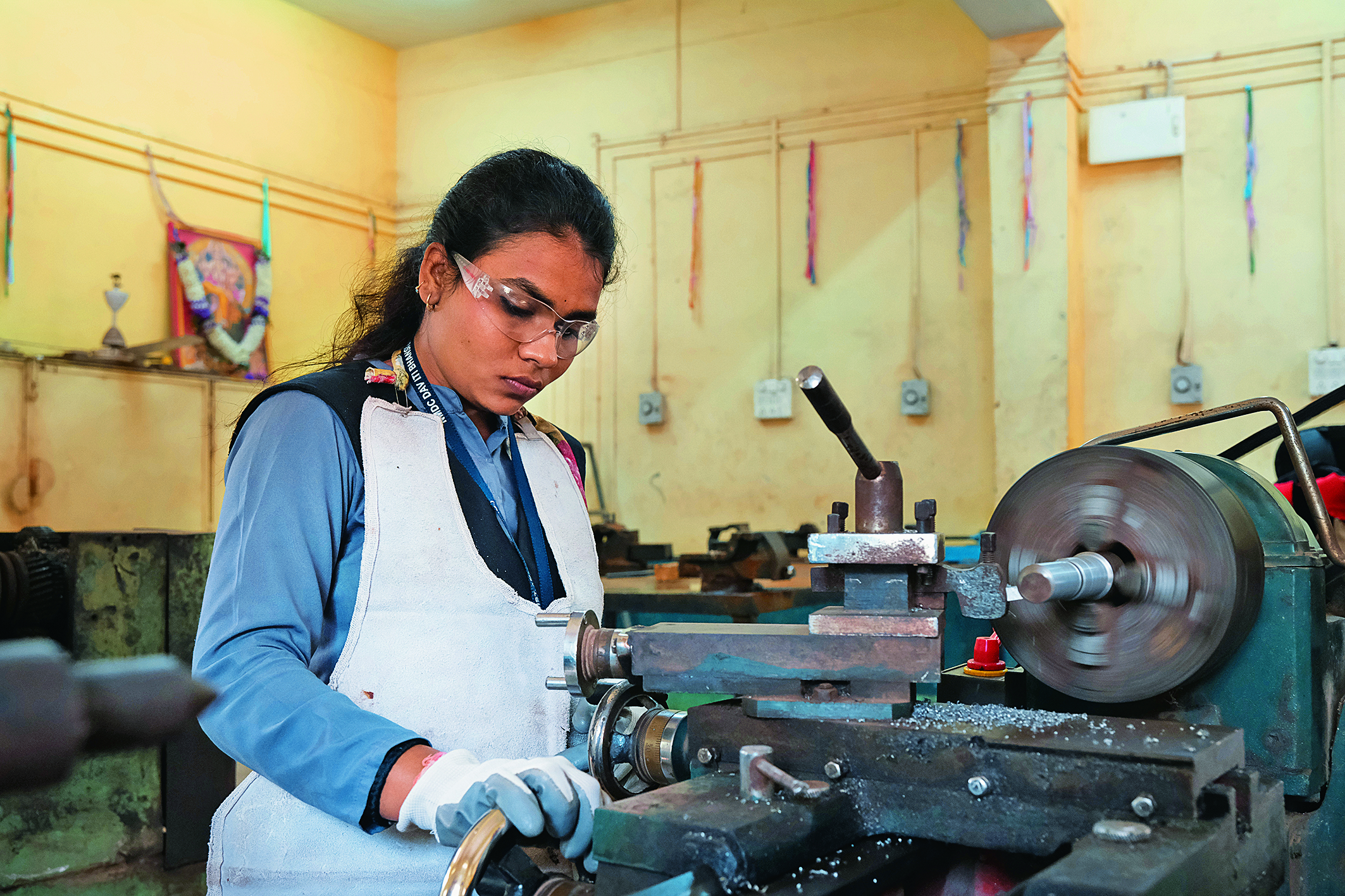
Young women break traditional barriers as they master industrial trades through NMDC-supported skill development programmes.
The programme offers free, job-oriented training to 500 young people from Bastar and Dantewada, fully funded by NMDC. Designed for inclusivity, it caters to students across educational levels.
For students who have passed the 8th standard, 400 seats are available in practical trades such as Injection Moulding, Plastic Extrusion, Plastic Recycling, and FRP operations. For those who have passed the 10th standard, 80 seats are reserved for diploma programmes in Plastic and Mould Technology. Additionally, 20 science graduates receive specialised training through a postgraduate diploma in Plastics Processing and Testing.
CIPET assures a 70 per cent placement rate with starting salaries ranging from ₹15,000 to ₹25,000 per month. However, the first batch surpassed expectations – 80 students from Bastar achieved 100 per cent placement, a historic milestone for the region.
Siddharth Pradhan from Dantewada reflects on the learning experience: “Earlier, I would never have thought about how a bottle is made. Today, I know how it is manufactured, how to ensure it is heat- and microwave safe, and toxin-free. NMDC is giving us a platform to stand on and move forward from conventional thinking.”
Placement: The first and second batch have successfully completed job oriented skill training and secured 100% placement, marking a significant milestone in making the youth of Chhattisgarh Atmanirbhar and reinforcing NMDC’s commitment to skill development, inclusive growth, and nation building.
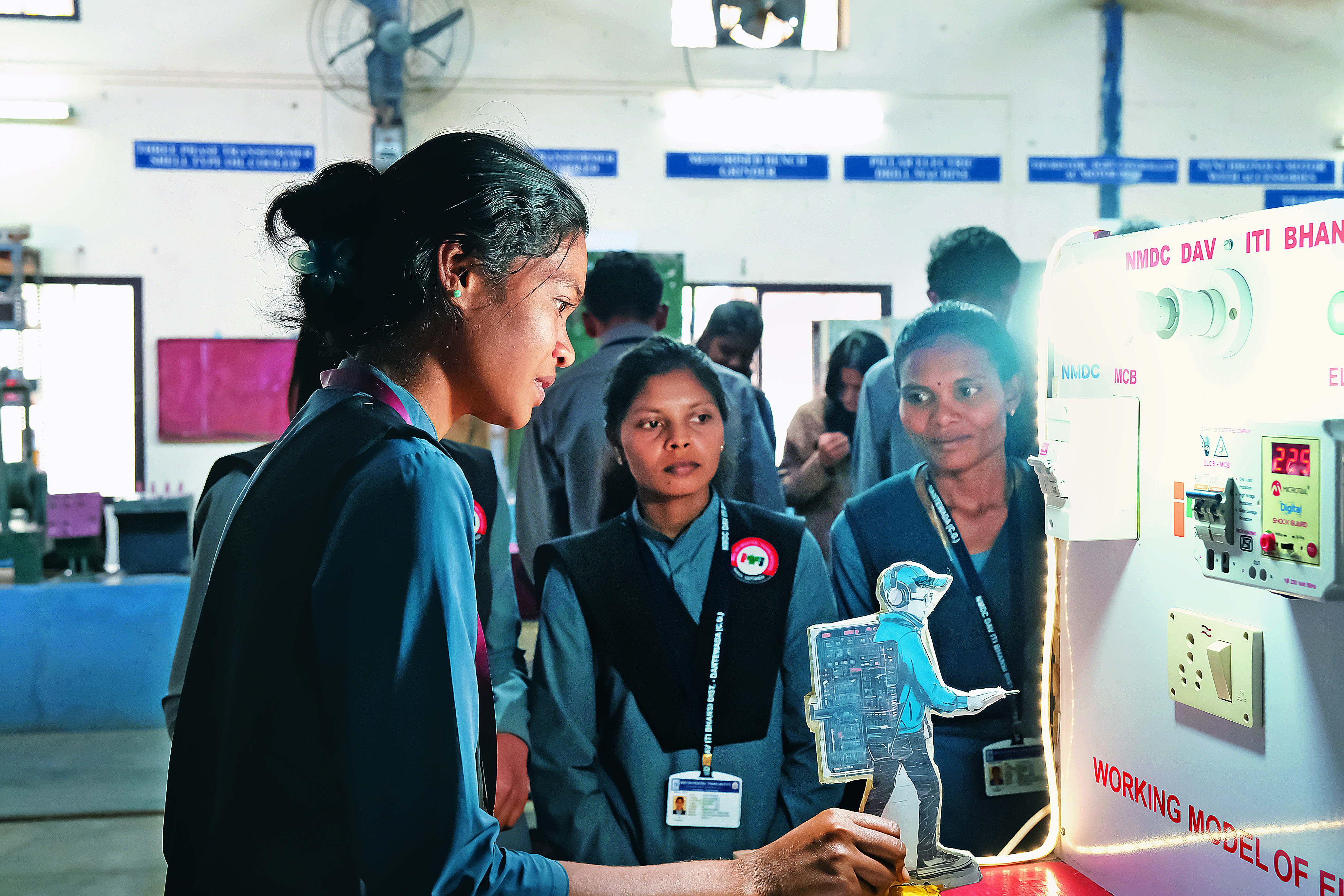
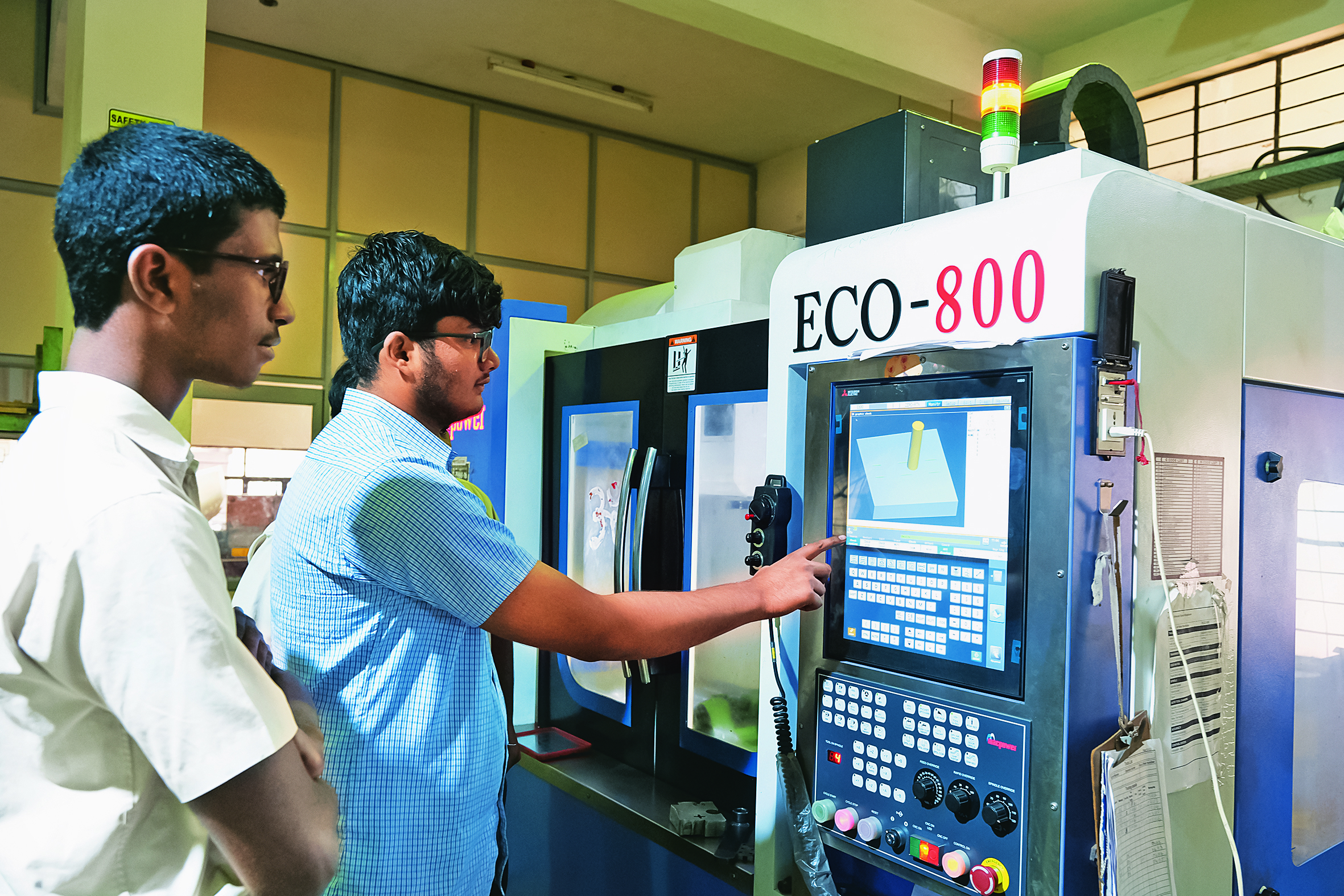
Exposure to modern technologies encourages young trainees to explore industrial processes and develop confidence in practical learning environments.
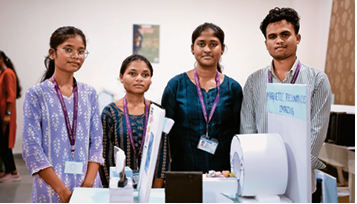
Students from Bastar and Dantewada begin a new academic journey, supported by NMDC’s expanding CSR footprint.
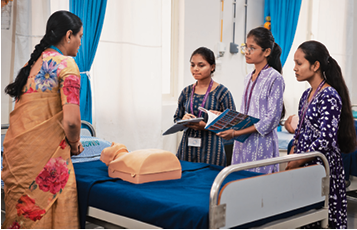
Simulation-based training allows students to practise critical healthcare procedures in a safe learning environment before stepping into real clinical settings.
NMDC’s CSR footprint now extends beyond Chhattisgarh. In partnership with Apollo University, the organisation supports nearly 90 students, primarily from Bastar and Dantewada, to pursue Allied Healthcare education in Chittoor.
The fully sponsored programme covers tuition, accommodation, meals, and access to laboratories, sports facilities, and campus life. A significant proportion of seats are reserved for girls, reflecting NMDC’s commitment to gender equity
Prof. K. Bhaskar Reddy, Dean, School of Health Sciences, observes: “Nearly ninety students sponsored under this programme are studying here. Many initially face language barriers, but over time they become more confident and engaged. They are sincere, disciplined, and motivated.”
Faculty members provide additional academic and mentoring support. Ms Denika Fernandes notes: “When we met the students and their families in Bastar, there was a great deal of hope. For many families, this opportunity represents a major step forward.”
Students echo this sentiment. Dipesh, a first-year student, says: “The faculty are helpful, and the campus environment is safe and encouraging. It feels like a place where we can focus on our studies and build our future.”
Pallavi Kashyap, who travelled from Dantewada, adds: “I am part of the Social Responsibility Club. Activities beyond the classroom help us grow in confidence and awareness.”
Through structured mentoring, modern infrastructure, and exposure to clinical environments, the programme is shaping confident healthcare professionals ready to serve society.
From nursing colleges and ITIs to advanced manufacturing labs and university campuses, NMDC’s CSR initiatives form a connected ecosystem of empowerment. They do not function in isolation; together, they address healthcare access, education, employability, and dignity.
NMDC’s journey reflects a powerful evolution – from a company that extracts mineral wealth to an institution that cultivates human potential. As hundreds of new students step into classrooms and workshops each year, they carry with them not just aspirations, but the collective hopes of their families and communities.
In Bastar, Dantewada, and beyond, NMDC is proving that when corporate responsibility is guided by empathy, scale, and long-term vision, the future is not only sustainable – it is profoundly hopeful.
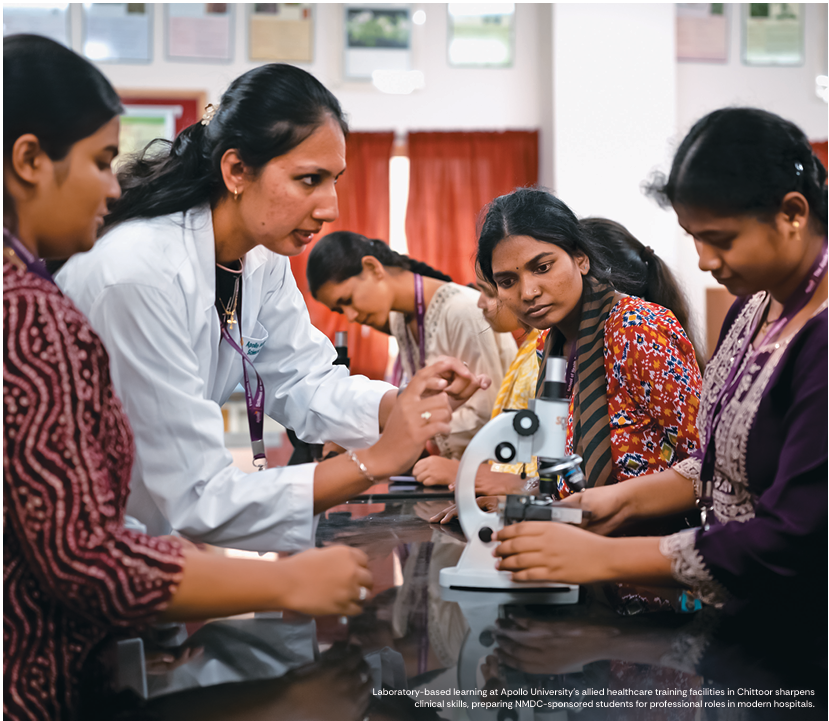
Laboratory-based learning at Apollo University’s allied healthcare training facilities in Chittoor sharpens clinical skills, preparing NMDC-sponsored students for professional roles in modern hospitals.