


WHERE ENERGY POWERS HOPE Extending Energy into Lives Across the North East
From the valleys of Arunachal to the classrooms of Assam, NEEPCO’s CSR initiatives illuminate lives, transforming energy generation into a force for education, health, and human dignity across the North East
In the North East, rivers are more than waterways. They are living inheritances — descending from forested heights, sustaining settlements in distant valleys, shaping the rhythm of everyday life. For nearly five decades, North Eastern Electric Power Corporation Limited (NEEPCO) has transformed this force into light for homes and institutions across the region.
Yet beyond turbines and transmission lines flows another current — one defined by responsibility
Education, healthcare, skill development, women’s empowerment, sanitation, and livelihood generation form the pillars of its Corporate Social Responsibility (CSR) framework.
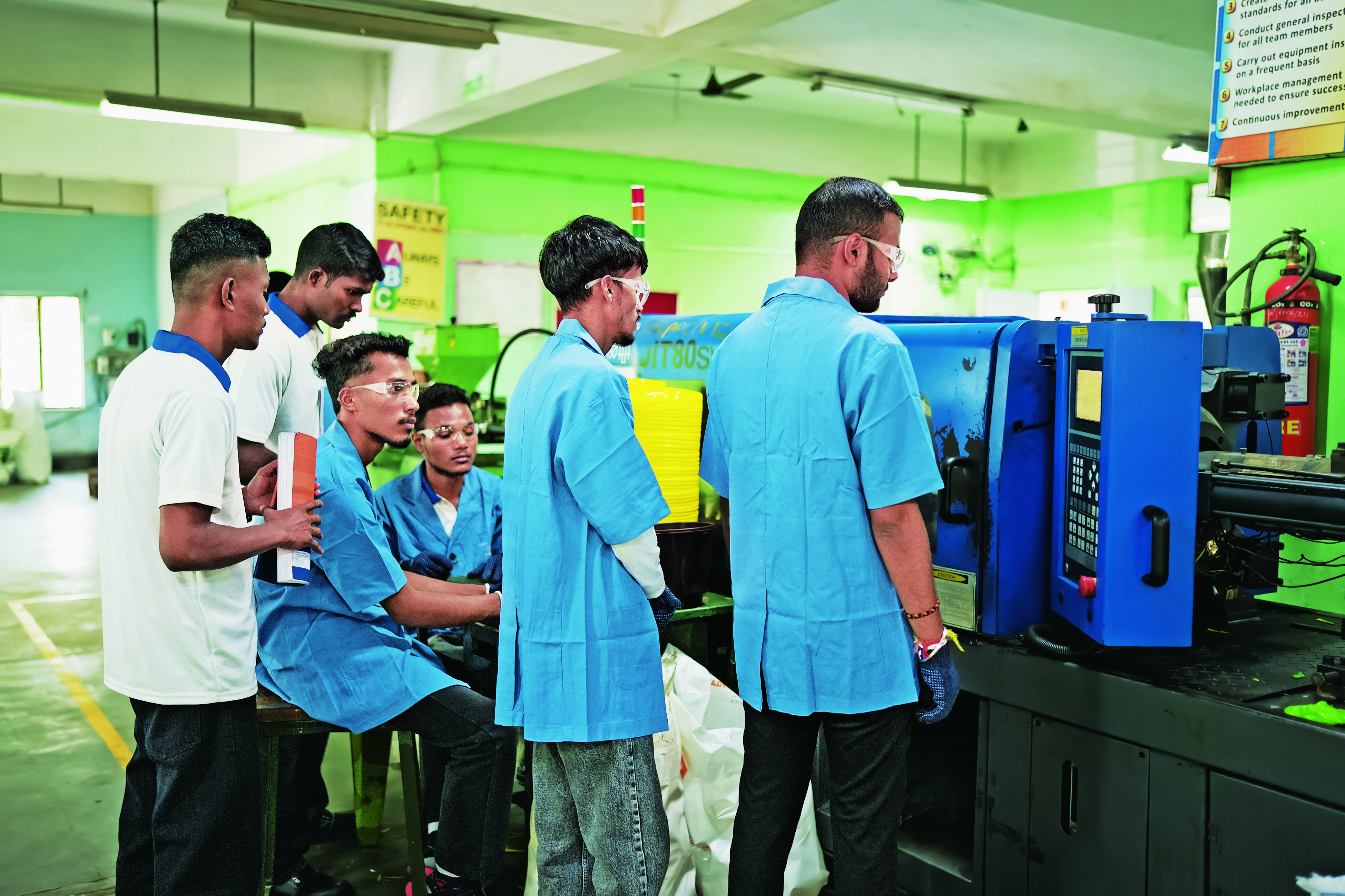
At CIPET: CSTS Guwahati, the hum of injection moulding machines mirrors the steady rhythm of opportunity. Under NEEPCO’s sponsorship, hundreds of youth from Assam, Arunachal Pradesh, Tripura and adjoining areas undergo structured residential training in Machine Operator – Injection Moulding and Plastic Processing programmes.
The support extends beyond tuition — covering accommodation, meals, uniforms, study kits and assured placement facilitation. Earlier batches have achieved high placement rates, with candidates securing employment in reputed industries across India. Subsequent batches, including expanded intakes of over 141 trainees, continue this pathway towards dignified livelihoods, even abroad.
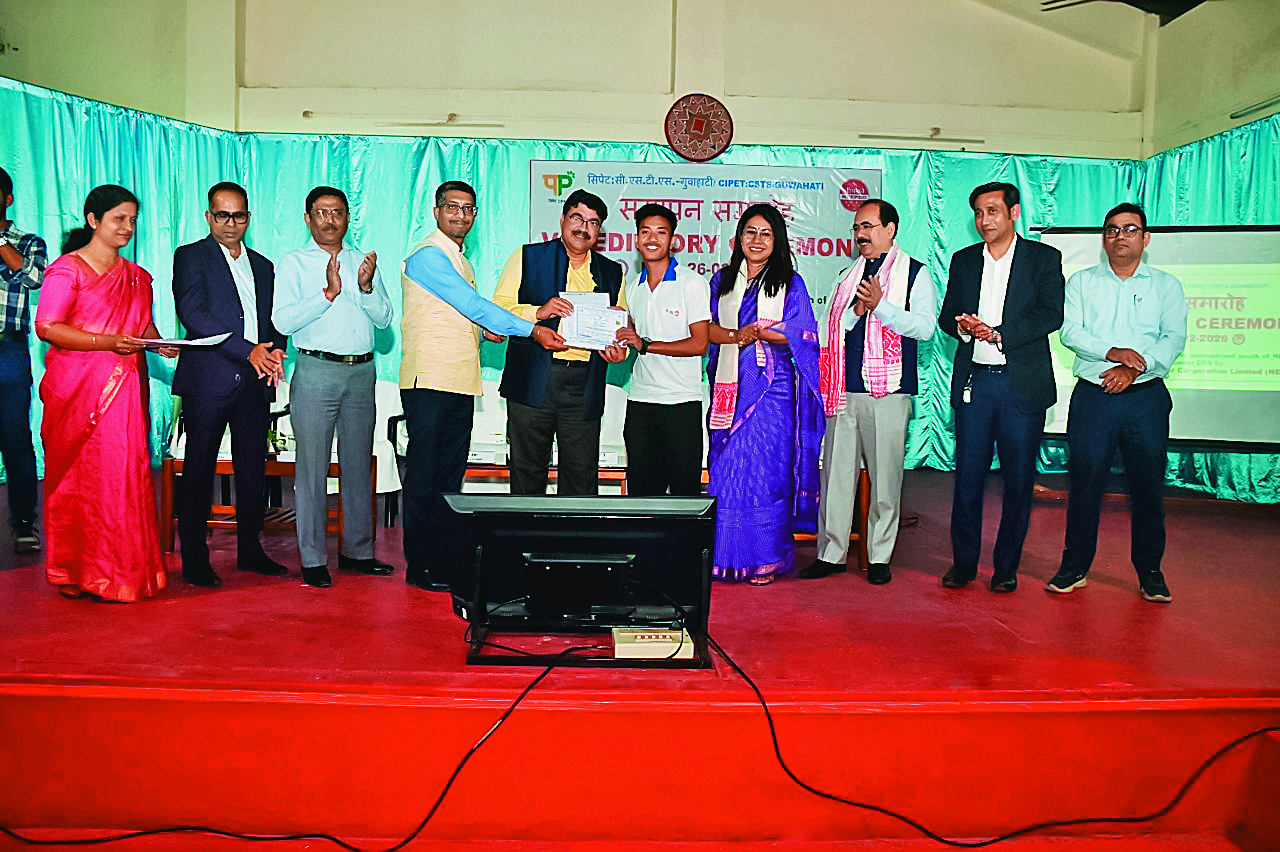
Celebrating new beginnings: Trainees receive certificates after completing industry-oriented skill training supported by NEEPCO, opening pathways to employment and self-reliance across the North East.
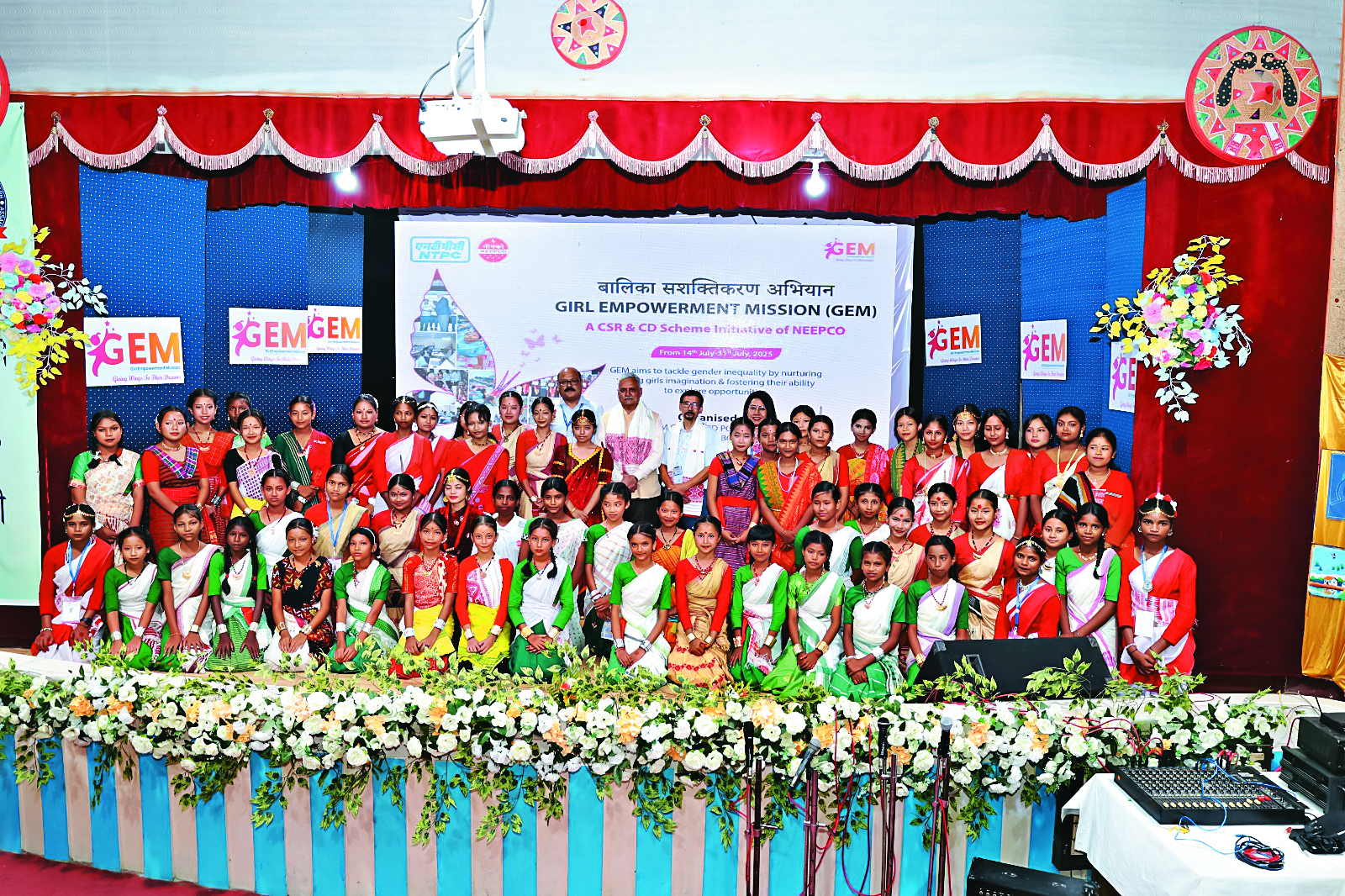
NEEPCO’s Girl Empowerment Mission nurtures confidence, leadership and learning.
on resilience built over generations. Under UBL’s Gram Swavalamban initiative, small yet well-planned interventions are helping villages such as Chopanki, Kharkhari, Kheri and Husepur move steadily towards self-sufficiency by strengthening the three pillars of rural survival: water, soil, and sustainable agriculture
In Chopanki village, Panchayat representative Ramchandra faced a challenge shared by many rural leaders: ensuring access to water during the peak of summer. Rainwater drained away quickly, and the village relied on a single borewell that had long since dried up
“There were 82 households depending on that borewell,” he recalls. When Ramchandra met UBL and its implementation partner - End Poverty, he raised the issue without hesitation.
After surveying the area, the team decided to revive the abandoned borewell. Work began in June 2024, and by July 2025, water was flowing again from the once-dry source
The impact exceeded expectations. Nearby, Dharamchand’s borewell – dug 10 years ago and dry for four and a half years – recharged naturally. Today, he says with quiet pride, “Now there is water in it 24 hours a day.” For residents like Tarawati, the change transformed daily life. “Earlier, we had to bring water from far away. It was extremely difficult. Now water is available right here. Every household needs water for daily work, and earlier we had to struggle a lot just to fetch it.
Parent Trishna Manoj Mali shares her son’s transformation. Once withdrawn and reluctant to attend school, he now speaks confidently and even manages household errands. The Parent-Teacher Association actively involves families in school life, fostering a sense of belonging.
Vihang – meaning “bird” – symbolises flight without barriers. With plans for vocational units, a cafeteria run by students, and packaging and printing initiatives, the school aims to make its students financially independent
By supporting Vihang, NBCC has strengthened not only infrastructure but also aspiration.
High in the hills of Uttarakhand, life has always demanded resilience.Villages cling to steep slopes, and roads wind uncertainly along ridges. For decades, healthcare remained one of the greatest challenges in these remote areas.
In the village of Peora in Almora district, the situation was particularly difficult. Until two decades ago, even minor illnesses meant travelling long distances. A fever, a cough, or a dental infection could become a major crisis simply because medical help was far away. Doctors were reluctant to serve in such inaccessible terrain, and basic diagnostic facilities were almost unheard of
It was in this environment that Aarohi Arogya Kendra began its journey in 1992. What started as a modest initiative in a small room gradually evolved into a lifeline for nearly 500 villages. The centre now provides round-the-clock services, including X-ray, ECG, ultrasound, blood tests, and surgical procedures. It has a four-bed in-patient facility and continues to expand.
Dr Pankaj Tiwari, Executive Director of Aarohi, reflects on the journey as one marked by determination. The team built the institution step by step, responding to the real needs of the community. “Since its establishment, Aarohi has undertaken a long and challenging journey. What began in a small room has today grown into a hospital serving nearly 500 villages,” adds Dr Tiwari.
In classrooms built on patience and possibility, children with special needs discover confidence, capability, and the quiet assurance that their future is full of potential.
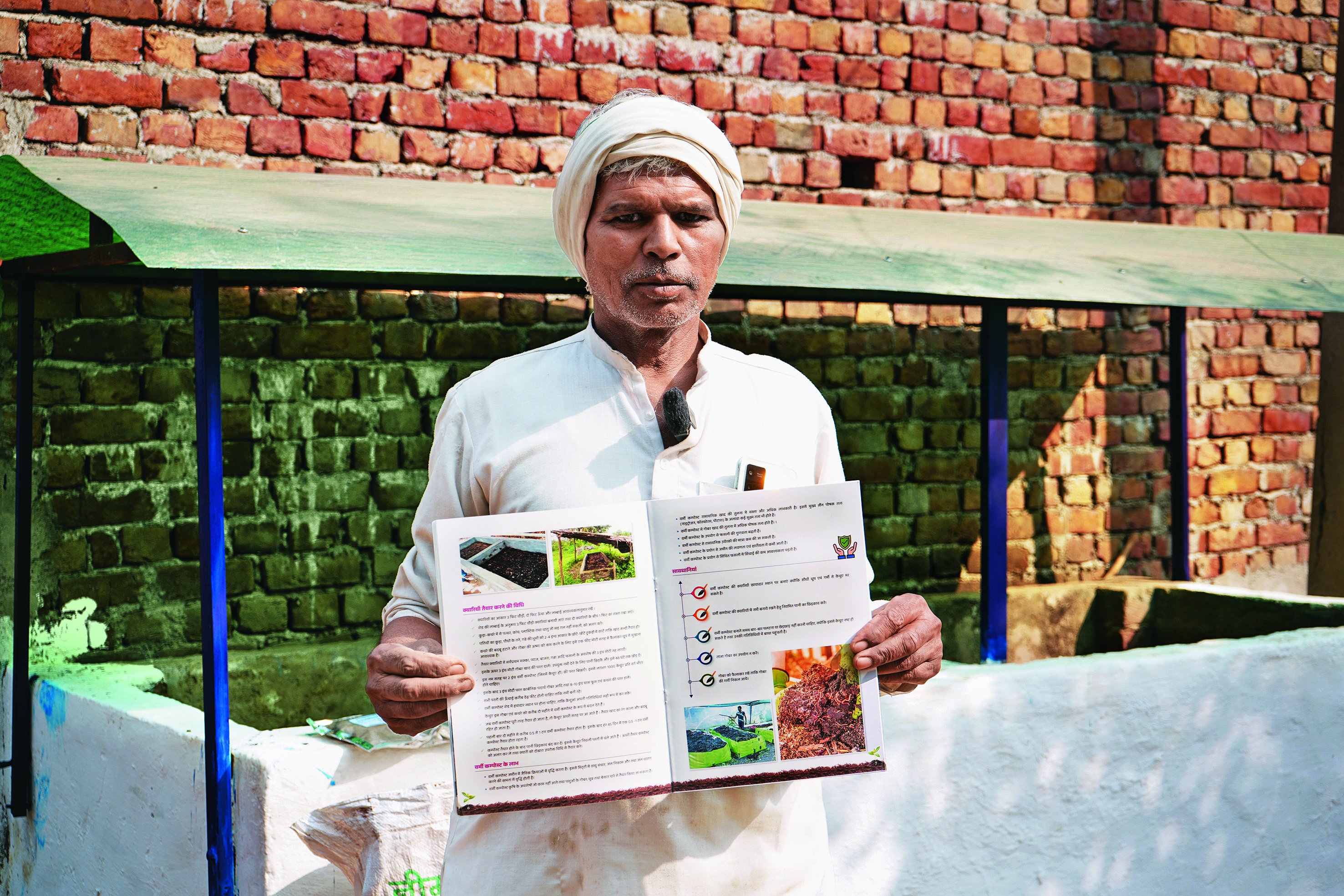
Under UBL’s Gram Swavalamban initiative, improved soil management and sustainable inputs are helping farmers move from dependency on chemicals to healthier, cost-efficient cultivation
By restoring water sources and promoting sustainable farming, UBL’s Gram Swavalamban initiative is helping rural communities rebuild resilience, reduce costs, and secure dependable livelihoods.
Among them was Kamruddin, son of Isa Khan, also from Husepur. From 1.25 bigha, he harvested 50 kilograms of good-quality onions. “Excessive DAP used to burn the roots,” he explains
Others such as Isaq and Nazir soon followed. Kamruddin highlights the double benefit: “The crop quality has improved, and we are saving money. We no longer have to buy DAP costing ₹1,800 to ₹2,000 per bag.” Agricultural expert Ravish guided farmers on soil health and precise input use. “It is important to test soil quality,” he explains. “Only the nutrients that are missing should be added. Adding unnecessary inputs damages the soil and affects crops.
Under the Gram Swavalamban initiative, soil samples from 40 farmers were tested. Farmers learned whether their soil lacked zinc or phosphorus and were advised to use neem cake during sowing
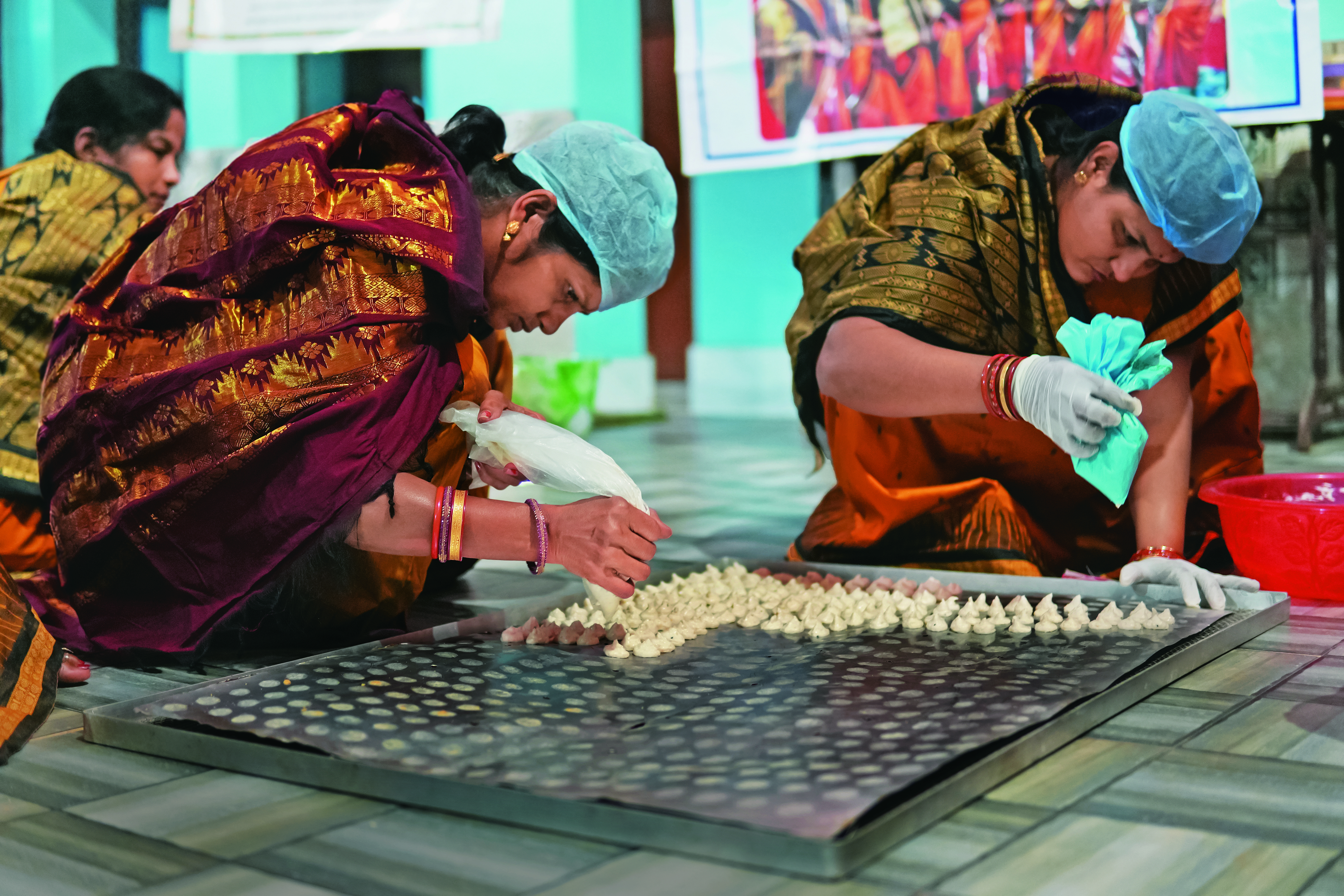
At the Sarvottam Badi Enterprise, women transform a traditional skill into a structured livelihood, blending heritage with economic independence
Ravish also recalls a practical solution to crop damage: “Wild boars used to destroy wheat crops at sowing time. When neem oil was applied, its strong smell kept animals away and also prevented pests.”
In Kharkhari village, uneven land caused water loss and uneven yields. The solution came through laser land levelling. Team member Brajesh Kumar Sharma explains, “Laser land levelling makes fields completely even. This saves both water and time. Crop yields improve because water spreads evenly.
The results were measurable: wheat yields increased by 12 per cent, and mustard by 9 per cent. Farmer Shaukat confirms, “The biggest benefit came from land levelling. Earlier, water and effort were wasted.” Farmers also learned to prepare organic soil nutrients under the guidance of agricultural scientist Sushil Kumar.. “Grow guar or sanai, then level it into the soil. Within 45 to 60 days, organic soil nutrients are ready,” explains Isaq
Karan Nayal, who brought his mother for treatment, speaks of earlier times when emergencies offered little hope. “In snakebite cases or self harm attempts, survival was uncertain,” he explains. Now, patients receive immediate care before being transferred to higher centres if needed. For women, children, and elderly residents – who often remain in villages due to migration – the presence of Aarohi means security. In the hills of Almora, NBCC did not merely provide equipment; it strengthened a lifeline.
In Jatni and Khordha, change does not arrive with banners or slogans. It appears in measured voices and steady steps – women speaking about income, dignity, and independence. Through the SAKhEE initiative, UBL -with implementation partner Urban Management Centre - supports this transformation by strengthening service delivery, entrepreneurship, and collective effort.
At the Jatni Municipality Office, Priti Priyanka Dash, Santoshi Jali, and Sasmita Pattnaik work as Subidha Sakhis, helping citizens access government schemes and municipal services
Across Jatni and Khordha, women led collectives are turning skills into enterprises – earning incomes, shaping identities, and quietly redefining what empowerment looks like.
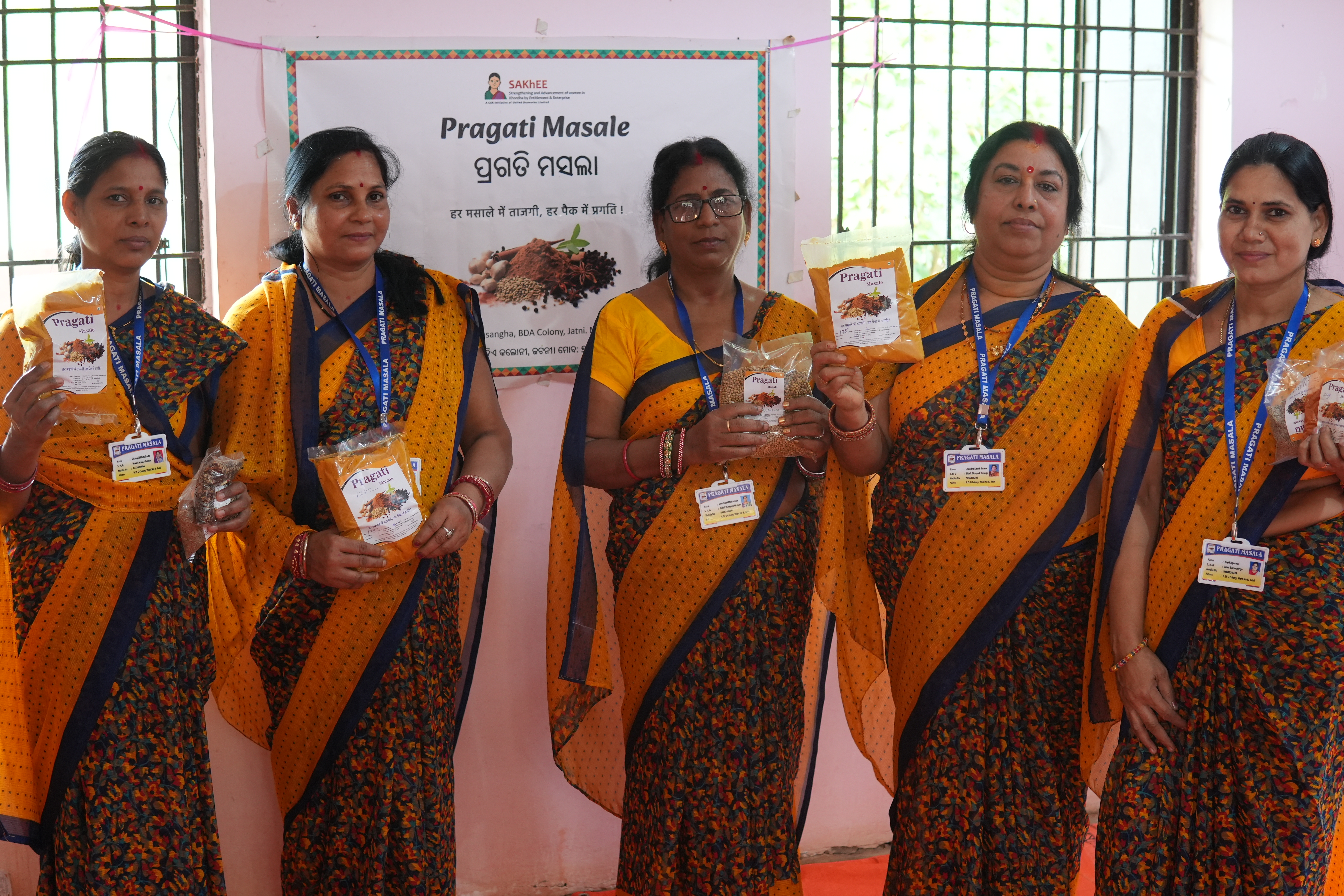
Standing behind their own brand, SHG members reflect a journey from uncertainty to ownership, dignity, and financial independence.
Priti recalls her student days, when financial support was uncertain. Training through her SHG gave her stability. Going door to door, she helped families navigate paperwork and access benefits. “Earlier I needed help. Now I help others,” she says softly.
Santoshi Jali, President of the Maa Kanak Durga SHG, led her group for nine years before becoming a Subidha Sakhi. “Progress was slow earlier,” she reflects. “What changed was not just work, but purpose.” For Sasmita Pattnaik, SAKhEE training expanded her SHG and built confidence – quietly, steadily.
In BDA Colony, Jatni, the Pragati Masala Enterprise operates under the Siddi Binayak SHG. Formed in October 2024, it completed one year in October 2025. Seven women invested ₹5,000 each, pooling ₹35,000 for branding, packaging, and machinery
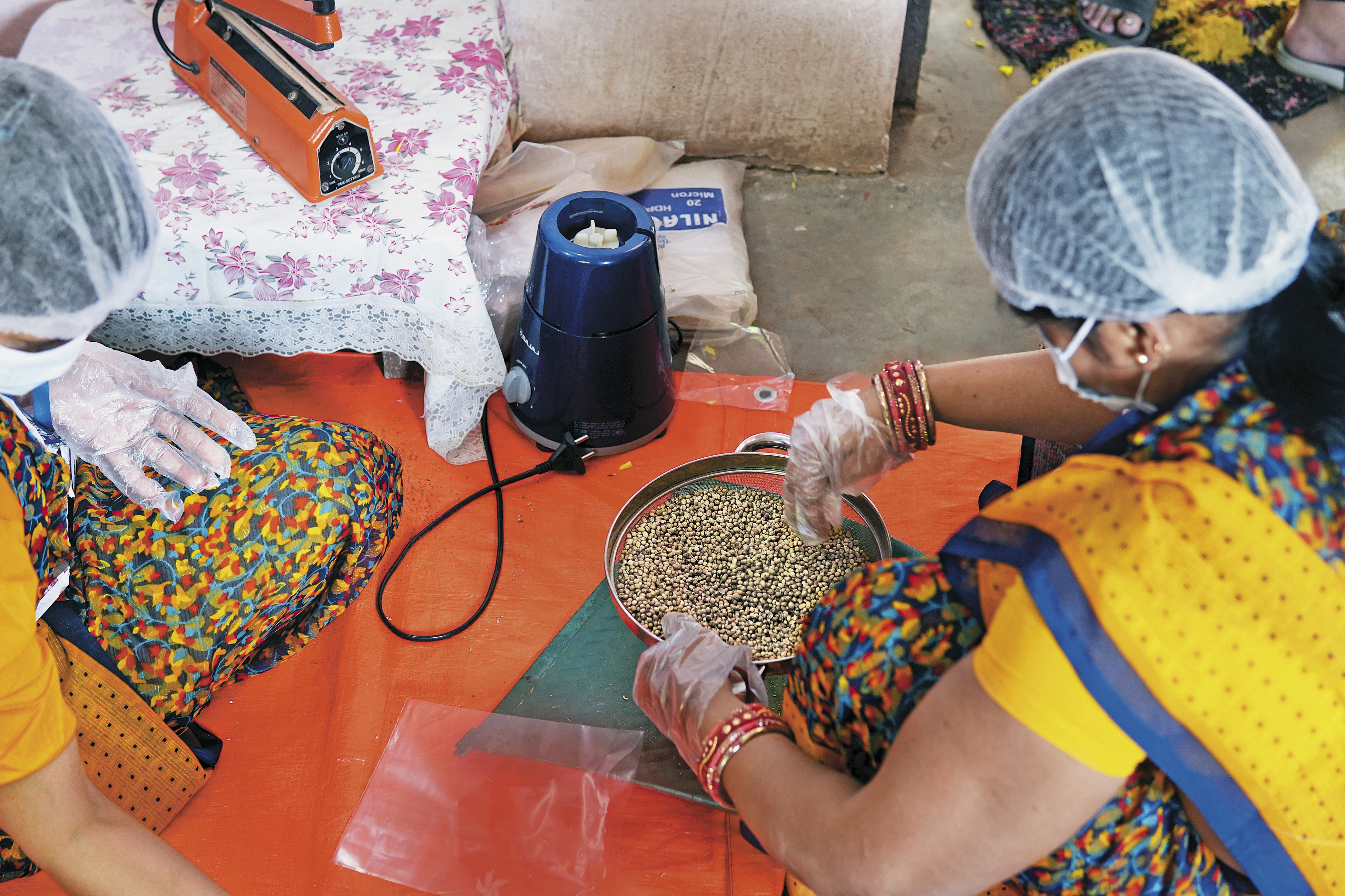
Inside the Pragati Masala Enterprise, women manage every step – from processing to packaging – building a reliable, women-led business rooted in self-belief.
with NBCC under a CSR initiative, has become a voice for the community in north Kashmir. In a region often defined by headlines, the station offers something gentler: conversation.
Broadcasting in Kashmiri, Urdu, and Hindi, the station features folk songs, educational programmes, discussions on health and hygiene, agricultural updates, and local stories. It listens as much as it speaks
RJ Harleen Kaur, one of the vibrant voices behind the microphone, sees radio as a means of cultural preservation. “Kashmir has a rich cultural past,” she says. “It is our responsibility to reconnect with our roots and share these stories with the masses because culture survives only when it is shared.
Station Head and Programmer RJ Arif Nabi views the station as a platform for social transformation. “Unemployment had pushed many young people towards substance abuse,” he explains. “We felt it was essential to bring them back to their roots through awareness programmes and mass campaigns.
communities come together on one platform, understanding follows naturally,” she says
Radio Baramulla also serves as a training ground for local youth, offering hands-on experience in broadcasting and media production. For many young Kashmiris, it is their first step into professional life.
A senior Army official associated with the project sums up its essence: “Radio Baramulla is not just a communication channel; it is a symbol of hope, connection, and cultural preservation. In a world dominated by digital noise, a simple radio wave can reach the farthest corners of our valleys – and our hearts.”
In Delhi, another journey unfolds – this one on a badminton court. Munna Khalid, from Khanpur in Bulandshahr, contracted polio at six months old. The third of seven siblings in a modest household, he grew up with limited exposure and resources.
Determined to study, he worked from childhood – at a PCO booth, making wooden crates, selling fruit and vegetables. Eventually, he secured admission to Jamia Millia Islamia and pursued higher education while supporting himself.
Inside the Pragati Masala Enterprise, women manage every step – from processing to packaging – building a reliable, women-led business rooted in self-belief.
Through technology driven awareness and behavioural training, Kartavya places responsibility at the heart of road safety, reminding every road user that caution is collective.

Interactive, tablet-led training at RTO Driver Sensitisation Labs helps road users understand risks, rules, and responsibilities before unsafe habits turn into accidents.
Today, Munna has represented India in international tournaments across Thailand, Indonesia, Bahrain, Dubai and Uganda. He holds two gold, two silver and six bronze medals internationally, and is ranked ninth in the world. The Delhi government has honoured him as Best Sportsperson.
He aspires to qualify for the World Championships, Asian Games and the 2028 Paralympics, drawing inspiration from Tokyo Paralympic gold medallist Pramod Bhagat
NBCC’s intervention was not simply about equipment; it was about belief.
From healthcare in Almora to airwaves in Baramulla, from classrooms in Sambhaji Nagar to badminton courts in Delhi, NBCC’s CSR initiatives are guided by a common philosophy: development must be inclusive.
Each story reflects a partnership between institution and community, and between aspiration and opportunity. In every case, NBCC chose to strengthen what already existed – a rural health centre, a local radio initiative, a special school, an athlete’s dream
Infrastructure may be NBCC’s core expertise, but in these stories, the true construction is intangible: trust rebuilt, confidence restored, potential unlocked.
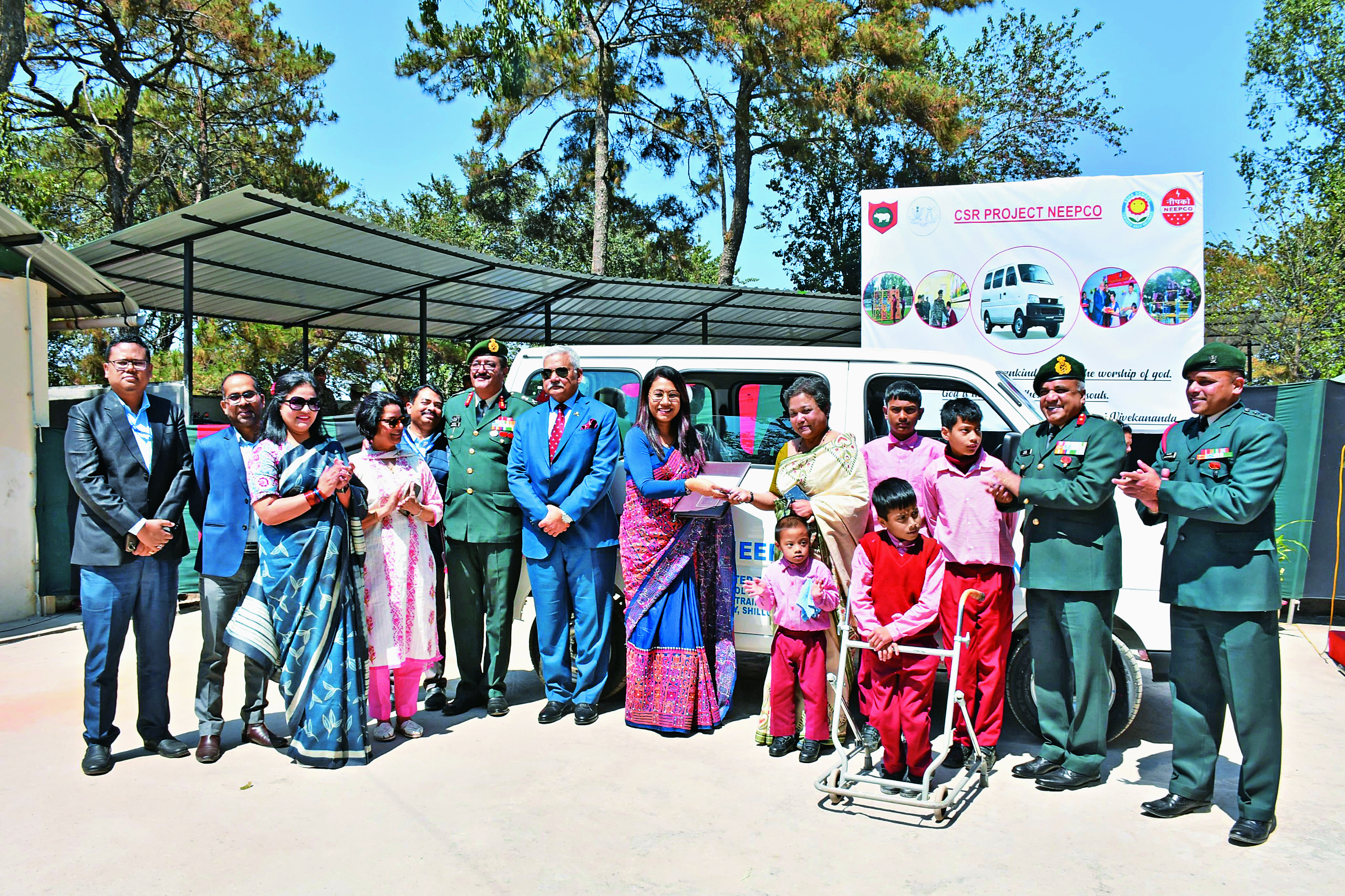
At an RTO Driver Sensitisation Lab, Kartavya’s interactive training modules help road users internalise safe driving practices, embedding responsibility into everyday mobility.