


STRENGTHENING SYSTEMS, SUSTAINING FUTURES
DCM Shriram Foundation’s CSR initiatives demonstrate how integrated investments in water conservation, sanitation, education, healthcare and livelihoods are quietly transforming rural landscapes across India
This philosophy finds expression through DCM Shriram Foundation, the Group’s philanthropic arm, which advances an integrated rural development strategy under its Khushali Framework. Across Rajasthan, Gujarat, and Uttar Pradesh, the Foundation is building resilient ecosystems — where water security supports biodiversity, early childhood education strengthens futures, waste is managed with dignity, preventive healthcare safeguards the first 1000 days, and agri entrepreneurship stabilises rural incomes. Their projects in Hardoi, Lakhimpur Kheri, Jhagadia and Kota, reveal a consistent philosophy in action.
Development that truly matters does not arrive with announcements or timelines pinned to walls. It takes shape gradually – through fuller ponds that endure long summers, through children who learn with confidence, and through farmers who no longer depend on season for survival.
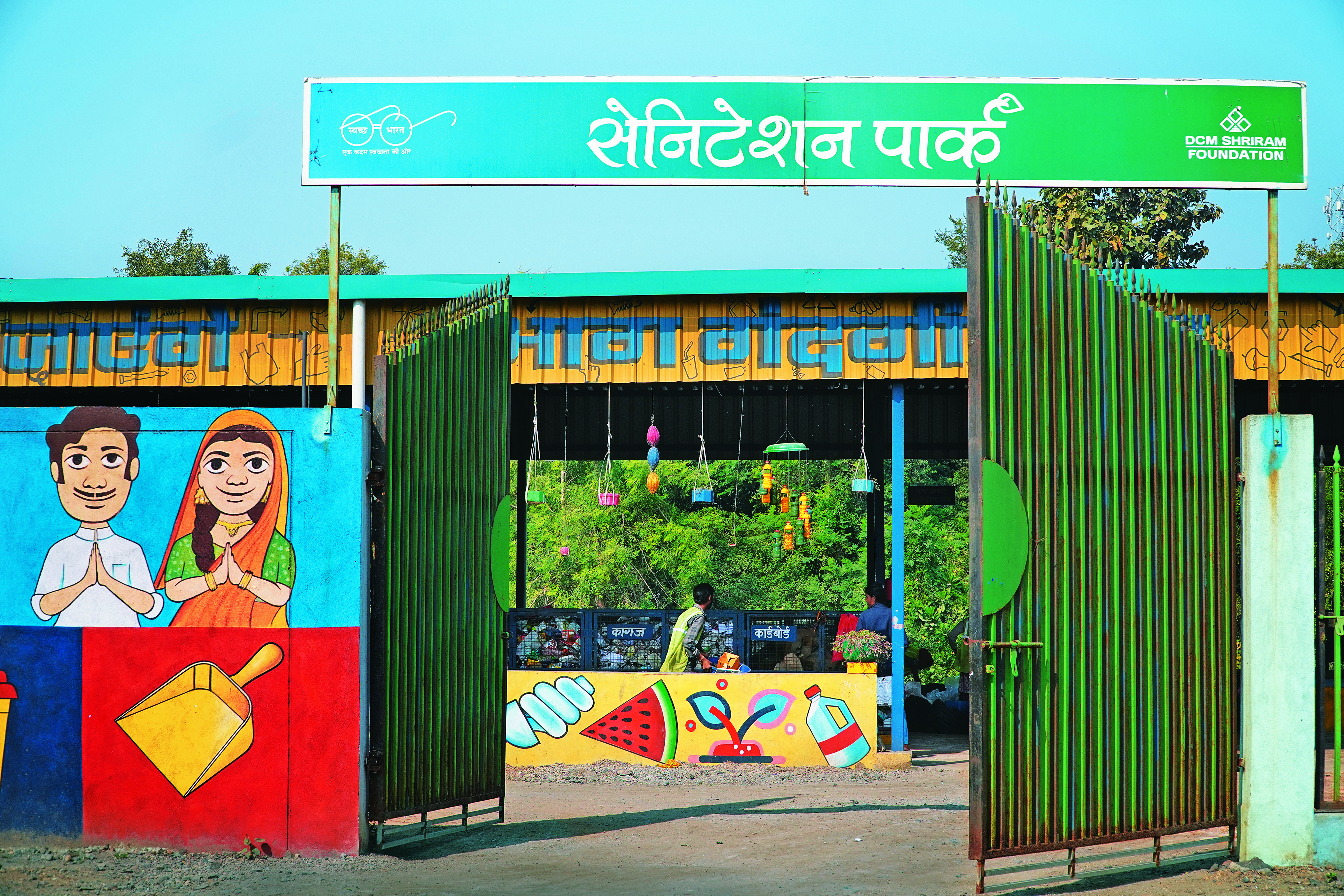
Sanitation Park at Jhagadia
A Lighthouse Model of Circular Rural Waste Management The Jhagadia Sanitation Park, the first Sanitation Park of Gujarat, stands today as a pioneering example of decentralised rural waste management. What began in Jhagadia Gram Panchayat of Bharuch district as an idea met with disbelief has evolved into a model of pride and replication. Waste had long been viewed as something to be pushed out of sight. When segregation and local processing were introduced, there was open resistance. As Sarpanch Sureshbhai Vasava recalls, “People refused to give waste and even mocked the idea, saying it would not last.
Implemented by DCM Shriram Foundation, in partnership with the District Administration, Bharuch, under the Zero Waste Zero Cost model and aligned with Swachh Bharat Mission–Grameen (SBM-G), the sanitation park was envisioned not merely as a processing unit but as a lighthouse model for circular rural economy.
Community-managed sanitation parks convert waste into value, creating cleaner villages, steady livelihoods, and a replicable model of circular economy rooted in dignity and discipline.
The system operates through a disciplined daily cycle: door-to-door collection from surrounding villages and industries, segregation into wet and dry streams, composting of organic waste, and channelisation of recyclables into markets. As Ishwar Kharadia, Project Coordinator, notes, “The sanitation park runs on a carefully organised daily process. This consistency has ensured its long-term success.
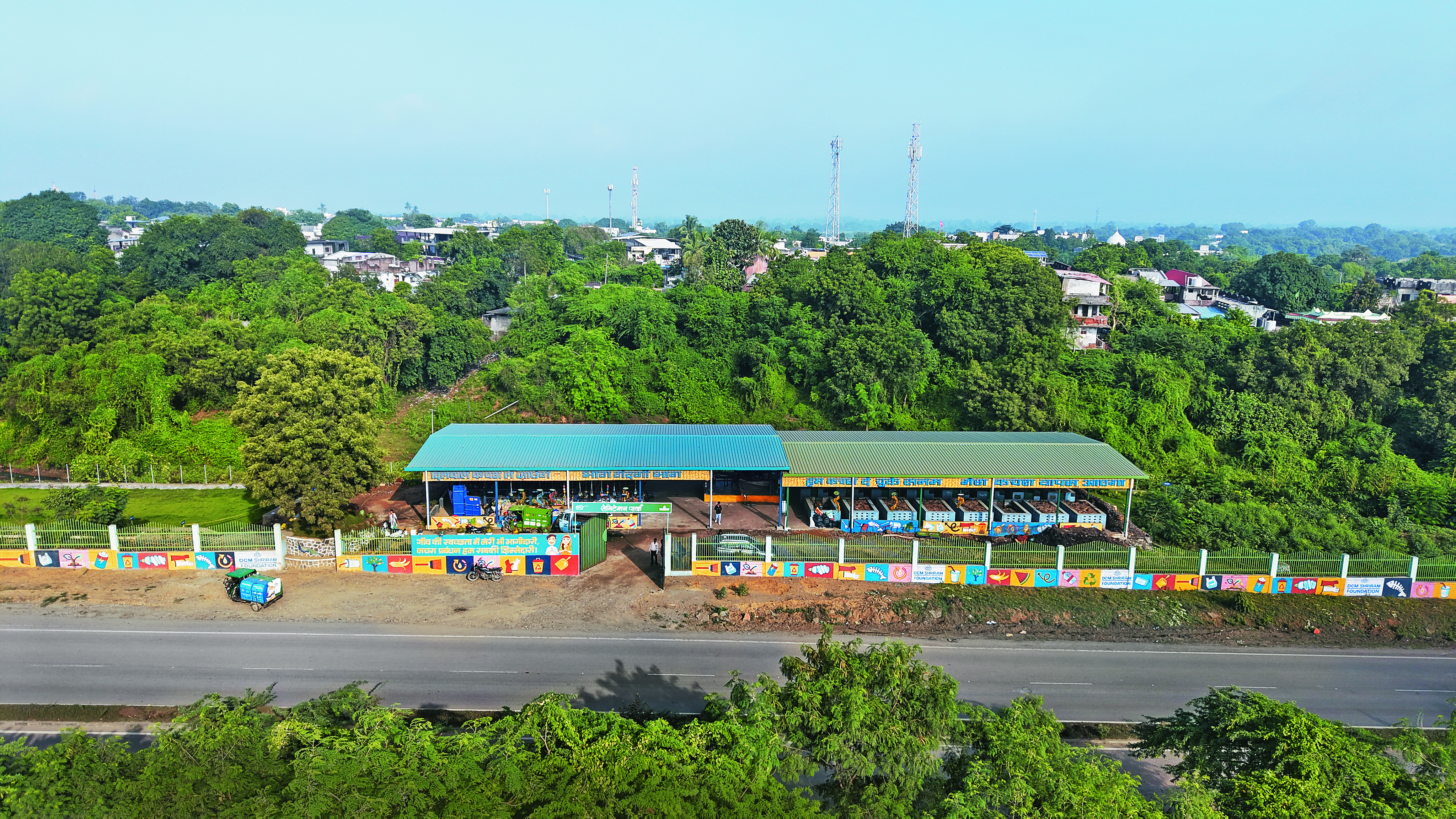
Jhagadia Sanitation Park highlights how organised infrastructure enables systematic waste management and cleaner rural environments.
A defining strength of the model is its financial sustainability. Proceeds generated from both wet and dry waste streams contribute towards operational costs. Organic waste is converted into compost, returning nutrients to farms and kitchen gardens, while dry waste generates revenue through recycling channels. This circular revenue mechanism reinforces the Zero Waste Zero Cost principle and reduces long-term dependency on external funding.
The Gram Panchayat plays an active governance role, while residents contribute by providing segregated waste at source. Ranjana Thorat, Sanitation Park Coordinator, highlights that sanitation has become a steady livelihood opportunity for several families.
The model has drawn significant institutional attention. The park has been visited by the DDO, Director DRDA (Bharuch), Dy. Commissioner – Rural Development Department (Government of Gujarat), TDO Jhagadia, UNICEF Gujarat, and representatives from leading industries. It has also hosted 123 Panchayat Secretaries, SHG groups, and school students — reflecting its recognition across public and private sectors as a replicable governance model.
For beneficiaries like Nimishaben and Surendra Singh Parmar, the impact is tangible — improved soil health, cleaner surroundings, and new economic opportunities. Today, the Jhagadia Sanitation Park stands as a financially viable, government-supported, and environmentally responsible initiative — demonstrating how rural waste management can operate on principles of circularity, dignity, and long-term sustainability, offering a replicable pathway for districts across India.
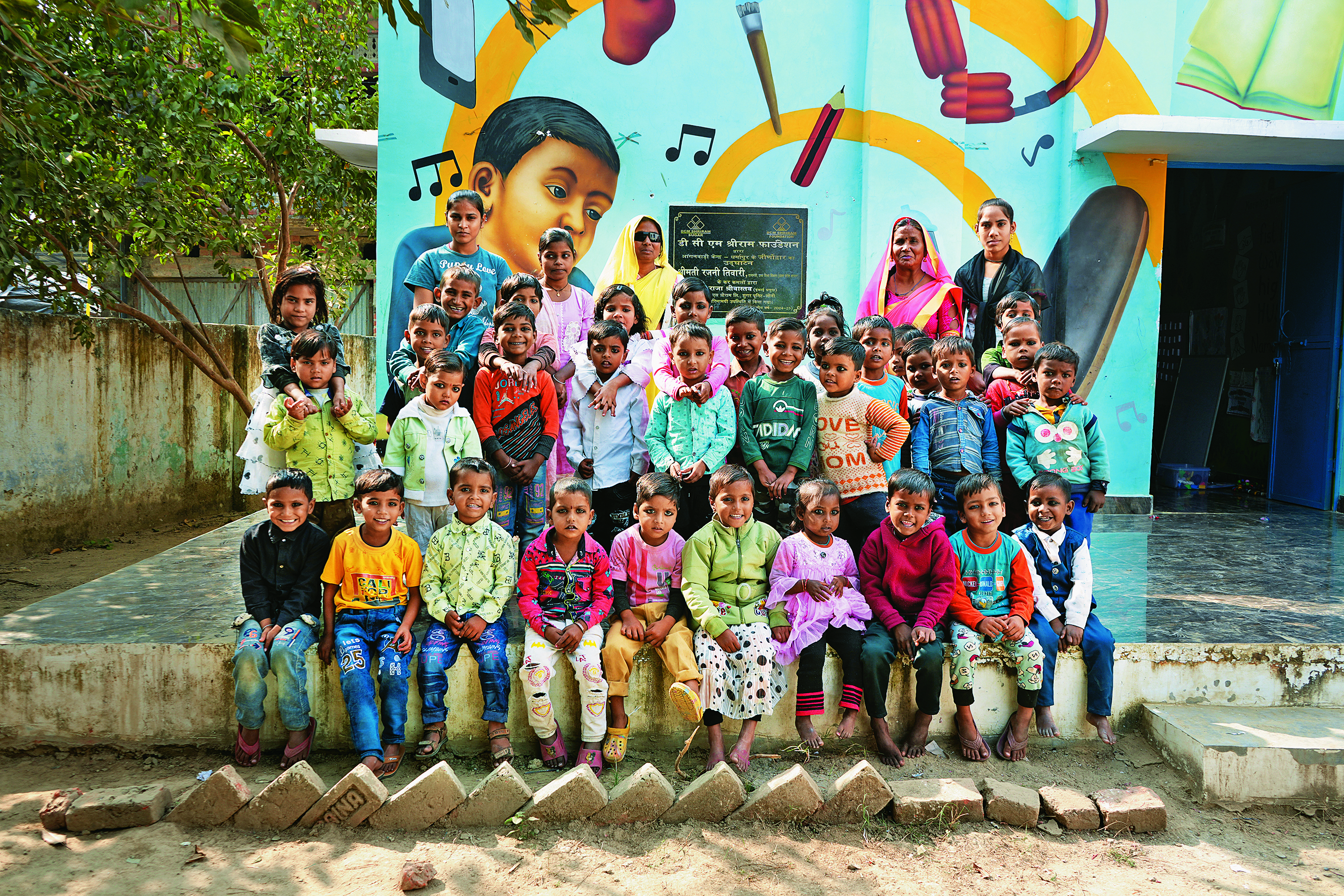
Play-based learning and improved infrastructure nurture curiosity, confidence, and foundational skills among young learners
Khushali Shiksha Strengthening Early Childhood Education Reimagining Anganwadis through Hub and Spoke model In Hardoi and Lakhimpur Kheri districts, Uttar Pradesh, early childhood education had long been constrained by inadequate infrastructure, limited teaching resources, and low parental engagement. Under Khushali Shiksha, DCM Shriram Foundation has adopted a structured approach to strengthening the Anganwadi ecosystem through infrastructure improvement, capacity building, and community participation.
The programme follows a hub-and-spoke model, where selected model Anganwadi centres function as resource hubs, demonstrating best practices in pedagogy, classroom organisation, and child-centric learning. These hubs provide mentoring and on-site support to surrounding Anganwadi centres — the spokes — ensuring consistent quality, peer learning, and scalable impact across clusters.
At the Dharmapur Anganwadi centre, Sarbati Devi, an Anganwadi worker with over two decades of experience, reflects on the transformation: “The monthly training sessions have taught us things I did not learn even in my 22 years of work. The learning is regular and practical.”
Once marked by broken infrastructure and limited resources, the centre is now vibrant and child-friendly. Equally significant has been the rebuilding of parental trust. Mothers’ Groups and community volunteers extend learning into homes, reinforcing shared responsibility and creating a culture where early childhood education is valued, supported, and sustained
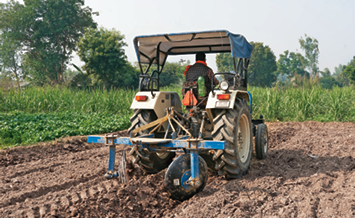
Sustainable agricultural mechanisation enhances productivity, reduces costs, and enables stable, year-round rural incomes.
Khushali Rozgaar builds rural entrepreneurs through skills, mechanisation, and market linkages, enabling sustainable incomes and reducing dependence on seasonal or informal work
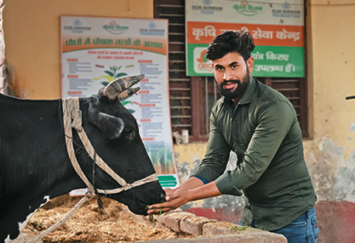
Village-level agri-entrepreneurs expand rural services and income opportunities through livestock and farm-based enterprises.
Khushali Rozgaar Strengthening Agri-Entrepreneurship and Rural Livelihoods Under Khushali Rozgaar, DCM Shriram Foundation is strengthening rural livelihoods by building a decentralised ecosystem of Agri entrepreneurs. The programme focuses on enhancing farm incomes through improved agricultural practices, access to mechanisation, enterprise incubation, and structured convergence with government schemes.
Moving beyond centralised infrastructure models, the initiative develops village-level Agri-Entrepreneurs who provide mechanisation and farm services to small and marginal farmers. To date, 256 Agri-entrepreneurs have been incubated, facilitating access to over 1900+ farm machines, significantly improving timely access to agricultural equipment.
A critical component of the programme is institutional convergence. The initiative has facilitated online subsidy applications, unlocking approximately ₹13+ crore in government subsidies. By addressing procedural and digital access barriers, the programme ensures that rural entrepreneurs are able to leverage public schemes effectively.
In addition to mechanisation services, entrepreneurs diversify into dairy, mushroom cultivation, Agri-input retail, and solar-powered processing units, creating multiple income streams and reducing seasonal dependency.
As Apoorva Dwivedi, CSR Lead, explains, “The objective is to develop agricultural entrepreneurs who can support not only their own farms but also small and marginal farmers who cannot afford machines.
By combining enterprise incubation, subsidy facilitation, and market linkage, Khushali Rozgaar is strengthening rural economic resilience and enabling sustainable, community-based agricultural growth
DCM Shriram Skill Academy: Turning Aspiration into Employment
For many young people in Hardoi and Lakhimpur Kheri, limited access to market-relevant skills led to migration or informal, low paid work. The DCM Shriram Skill Academy, operating under Khushali Rozgaar, addresses this gap by providing vocational training directly linked to employment.
Courses in General Duty Assistant (GDA), Electrical and Solar Assistant, and Multi-function Office Assistant skills combine classroom instruction with practical training. Project Manager, Ashok Kumar Verma, associated with the academy since its inception. identifies a key challenge: “The biggest challenge is convincing parents, especially of girls. Counselling and real-life success stories make the difference.”
Stories such as those of Satyavati and Vidyavati, former sugarcane workers now placed in Noida, highlight the impact. Trainers report placement rates of over 95 per cent in some courses, with increasing participation of young women gradually shifting social attitudes.
Students like Sandeep Kumar, now earning ₹13,700 a month as an assistant electrician, and Danish Ali, who moved out of underpaid informal work, speak of renewed direction and future plans to start their own enterprises.
Khushali Sehat: Preventive Healthcare at the Last Mile
In rural Hardoi, Lakhimpur Kheri, Kota and Bharuch, maternal and infant health risks often went undetected until complications became critical. Under Khushali Sehat, DCM Shriram Foundation has shifted the focus from reactive treatment to preventive, continuum-based care — especially during the crucial first 1000 days, from conception to a child’s second birthday, when nutrition, monitoring, and timely intervention shape lifelong outcomes.
The programme follows an integrated model that combines Community Health Worker (CHW) mentoring with Mobile Health Units (MHUs), creating a system where frontline capacity and clinical outreach reinforce each other. ASHA and Anganwadi workers receive structured mentoring, practical training, and digital support tools to strengthen early identification of high-risk pregnancies, anaemia, malnutrition, and neonatal vulnerabilities.
The programme follows an integrated model that combines Community Health Worker (CHW) mentoring with Mobile Health Units (MHUs), creating a system where frontline capacity and clinical outreach reinforce each other. ASHA and Anganwadi workers receive structured mentoring, practical training, and digital support tools to strengthen early identification of high-risk pregnancies, anaemia, malnutrition, and neonatal vulnerabilities.
Mobile Health Units act as a catalytic layer, bringing diagnostic services, medical consultations, and follow-up care directly to villages across multiple Gram Panchayats. The data generated through digital platforms supports systematic tracking, ensuring that no case slips through the cracks.
At CHC Hariyawan, Dr. Ankur Tripathi notes, “Early identification of antenatal and high-risk pregnancy cases was the biggest challenge previously. This programme has changed that completely.”
For women like Rama Devi, consistent monitoring and timely care have translated into safer pregnancies and healthier newborns. As she shares, “This time, I did not develop severe anaemia. Both my baby and I are healthy.” Her experience reflects the impact of sustained follow-up and early intervention. By integrating mentoring of frontline workers, mobile outreach through MHUs, and data-led surveillance, Khushali Sehat is strengthening last-mile healthcare systems — ensuring that maternal and child health is protected during the most critical stages of life.
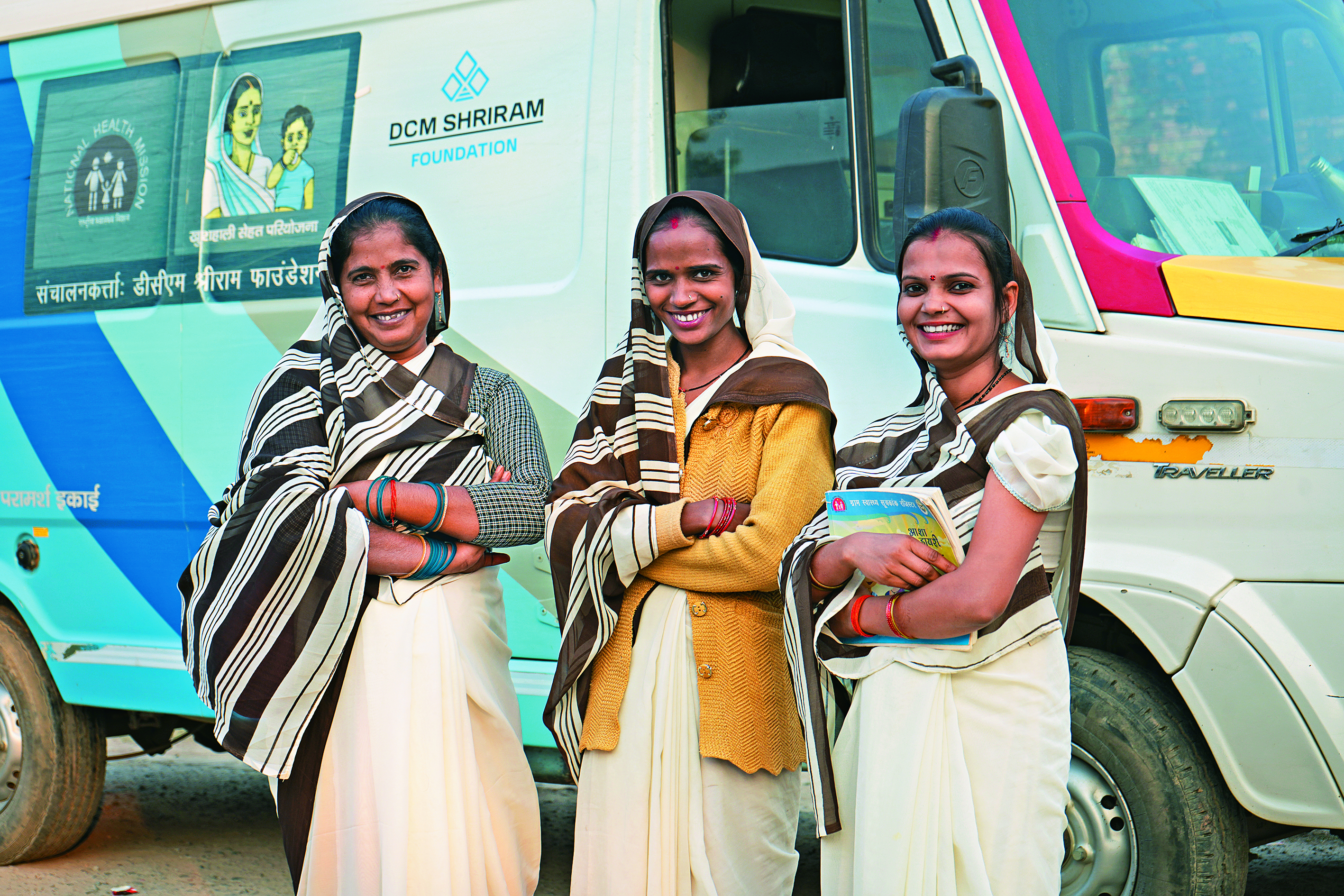
Mobile Health Units bring diagnostic services and maternal healthcare directly to villages, ensuring timely care and safer pregnancies
Khushali Paryavaran: Community-Led Water Harvesting
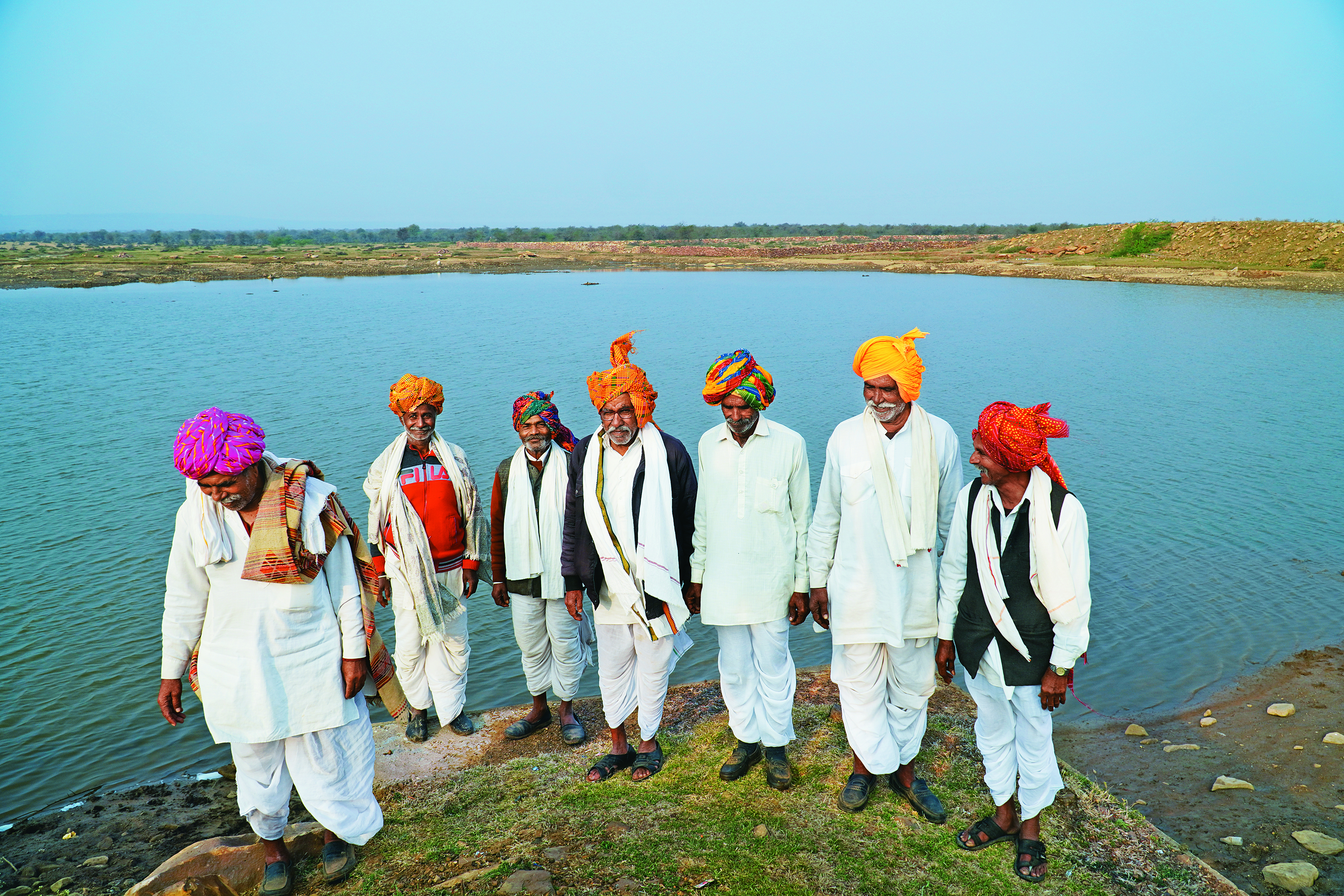
In the villages located in the Bharuch district near the Dang forest belt, water scarcity once influenced daily decisions. Farming, livestock rearing, and household needs depended on uncertain rainfall and declining groundwater levels. DCM Shriram Foundation’s water harvesting initiative aimed to address this challenge through durable infrastructure supported by strong local governance.
Several ponds were constructed to capture and store rainwater, and a Water Committee was established to oversee maintenance, cleanliness, and equitable use. Former Sarpanch Arjun Bhai S. Vasava reflects on the project’s continuity: “This initiative started during my tenure and continues smoothly today. The groundwater level has improved, and water availability has become reliable.”
Community participation was not immediate. Rudraksh Purohit, Project Coordinator, recalls that villagers were initially hesitant to take responsibility. Over time, consistent engagement-built trust and ownership. Solar panels installed to power water pumps further strengthened the system, reducing dependence on conventional
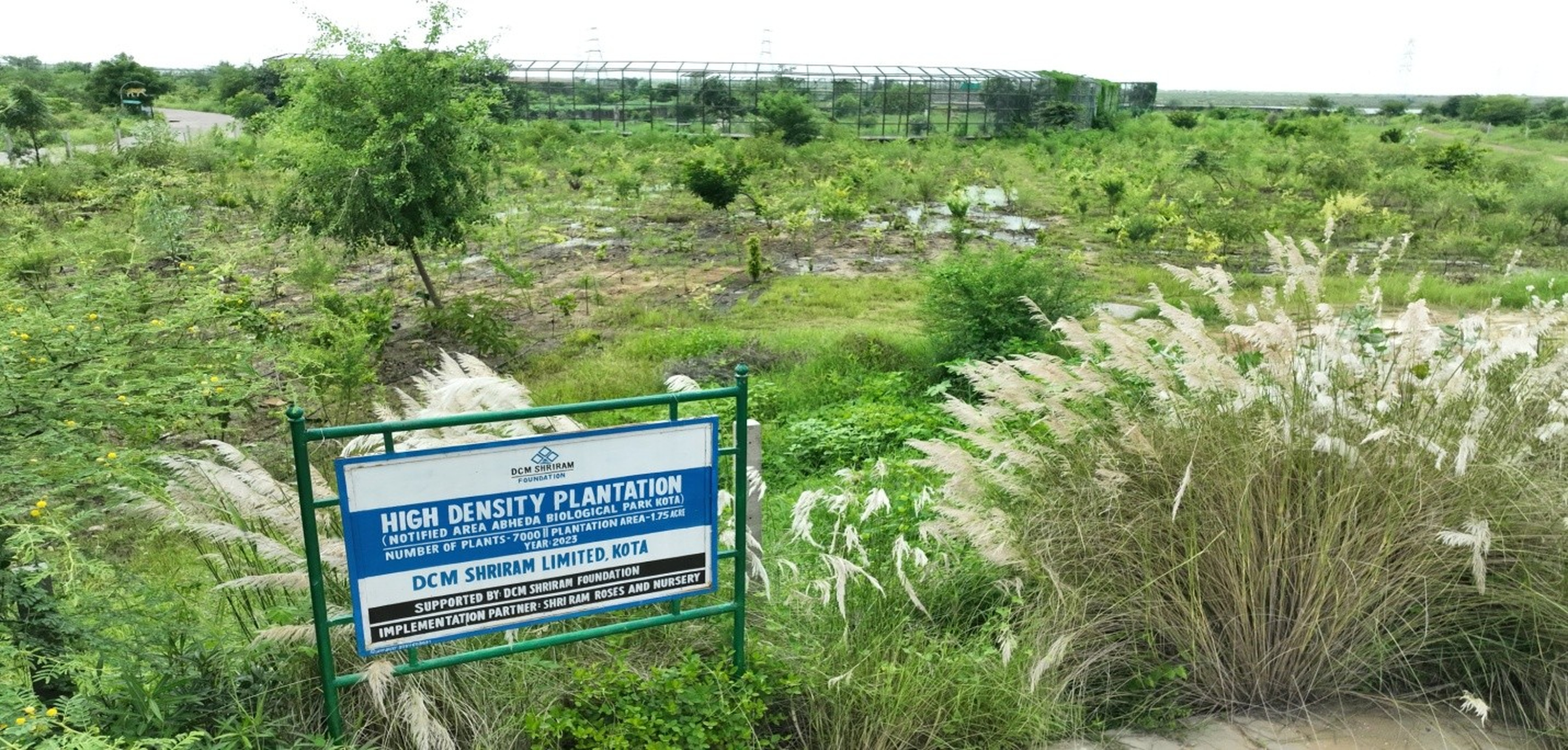
Improved biodiversity strengthens water availability, supports livestock, and enhances rural resilience while reducing pressure on surrounding ecosystems.
For residents, the impact is clear. As Patel Harish Kumar Jagdish Bhai, a villager, says: “Today, no farmer, household, or livestock suffers from water shortage. Even groundwater levels have risen.
Beyond human needs, the ponds have also reduced stress on wildlife from the surrounding region, ensuring water availability without forcing animals to stray far from their habitats
Water Conservation at Abheda Biological Park
On the outskirts of Kota, Abheda Biological Park stands at the intersection of conservation and climate stress. In this drought-prone region, recurring dry spells had begun to affect vegetation, wildlife habitats, and essential visitor amenities. In collaboration with the Forest Department, DCM Shriram Foundation undertook an integrated intervention to strengthen water security and ecological resilience within the biological park
On the outskirts of Kota, Abheda Biological Park stands at the intersection of conservation and climate stress. In this drought-prone region, recurring dry spells had begun to affect vegetation, wildlife habitats, and essential visitor amenities. In collaboration with the Forest Department, DCM Shriram Foundation undertook an integrated intervention to strengthen water security and ecological resilience within the biological park
Rainwater harvesting structures were developed to capture and conserve seasonal rainfall, ensuring reliable water availability for animals, irrigation, and park maintenance throughout the year. Complementing this effort was a large-scale plantation initiative, including both native tree planting and high-density afforestation, aimed at enhancing green cover, improving soil moisture retention, and restoring habitat conditions.
The intervention also strengthened visitor infrastructure through renovation of eco-friendly bamboo huts, creation of a children’s play zone, installation of drinking water facilities, and introduction of golf carts to ensure convenient, low-impact mobility within the biological park.
Together, these efforts have improved vegetation density, strengthened animal wellbeing, and reduced pressure on surrounding forest areas. Today, Abheda Biological Park reflects how integrated water conservation, afforestation, and responsible infrastructure development can restore ecological balance while fostering community engagement and climate resilience.